Making Polite Requests and Offers with "Would like"
Clase 7 de 11 • Curso de Inglés Básico A2: Propuestas y Permisos
Contenido del curso



Making Polite Requests at Work
Asking and Giving Instructions

Resumen
Polite English at work and beyond starts with choosing the right form. Learn exactly when to use can, could, and would like to make requests and offer help with confidence, professionalism, and clarity. Real examples show the tone: from friendly to very polite and diplomatic.
What is the difference between can, could, and would like for polite requests?
Choosing the structure changes the tone. You are not just asking for something; you are managing how formal and respectful you sound.
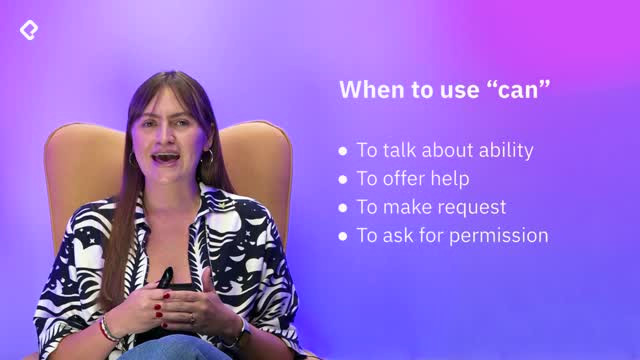
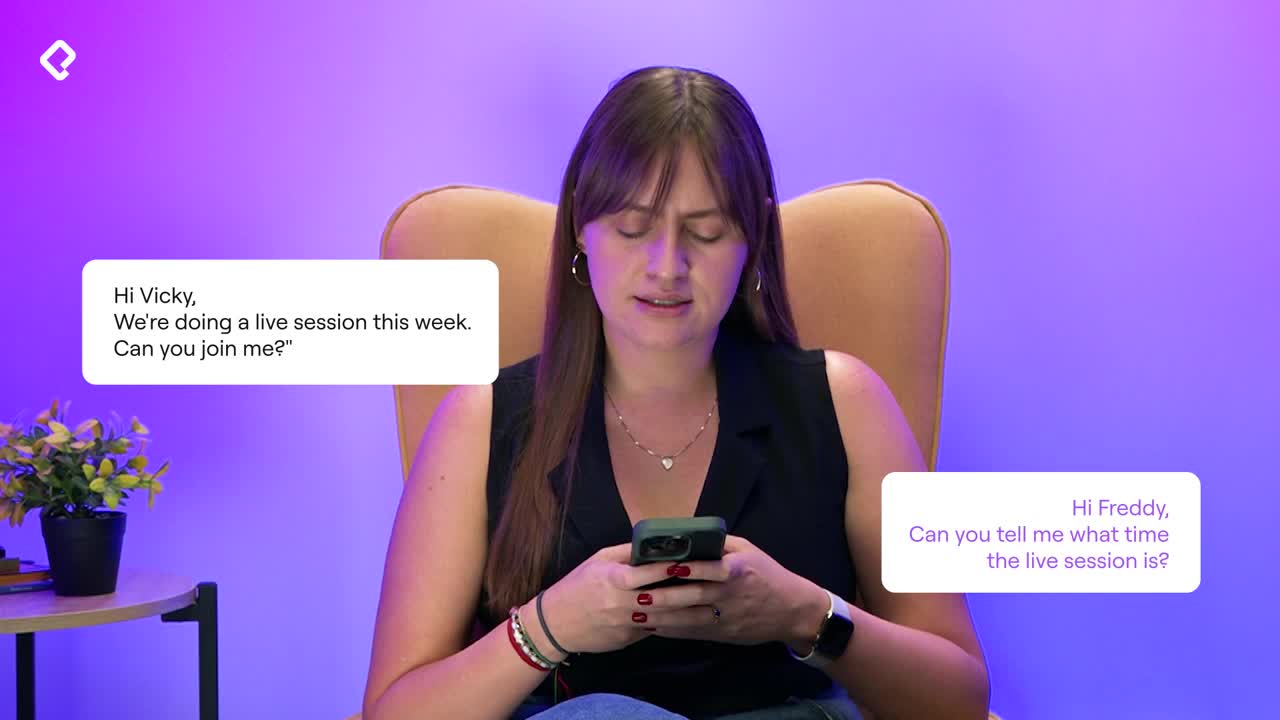
- Can you…? polite and direct question. Good with peers and friends.
- Could you…? more polite. Adds extra courtesy.
- I would like… a statement. Professional, polite, and diplomatic.
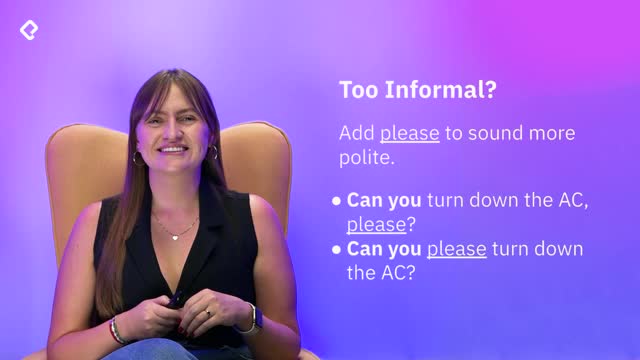
- Adding please increases courtesy in any option.
How do you use I would like + noun?
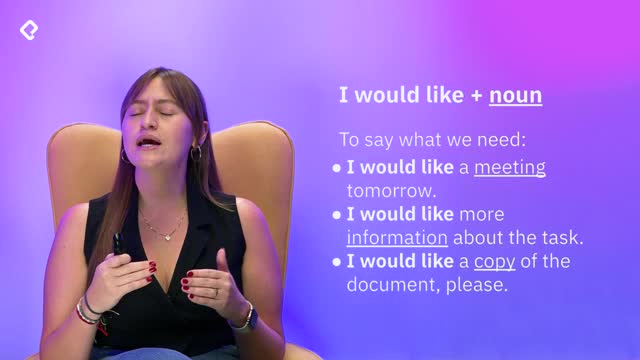
Use the structure: I would like + noun to state what you need.
- "I would like a meeting tomorrow."
- "I would like more information about the task."
- "I would like a copy of the document, please."
Tip: this is a request stated as a sentence, not a question.
How do you use I would like to + base verb?
Use the structure: I would like to + base verb to say what you want to do.
- "I would like to ask a question."
- "I would like to know the status on the project."
- "I would like to request time off, please."
Keywords: base form (no -ing, no past), clear and formal tone.
How do you use I would like you to + base verb?
Use I would like you to + base verb to be clear that the other person does the action.
- "I would like you to present the report."
- "I would like you to start the conversation."
- "I would like you to cancel the meeting."
Note on contraction: I’d like = I would like. Examples: "I’d like access to the file.", "I’d like some feedback.", "I’d like to share my screen.", "I’d like you to confirm the deadline."
How do you make polite offers with would you like?
Use would to offer help or options. The form signals courtesy and readiness to help.
- A noun after "Would you like" offers an item or extra time.
- A base verb after "Would you like to" offers an action.
- Using me shows you will perform the action.
Would you like + noun?
Offer things directly with a noun.
- "Would you like some help?"
- "Would you like a copy of the file?"
- "Would you like more time?"
Would you like to + base verb?
Offer actions using the base form of the verb.
- "Would you like to start the meeting now?"
- "Would you like to check this together?"
- "Would you like to join the call?"
Would you like me to + base verb?
Offer your help, making it clear you will do it.
- "Would you like me to send the email?"
- "Would you like me to fix this?"
- "Would you like me to update the document?"
Extra contexts: service situations.
- At a café or restaurant: "Would you like something to drink?" → "I would like a cup of coffee."
- Payment options: "Would you like to pay with cash or credit card?" → "I would like to pay with cash."
When should you choose can, could, or would like in real contexts?
Match the tone to the relationship and situation. All forms can be correct, but the best choice depends on how friendly, formal, or professional you need to be.
- Best friend at work: "Can you create a social media post for this event, please?" Friendly, polite, not too formal.
- Financial manager: "I would like to see the budget, please." or "Could you please send me the budget?" Professional and courteous.
- HR manager (offering help): "Would you like me to schedule the interviews?" Clear, respectful, and proactive.
- Coworker’s phone number: "Could you give me your phone number, please?" Polite and appropriate.
Skills you build:
- Choosing tone: friendly, polite, or diplomatic.
- Forming polite requests with questions vs. statements.
- Using the base form correctly after "to".
- Using please to soften requests.
- Applying contractions like "I’d like" naturally.
Have a question or an example to test? Share a sentence in the comments using would like, could, or can, and say why you chose it.