Being More Polite with "Could"
Clase 6 de 11 • Curso de Inglés Básico A2: Propuestas y Permisos
Contenido del curso



Making Polite Requests at Work
Asking and Giving Instructions


Resumen
Master polite, professional requests in English with clear, reusable patterns. Learn when to use can and when to switch to could for a more formal tone, how to offer help naturally, and how context (manager, friend, client) changes your choice. Build confidence with ready-to-use examples and key vocabulary.
Why use could to make polite requests?
Using could makes a request more polite and professional than using can. The core pattern is simple: could + you + base verb (no -ed, no -ing).
- Structure: Could you + base verb + …?
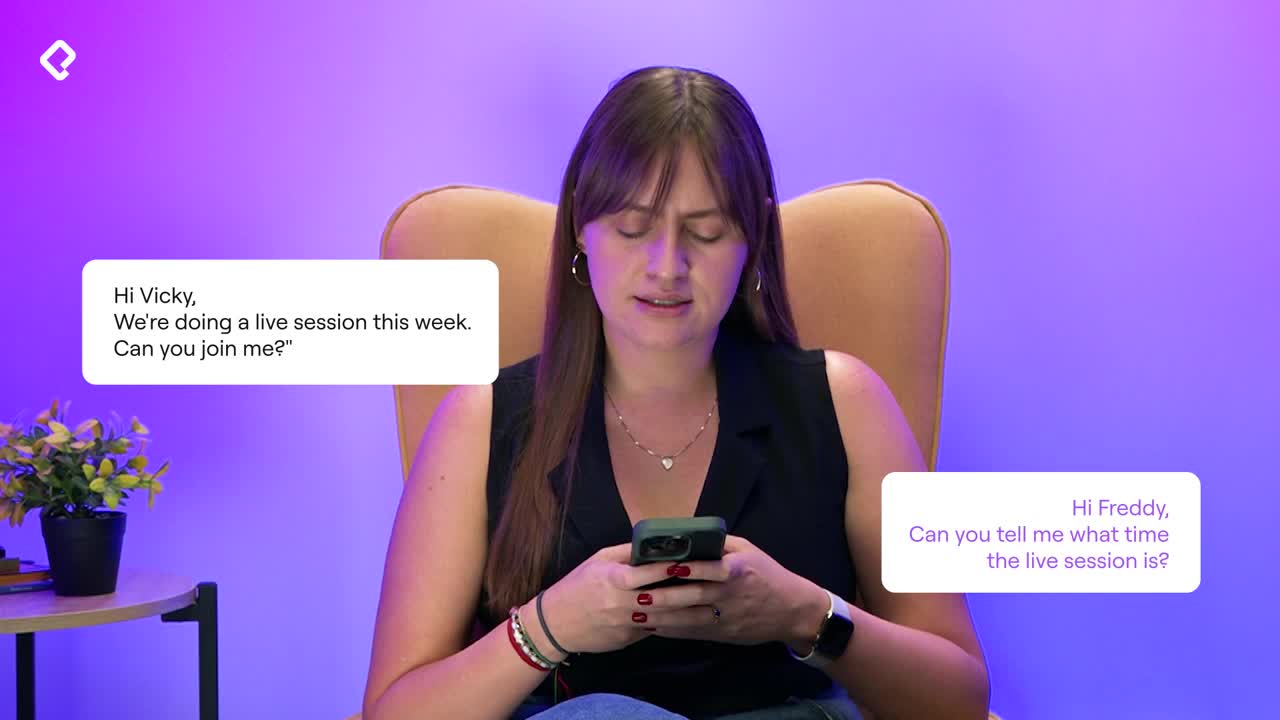
- Example: Could you tell me what time the live session is?
- Compare: Can you tell me… → Could you tell me… for extra politeness.
- Another pair: Can you cancel the meeting? → Could you cancel the meeting?
Key concepts you practice here:
- Base form: the verb in its normal form, without endings.
- Politeness and register: choosing language that fits professional situations.
What examples should you remember?
- Can you tell me what time the live session is? → Could you tell me what time the live session is?
- Can you cancel the meeting? → Could you cancel the meeting?
Which skills are you building?
- Making requests with modal verbs: can vs could.
- Adjusting tone for professional communication.
- Choosing the base form correctly after a modal.
How to offer help with could in formal contexts?
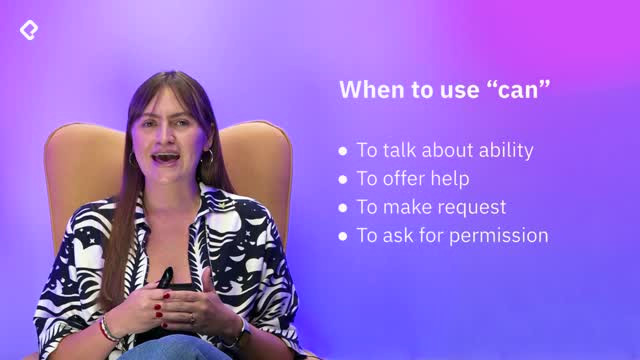
You can offer help with can or could. Use could when you want to sound more polite or professional. The patterns mirror can, just swap can → could.
- Structure 1 (with help): Could + subject (I, she) + help + you …?
- Example: Could I help you?
- Structure 2 (more specific): Could + subject + help + you + base verb …?
- Example: Could I help you onboard the new member?
- Structure 3 (without the word help): Could + subject + base verb + … for you?
- Compare: Can I host the event for you? → Could I host the event for you?
Notes that boost accuracy:
- After modals, use the base form: host, tell, cancel, provide, onboard.
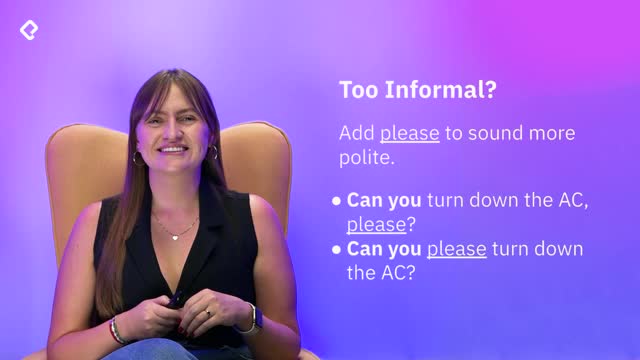
- Add please for extra politeness when needed.
- Add for you to show you’ll take the task off their plate.
What vocabulary matters here?
- Request: asking someone to do something.
- Polite/professional: language suitable for managers or clients.
- Base form: verb without endings (tell, cancel, help, host, provide, onboard).
- Onboard: help a new member start successfully.
When to choose can or could in real scenarios?
Match the modal to the relationship and situation. Think about who you’re talking to, the context, and how polite you need to be.
- Manager context: use could.
- Example: Could you help me with this, please?
- Best friend at work: can is fine.
- Example: Can you send me the file?
- Client communication: choose could and add please.
- Example: Could you please provide me with your address?
Practical checklist before you ask:
- Audience: manager, friend, or client.
- Goal: request or offer help.
- Form: could for extra politeness, can for neutral tone.
- Grammar: modal + base form.
What examples can you reuse immediately?
- Could you tell me what time the live session is?
- Could you cancel the meeting?
- Could I help you onboard the new member?
- Could I host the event for you?
- Can you send me the file?
Ready to practice more polite requests with would next time. Have a question or a sentence you want feedback on? Share it in the comments and get help refining it.