
AMO Model: Evaluate Candidates With Data
Contenido del curso


Atracción y Selección de Talento
Integración y Desarrollo del Empleado

Operaciones, Compensación y Beneficios

Cultura, Experiencia y Salida del Empleado
Cerrar el Ciclo sin Romper la Cultura
Cultura y Estrategia de Personas

AMO Model: Evaluate Candidates With Data
Resumen
Turning interview impressions into solid hiring decisions requires more than gut feeling. The AMO Model and a well built scorecard help you evaluate candidates with evidence, align with your culture and role, and close the process with an offer that actually wins talent.
What is the AMO Model and why does it matter in hiring?
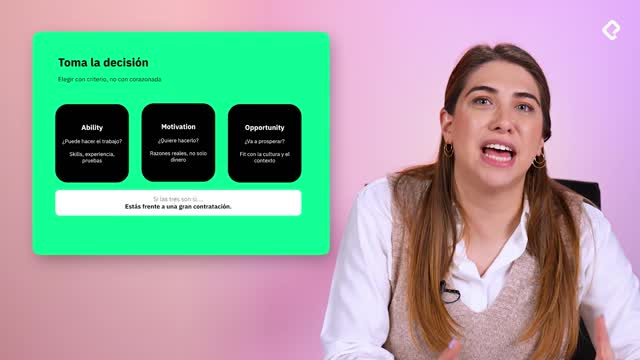
The AMO Model is a framework that measures the two things you defined from the start: culture fit and role fit. It breaks the evaluation into three clear questions that guide whether a candidate should move forward.
- Ability: can the person do the job? Do they have the skills, know the tools, and bring the experience the role demands.
- Motivation: do they want to do the job for real reasons? Look for connection with the challenge and the company mission, not just the paycheck.
- Opportunity: will they thrive here? Ask if they will grow with the company and live by your values.
If the three answers are yes, you are likely looking at a great hire. One no is normal, since every candidate has areas to develop. Two or three nos is your signal to pause and reconsider.
What does AMO stand for in recruiting? Ability, Motivation and Opportunity. It is a framework to check if a candidate can do the job, wants to do it, and will thrive in your environment.
How do I build a hiring scorecard that actually works?
Every hire shapes the future of your business, so you need to document everything and decide with data. A scorecard is a guide that helps you choose with evidence instead of relying on memory or first impressions like "I remember this candidate was nice."
What should a recruitment scorecard include?
Your scorecard should pull directly from the role definition you created at the start of the process. Keep it simple, but make it complete.
- Key competencies of the role, the ones you defined when you designed the hiring process.
- Behavioral indicators or technical test results, scored on a 1 to 5 scale or even a simple meets or does not meet.
- Space for notes and evidence, where each interviewer leaves impressions and qualitative input.
After the numbers, the qualitative notes are what tip the balance. You may have two candidates scoring five out of five, and the written evidence becomes the deciding factor. Numbers help, but you are still working with people.
Why use a scorecard instead of intuition? Because intuition forgets details and favors charisma. A scorecard captures evidence from every interviewer so the decision reflects the full process, not one moment.
How do I make a job offer that closes the right candidate?
Recruiting works in two directions. You choose the candidate, and the candidate also chooses you. The offer is not a document you email, it is a final interview where you show everything the person gains by joining your team. This is where the process ends and the relationship begins.
What should every job offer include?
Three elements cannot be missing from your offer conversation. Each one answers a different concern the candidate has before saying yes.
- Competitive salary: aligned with the market, never a surprise, and genuinely attractive. This is often the base of the decision.
- Benefits: health, care, flexibility and any perk beyond the monthly number. Sell the full package.
- Role and challenge revisited: remind them of the purpose, the expected results and the responsibilities. Get them excited again.
This closing moment helps you bring great people to your team and reinforces your employer brand. Even candidates who do not move forward will talk about how you treated them, so every stage matters.
Which part of your hiring process feels weakest right now, the evaluation or the offer? Share your experience in the comments.