
How the 70-20-10 Model Builds Real Talent
Contenido del curso




Atracción y Selección de Talento
Integración y Desarrollo del Empleado


Operaciones, Compensación y Beneficios

Cultura, Experiencia y Salida del Empleado
Cerrar el Ciclo sin Romper la Cultura
Cultura y Estrategia de Personas

How the 70-20-10 Model Builds Real Talent
Resumen
Building a talent development plan is one of the most strategic decisions a company can make, because preparing your employees for what is coming next is what keeps your business ready for new challenges. And no, sending someone to a training session is not the same as developing them. Real learning happens when people are doing the work, not when they are taking notes.
What is the 70-20-10 model in talent development?
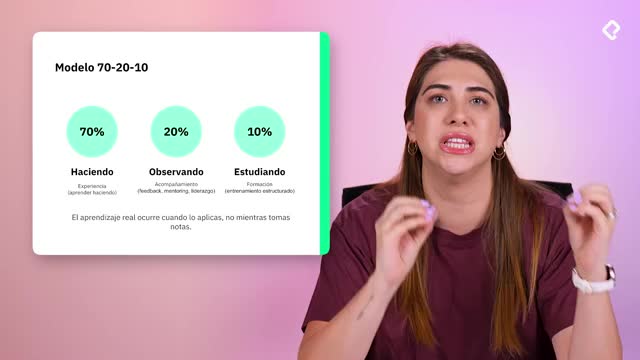
The 70-20-10 model is one of the most widely used frameworks in learning and development, and it gives you a clear map of how people actually grow.
- 70% of learning comes from experience, from doing the work.
- 20% of learning comes from observation, mentoring, feedback and present leadership.
- 10% of learning comes from formal study, like courses or books.
This does not mean you should stop reading or taking courses. It means you have to take what you learn into action, because that is where the chain of learning usually breaks.
What is the 70-20-10 model? It is a learning framework that says 70% of growth comes from doing, 20% from mentoring and feedback, and 10% from formal study like courses or books.
How do performance and potential connect to development?
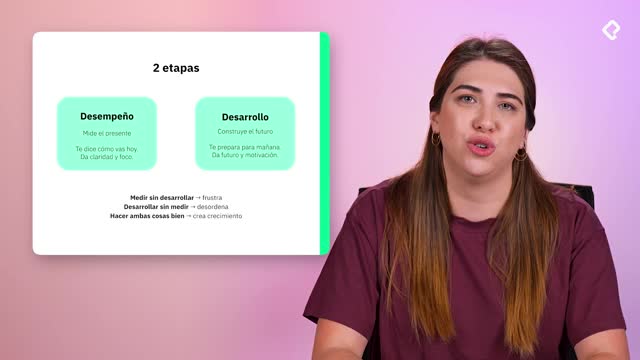
In talent management, performance tells you where a person stands today and what they have or have not achieved. Potential tells you where they could go next. When you connect both with your business objectives, you can start designing development plans that actually move the needle.
How do I design a personalized development plan?
Before writing anything, get clear on what the person actually needs. Do they need upskilling, meaning leveling up in what they already do? Do they need reskilling, learning a completely new set of skills? Or are they stepping into a leadership role and need to develop soft skills?
Once that is clear, build the plan around three questions you and your employee must answer together.
- What do I want to achieve? Help the person define a clear, measurable objective.
- How am I going to achieve it? This is where the 70-20-10 methodology comes in.
- How are we going to measure progress? Schedule periodic check ins to track how things are going.
That structure turns a vague intention into a real plan with accountability.
What do I do when someone is underperforming?
Nobody wakes up deciding to do a bad job. Low performance is usually the consequence of several things happening around the person, and your job is to address it the right way. The first move is always a conversation, but a conversation only works if you prepare it well.
How should I prepare a low performance conversation?
The foundation of the conversation is having the facts ready. Do not speak from perception; bring concrete examples and observable behaviors you can actually discuss.
When you are in the meeting, listen to understand, not to respond. Look for context and try to grasp what the person is going through. Remember the five signs of disengagement covered in the engagement class; sometimes the root cause lives somewhere else.
And before you close, make expectations crystal clear. What changes do you need to see? What are the next steps? If you leave the room without that clarity, the conversation was not successful.
What is a PIP? A Performance Improvement Plan is a document that defines the specific changes an employee needs to make, the support they will receive, and how progress will be reviewed.
What should a Performance Improvement Plan include?
A Performance Improvement Plan, or PIP, is your action format to make sure the conversation turns into real change. A solid PIP has three components.
- The specific changes you need to see. Be detailed, avoid generalities.
- The support the person will count on. This can be training, coaching or constant feedback.
- How you will review progress. Weekly check ins work well.
Notice how similar this looks to a development plan. That is the point. A PIP is not a sentence, it is a tool to help someone improve. If you are using it just to push someone out, do not use it. Always run it with the intention of helping the person succeed.
When is it time to let someone go?
If you gave the person all the support and tools and improvement still does not arrive, then it is time to make a decision. It is a hard one, but if you followed the process, three things will be true.
- It will not be a surprise, because conversations already happened.
- It will be fair, because you invested time, support and resources.
- It will be the right call for both sides, because the person was clearly not finding a place to thrive.
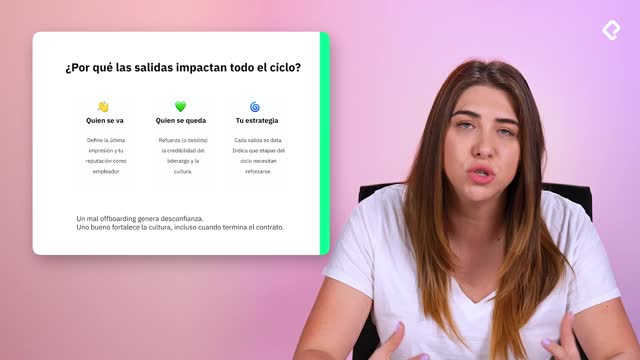
The message you send to the rest of the team about the talent you keep, and the talent you let go, matters more than you think. Talent management is a continuous loop that feeds itself, fuels engagement and protects the commitment of your people.
What part of your current development process do you think needs the biggest upgrade?