
How the STAR Method Predicts Hiring Success
Contenido del curso

Atracción y Selección de Talento
Integración y Desarrollo del Empleado

Operaciones, Compensación y Beneficios

Cultura, Experiencia y Salida del Empleado
Cerrar el Ciclo sin Romper la Cultura
Cultura y Estrategia de Personas

How the STAR Method Predicts Hiring Success
Resumen
Interviewing looks easy, but it is actually a craft. You are not just chatting with someone, you are reading behaviors and predicting whether that person will thrive in the role you are filling. If you want to hire better, you need a clear interview structure and a behavioral method that pulls real evidence out of every conversation.
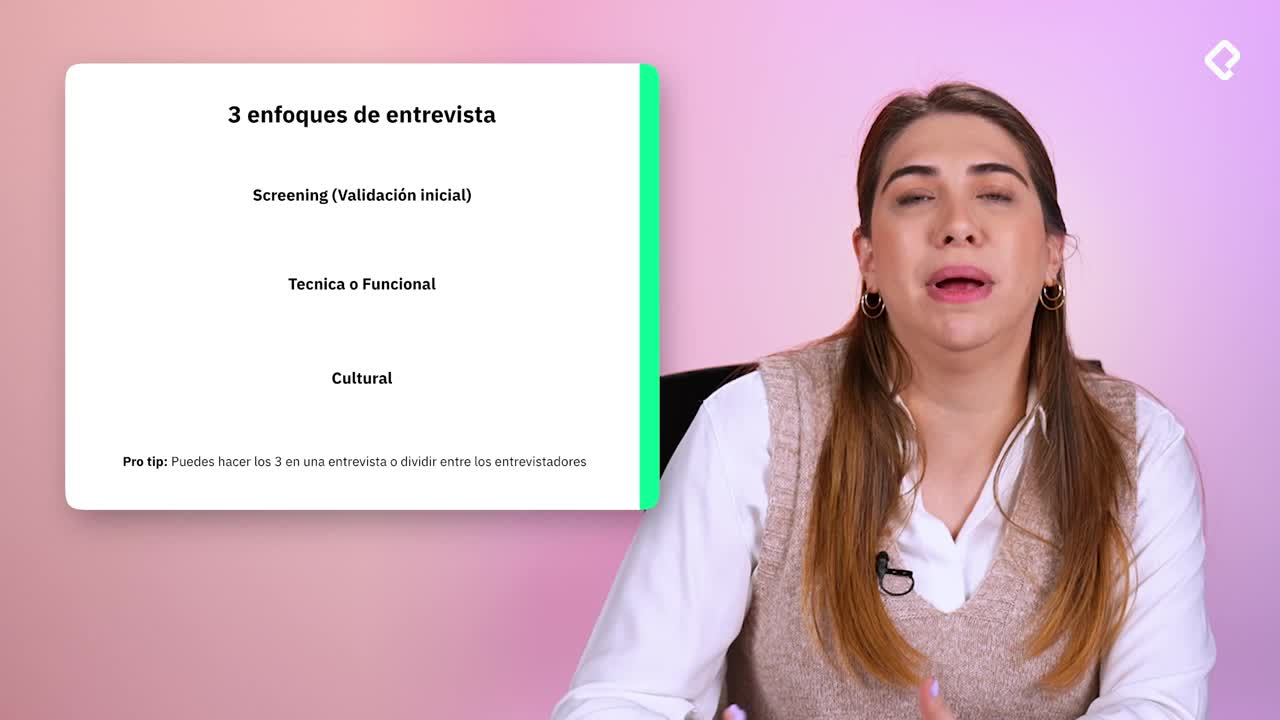
What are the three types of job interviews you should run?
There are three complementary stages, and each one answers a different question about the candidate. Used together, they cover the what, the how and the why of a hire.
How does the screening stage filter candidates early?
The screening or initial validation is usually run by the recruiter or HR partner owning the vacancy [0:35]. The goal is simple: confirm the basics before anyone else invests time.
- Salary expectations match the band.
- Core technical baseline is there, including any required software or tool.
- The candidate is interested for the right reasons.
Think of it as a gate, not a deep dive. If these basics fail, the rest of the funnel collapses.
What happens in a technical or functional interview?
This stage confirms that the person can actually solve the problem the role exists to solve [1:09]. It is typically led by the hiring manager or by a specialist who performs the same role and knows the skills inside out.
Here you validate tools, frameworks and processes. A powerful add-on is a practical case: you send a real scenario, the candidate solves it and presents the solution back. That format lets you see live reasoning, hear the why behind each decision, and check whether the tools were used well.
What is a practical case in an interview? It is a real scenario you send to the candidate so they solve it and present the solution. It reveals reasoning, tool fluency and communication in one exercise.
Why is the cultural interview the one that decides the hire?
The cultural interview makes sure the person fits how your company actually operates [2:00]. Previous stages covered the what. This one covers the how: how you make decisions, the speed you move at, the autonomy expected, and whether the candidate clicks with the team and the direct manager.
Clicking does not mean liking each other socially. It means their working style meshes with yours so problems get solved together instead of escalated. A candidate can have every skill on the list and still fail here, which is why this stage is non negotiable.
Can you mix interview types in the same process?
Yes, and you should. Although each stage has an owner, the smartest processes blend them [3:31]. The hiring manager should still probe cultural fit, and the recruiter should still sanity check technical needs.
Each role goes deeper in their specialty, but every conversation is a chance to double check signals from the others. Define who leads what, then let everyone validate across the board.
- Recruiter leads screening, but flags cultural red flags.
- Hiring manager leads technical depth, but tests cultural fit too.
- Cultural interviewer confirms working style, but can revisit tool fluency.
This overlap is what prevents blind spots between stages.
How does the STAR method work in behavioral interviews?
Regardless of the stage, you need to extract information good enough to decide. The STAR method is a behavioral interview framework built on a clear premise: past behavior predicts future behavior [4:30].
STAR stands for four components you walk the candidate through:
- S, Situation: the context and the challenge they faced.
- T, Task: what specifically had to be done.
- A, Action: what they did, not what the team did.
- R, Result: what happened, and just as important, what they learned.
The result does not need to be a win. What matters is what the person did with the outcome.
Why does STAR ask about what you learned? Because results are not always positive. Learning shows self awareness and how the candidate processes setbacks, which often predicts future performance better than a clean success story.
How do you apply STAR to a real interview question?
Say you want to understand collaboration and influence. A solid prompt is: tell me about a time you had to influence others without being their direct manager [5:18]. Then you unpack it with STAR.
- Situation: what was the goal of the project?
- Task: what did you specifically need from the other teams or people?
- Action: what strategy did you use, what action did you take personally?
- Result: did you get their support? If not, did you escalate? What did you learn?
This sequence forces the candidate to separate their individual contribution from team achievements. You stop hearing polished project summaries and start hearing the actual role they played, which is exactly the signal you need to decide.
If you want to put this into practice, share in the comments which stage of your hiring process feels weakest right now, screening, technical or cultural.