Contenido del curso


Operaciones con Vectores y Matrices

Multiplicación de Matrices



Construcción de un Modelo de Regresión Lineal



Linear Algebra Behind AI Recommendations
Resumen
Ever wondered how Netflix nails the movie you want to watch, or how Spotify finds that song that feels written just for you? Behind what we casually call artificial intelligence or a black box lives a precise language that lets machines understand our world: linear algebra. And once you see how it works, recommendation systems, translators, and neural networks stop feeling like magic.
How does linear algebra power machine learning models?
Machines don't read words or images the way you do. They translate everything into vectors, which are arrows pointing in a specific direction inside a space with many dimensions. Picture four concepts: mother, father, son, and dinosaur. The arrows for father and son point in very similar directions, so they sit close together. The dinosaur arrow lands somewhere completely different, signaling no real connection.
That closeness is exactly what a model measures when it makes a decision. Spotify recommends a track because its vector lives near the vectors of songs you already love. A translator figures out that man is to woman as king is to queen because the distance and direction between those vectors are nearly identical. From facial recognition on your phone to the largest language models, it all comes down to vector operations at scale.
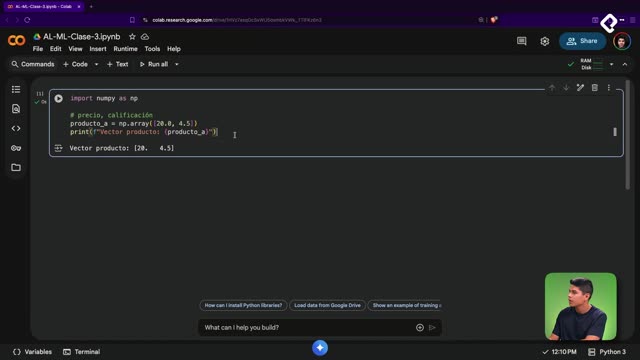
What is a vector in machine learning? It's a list of numbers that represents a concept, like a word, image, or song, as a direction and magnitude in space. Models compare vectors to measure similarity between ideas.
Why is matrix multiplication the engine of deep learning?
If vectors are the vocabulary, matrix multiplication is the grammar. It's the operation that transforms entire datasets at once and powers every layer of a neural network in deep learning. Instead of processing one data point at a time, a matrix lets you move thousands of vectors through the same transformation in a single step.
That efficiency is why modern AI scales the way it does. Each layer of a neural network is, at its core, a matrix multiplication followed by a small adjustment, repeated again and again until the model learns a useful pattern.
Why do neural networks use matrices? Because matrix multiplication applies the same transformation to many vectors simultaneously, which is faster and mathematically cleaner than looping through each data point.
What will you build with NumPy and linear algebra?
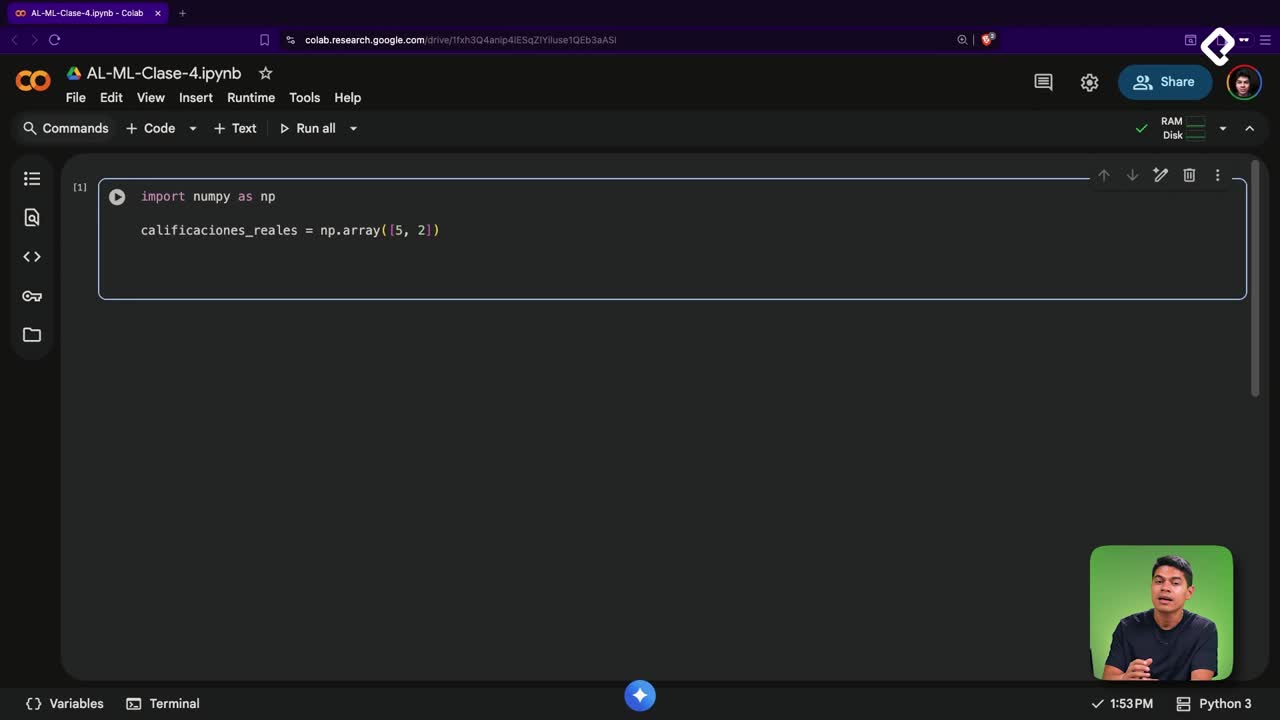
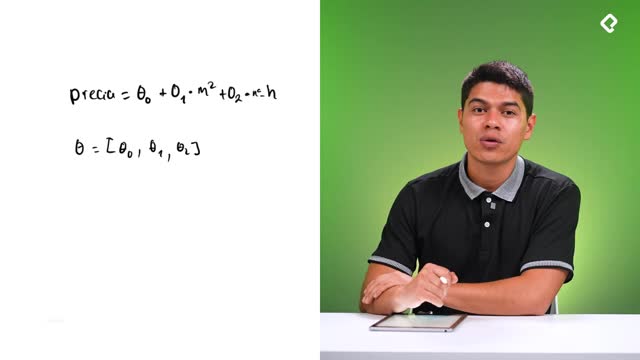
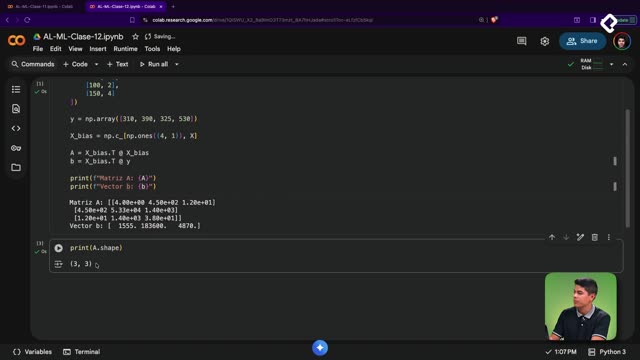
The final project takes theory into practice. You'll build a model from scratch using only NumPy and pure linear algebra, capable of predicting housing prices. No high-level frameworks hiding the math, just vectors, matrices, and the operations that connect them.
The interesting part comes when things break. Real data doesn't always behave, and sometimes a matrix can't be inverted, which stops a naive model in its tracks. You'll learn how to handle that case with the pseudo-inverse, a tool that finds the best possible solution when the standard path fails. That's how professionals keep models running on messy, real-world data.
What you'll take away from the course
- Mastery of matrix multiplication as the core operation behind every neural network layer.
- A working housing price predictor built from zero with NumPy.
- A practical fix for broken matrices using the pseudo-inverse.
- The ability to look at a recommendation system and recognize the vector and matrix operations underneath.
Who should take this linear algebra course?
To get the most out of these lessons, you should already have taken the Fundamentos de Álgebra Lineal course on Platzi. Many concepts from that foundation, like vector spaces, matrix operations, and basic transformations, show up directly here and won't be re-explained from scratch.
Your instructor is Daniel Erazo, a software engineer specialized in AI. By the end, when you see a recommendation system in action, you'll read it for what it really is: a coordinated set of operations on vectors and matrices. Drop a comment with the AI tool you most want to understand from the inside, and let's start building the language of machine learning together.