That moment when you know exactly what you want to say but your mouth refuses to cooperate is more common than you think — and surprisingly, it's the most useful piece of information about your English level. Understanding where you freeze when speaking is the first step toward building real fluency, and this diagnostic approach treats those freezes not as failures but as a precise map for improvement.
¿Qué es el tripod de contexto y por qué importa al hablar?
Before responding to anything in English, three questions should flash through your mind [0:52]: Where am I? Who am I talking to? What do I need? These three elements work like a tripod — remove one leg and your answer wobbles.
Consider the difference:
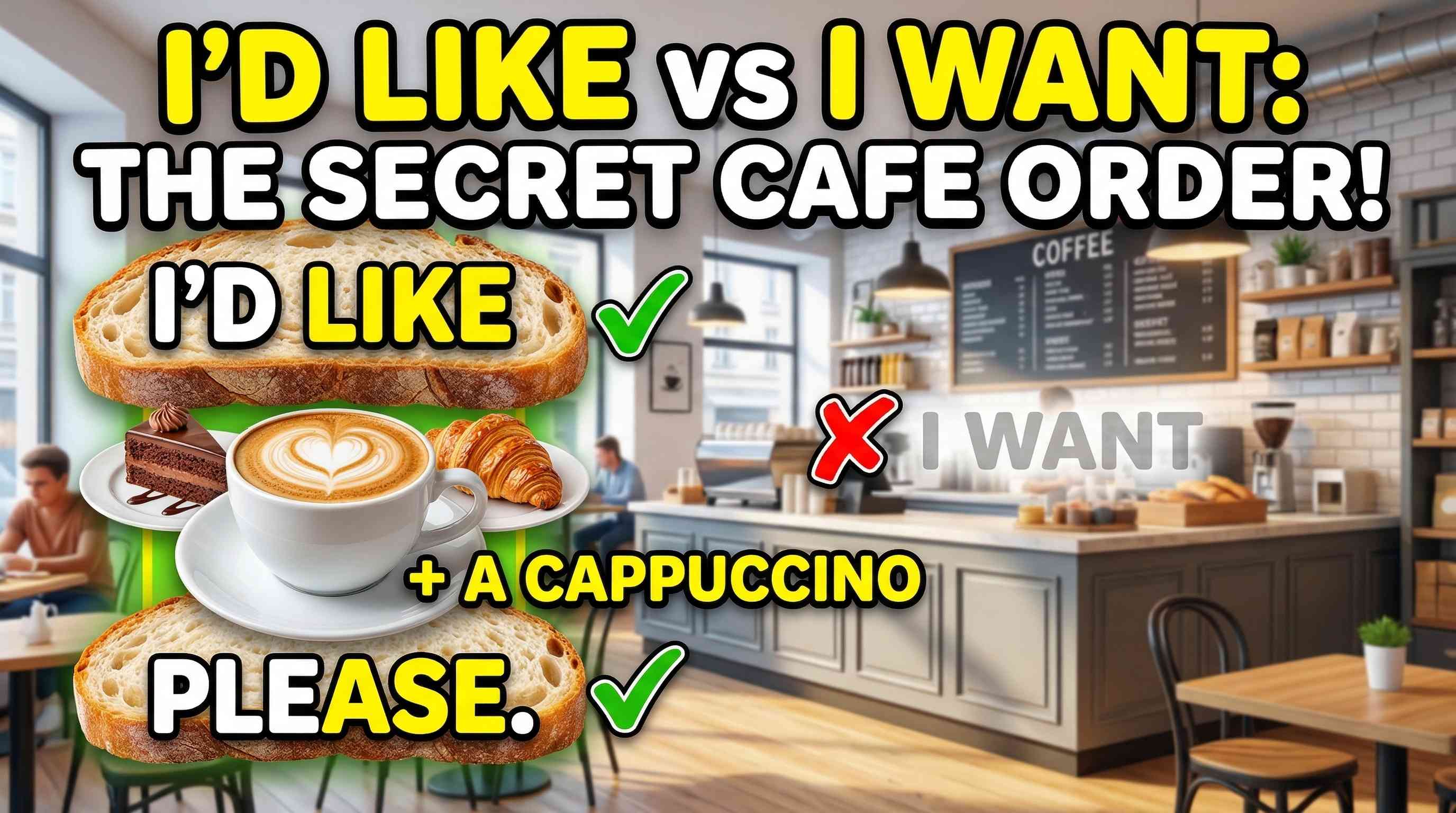
- At a cafe with a stranger: "I'd like a coffee, please."
- At home with a friend: "I want coffee."
Same caffeine, completely different words. The place and the person changed everything. Think of politeness like a volume knob [1:17] — turn it up for strangers and bosses, turn it down for friends.
Your need also shifts meaning dramatically. "I like sandwiches" tells someone about your taste. "I'd like a sandwich" tells them you want to order one right now [1:30]. Tiny difference in words, huge difference in meaning.
¿Por qué las short answers con do y does causan tantos problemas?
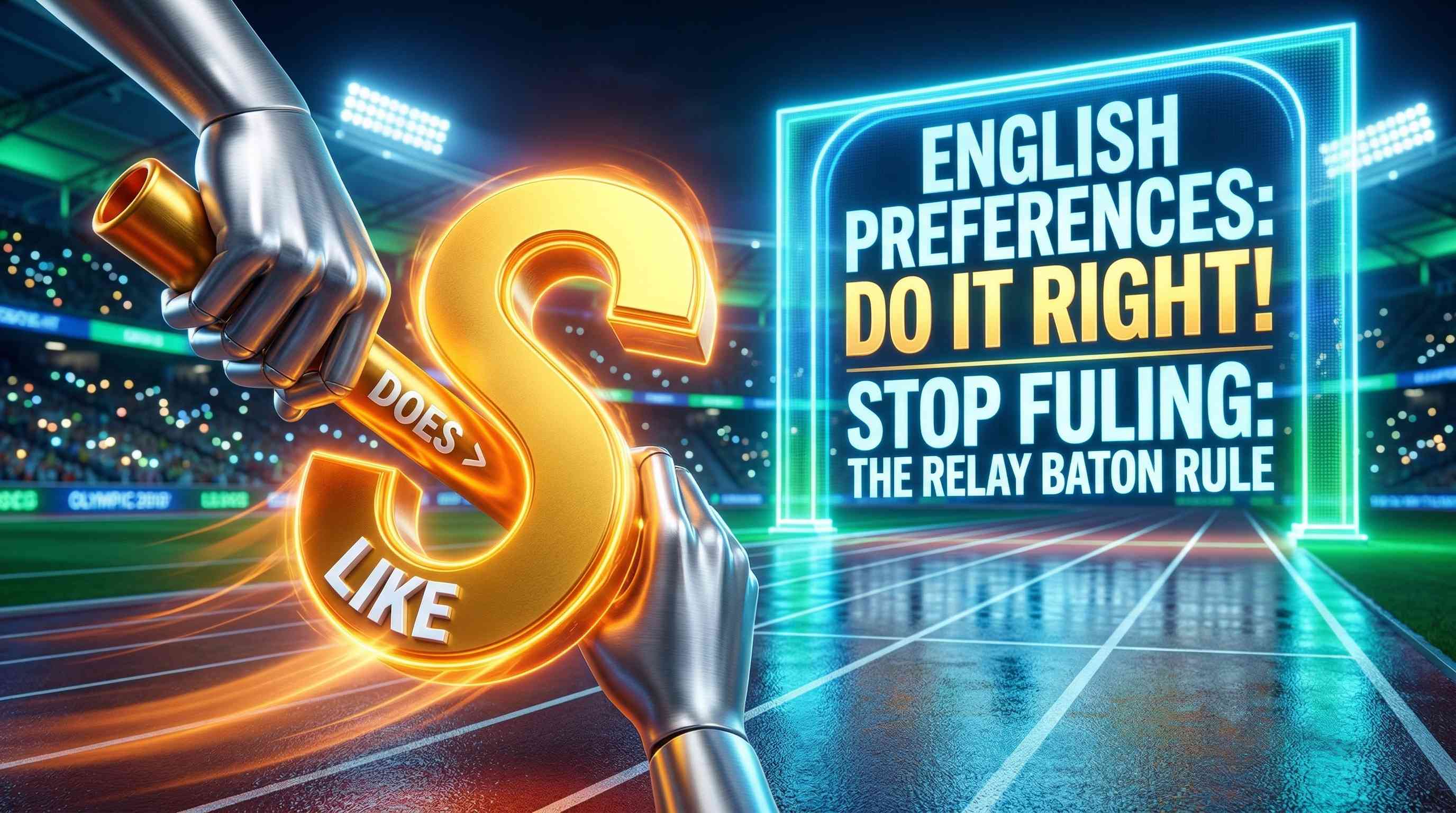
This is the skill that trips up the most people [1:42]. When someone asks a yes-or-no question, English demands you echo back the auxiliary verb. "Do you like coffee?" gets "Yes, I do," — not just "Yes." A bare "yes" works fine in Spanish, but in English it sounds like you hung up the phone mid-sentence.
The split is simple [2:05]:
- Do goes with: I, you, we, they.
- Does goes with: he, she, it.
If someone asks "Does Maria work here?" you answer "Yes, she does," swapping the name for a pronoun automatically. And here's the critical part: never stuff the main verb back in [2:22]. "Yes, I do" is complete. "Yes, I do like" is overpacked luggage.
¿Cómo evitar la trampa entre be y do en respuestas cortas?
There's a trap the diagnostic specifically catches [2:35]. Questions with be (is/are) need be answers. Questions with do/does need do/does answers.
- Server asks: "Are you ready to order?" → "Yes, I am." (not "Yes, I do").
- Server asks: "Do you want milk?" → "No, I don't."
The rule is almost embarrassingly simple [3:05]: echo the first verb in the question. Are gets am. Do gets do. Does gets does. But under pressure with a real person staring at you, this is exactly where brains short-circuit.
¿Cómo elegir entre present simple y present continuous sin adivinar?
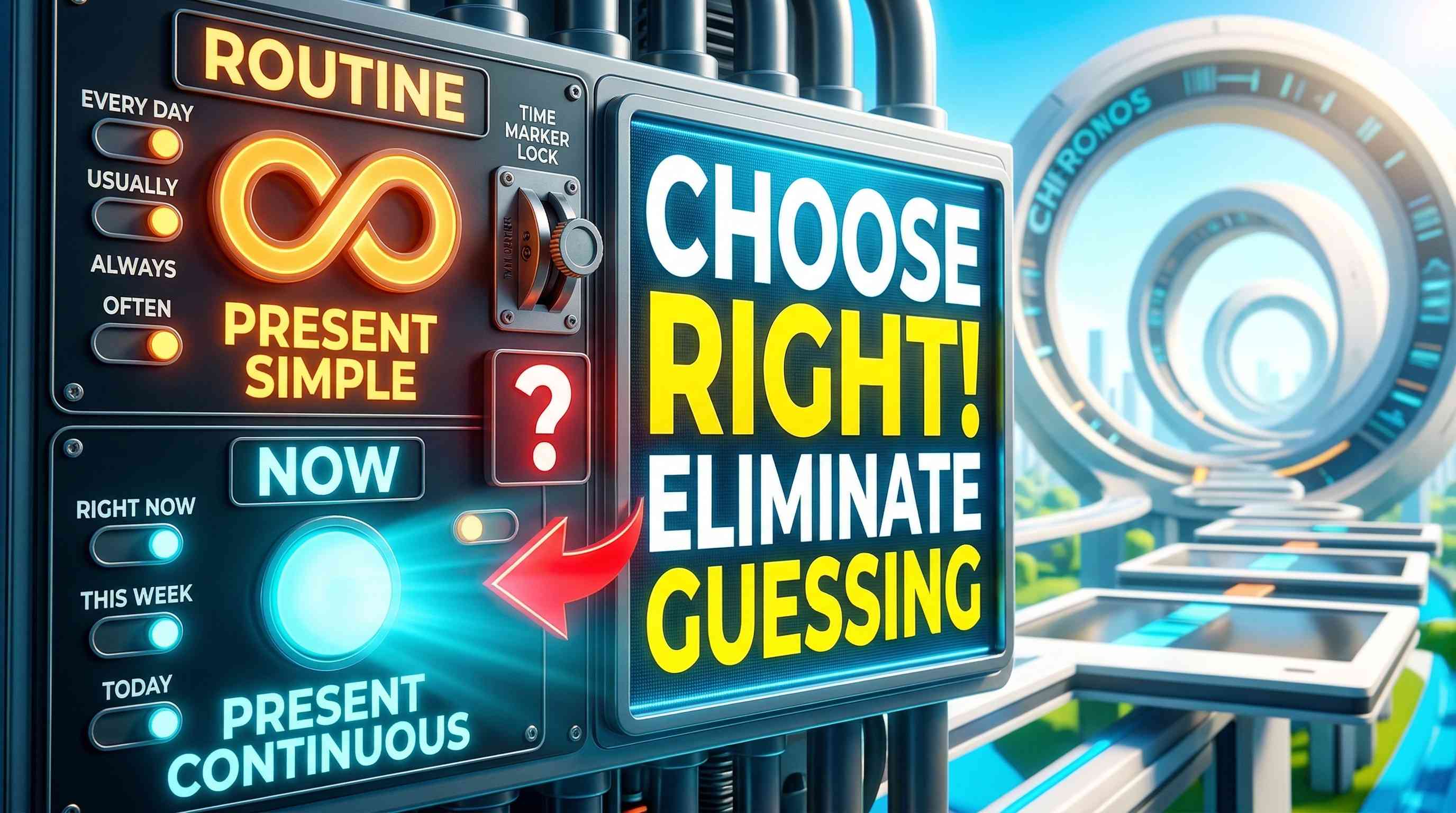
Here's your decision tool [3:22]:
- Can you add every day to the sentence? Use present simple.
- Can you add right now? Use present continuous.
"I drink coffee every morning" — that's a routine, a circle that repeats. "She is drinking coffee right now" — that's a dot, this exact moment [3:38].
¿Qué son los state verbs y por qué no aceptan la forma continua?
Some verbs are stubborn [3:58]. Words like like, know, and want describe states, not actions, and they refuse to wear the -ing form. You say "I like this song," never "I am liking this song."
¿Cómo funcionan los object pronouns y las preferencias?
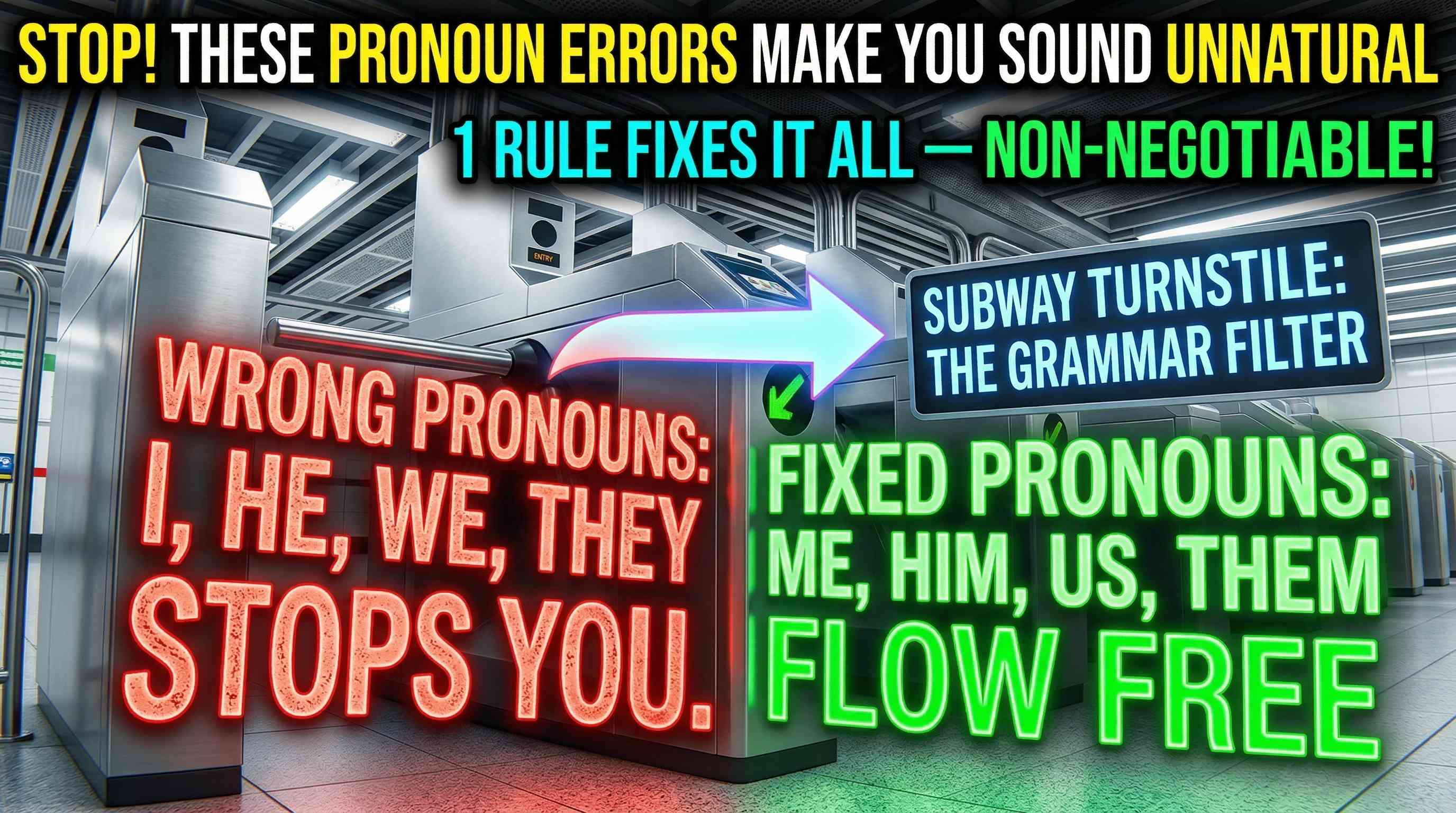
The words me, him, her, us, them appear after verbs and prepositions [4:12]. Think of a seesaw: the doer uses subject forms (I, she, they), the receiver uses object forms (me, her, them).
- "She helps me," not "She helps I."
- "This is for her," never "for she."
- "Come with me," never "with I."
For expressing preferences, use present simple because they're state verbs: "I like swimming. She loves reading." If you want emphasis, very much goes after the object [4:48]: "I like basketball very much."
After completing the diagnostic, your errors get sorted into three buckets [5:02]: routine errors (grabbing the wrong system entirely), structural errors (right system, wrong construction), and conversational errors (your first language sneaking in). But the real secret weapon is your self-check — only you know where you paused, where you translated in your head first. Write those moments down with precision: not "grammar was hard," but "I almost said 'Yes, Maria does' instead of 'Yes, she does.'" [5:30]. That precision turns vague anxiety into a target you can actually hit.