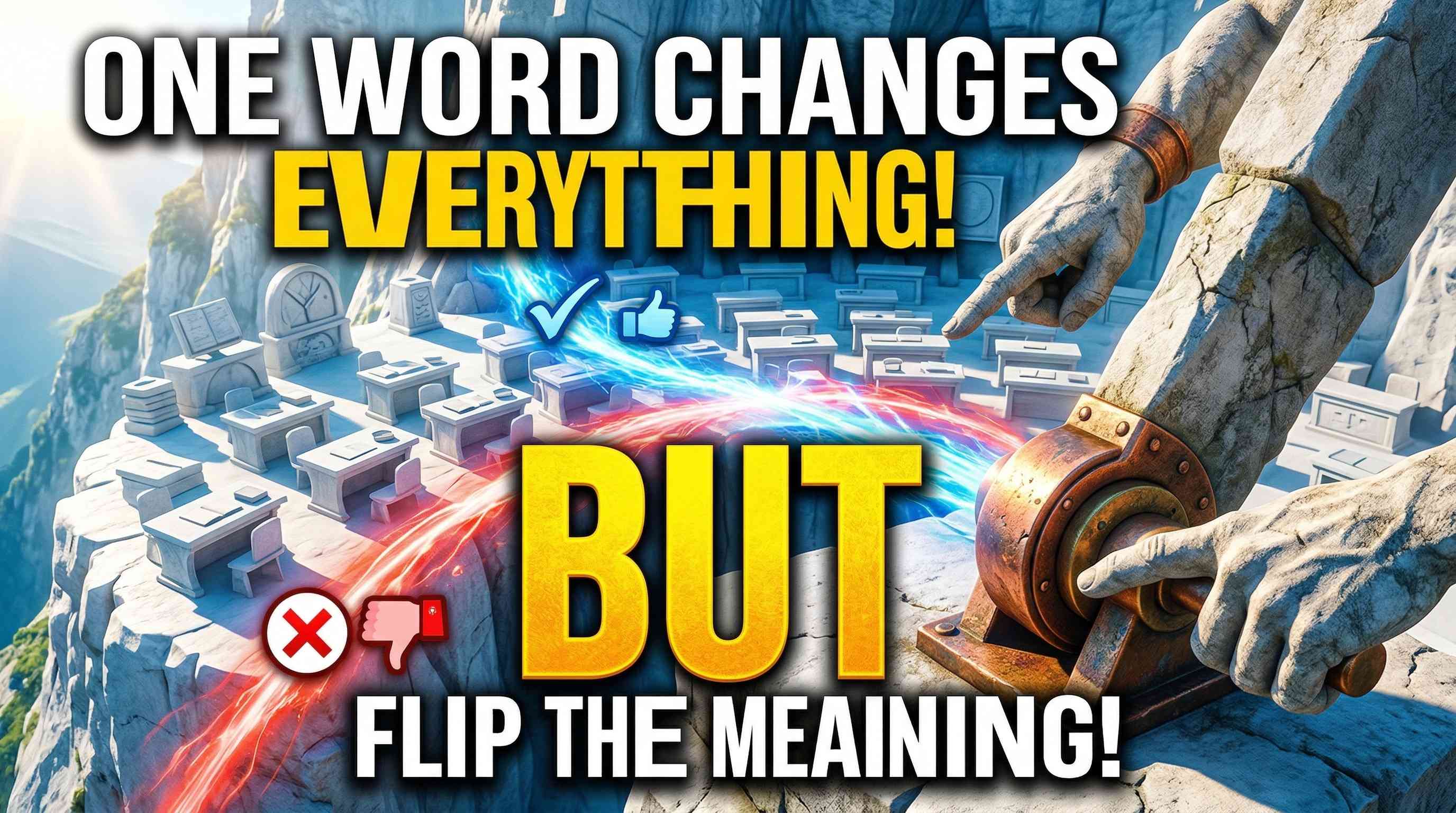
Connecting two opposing ideas in a single sentence is one of the most practical skills you can build in English. The word "but" acts as a turning point — it signals your listener that the direction of your thought is about to change. Mastering its placement, punctuation, and rhythm will make your spoken and written English sound more natural and persuasive.
What does "but" actually do in a sentence?
Think of "but" as a corner [0:54]. You're walking north — everything sounds positive — and then you turn south. That tiny word tells your listener: "Hey, I'm about to change direction." The structure is straightforward: Idea A, comma, but, Idea B. The two ideas need to contrast — that's the whole deal.
For example: "The hotel was cheap, but the rooms were dirty" [1:12]. The first part sounds great, then "but" arrives and the listener's brain shifts gears: something negative is coming.
Why does the order of ideas matter?
Here's the subtle part nobody tells you: what comes after "but" carries more weight [1:27]. It's the last thing the listener hears, so it sticks.
- "The food was delicious, but the service was slow" — you leave them thinking about slow service. That's a warning [1:37].
- "The service was slow, but the food was delicious" — now it's a recommendation [1:46].
Same facts, different emphasis. You control the message just by choosing the order.
When do you use a comma before "but"?
Use a comma before "but" when you're joining two complete sentences — meaning each side has its own subject and its own verb [2:01]. Cover everything after "but": does it stand alone? Cover everything before: does it stand alone too? If both are complete, comma required.
- "I like coffee, but I don't like tea." — Both sides are full sentences. Comma needed [2:10].
- "It's cheap but good." — What comes after "but"? Just "good." No subject, no verb, so no comma [2:30].
Think of it like building blocks. Two complete blocks need a comma between them. One block painted two colors? No comma needed [2:41].
When speaking, that comma becomes a pause — about half a second, right before "but" [2:51]. This signals the contrast to your listener. Without it, the turn gets buried in a rush of words.
How do you keep both sides of a "but" sentence balanced?
Think of a "but" sentence as a seesaw [3:06]. If one side is way heavier, the whole thing tips over.
- Unbalanced: "He can cook really well and makes dinner for his family almost every night, but he can't bake." — By the time you reach the turn, you've forgotten what the sentence was about [3:13].
- Balanced: "He can cook, but he can't bake." — Clean. Sharp. The contrast hits immediately [3:25].
Try to match the grammar on both sides. "She's very smart, but she's also very shy" — both sides follow the pattern: she's + adjective [3:34]. A quick test: read your sentence out loud. If you need a much longer breath on one side, that side needs trimming [3:54].
What is the difference between "but" and "and"?
"But" highlights a surprise or opposition [4:36]. Both ideas seem like they should match, yet they don't. "I like coffee, but I don't like tea" — both are drinks, you'd expect the same feeling, but nope.
"I like coffee and I don't like tea" just lists two facts, flat as a grocery receipt. If the ideas truly oppose each other, use "but." If they sit together without any tension, use "and."
A quick mental test: can you replace "but" with "however" and it still makes sense? Then "but" is correct [5:07].
What are the five common traps to avoid with "but"?
- Don't forget the comma when both sides are complete sentences [6:12].
- Never combine "although" with "but" in the same sentence — pick one. "Although it was raining, but we went out" is wrong. Choose either "Although it was raining, we went out" or "It was raining, but we went out" [6:17].
- State verbs like "like," "want," and "know" stay in present simple — no "I'm not liking" [6:33].
- Check subject-verb agreement on each side separately. "She like dogs, but she don't like cats" has two errors. Correct: "She likes dogs, but she doesn't like cats" [6:43].
- Make sure the ideas actually contrast. "I like apples, but I like oranges" — where's the opposition? That's an "and" sentence, not a "but" sentence [6:59].
Now grab this tool and put it to work: say two "but" sentences about your real day. "I liked the lunch, but I didn't like the coffee." Your brain remembers what's true far better than anything from a textbook [8:00]. Try it and share your best sentence in the comments!