Contenido del curso




Propósito y pasión


Creatividad práctica para el día a día

Relaciones que suman


Estrategias para la calma interior


How to Live in Line With Your Values
Resumen
Aligning your values with your daily life starts with one honest question: are you actually living in coherence with what you feel? Identifying your core values is the first step to making decisions that bring real wellbeing, and it matters for anyone who feels stuck between what they do and what they believe.
What are personal values and why do they shape your life?
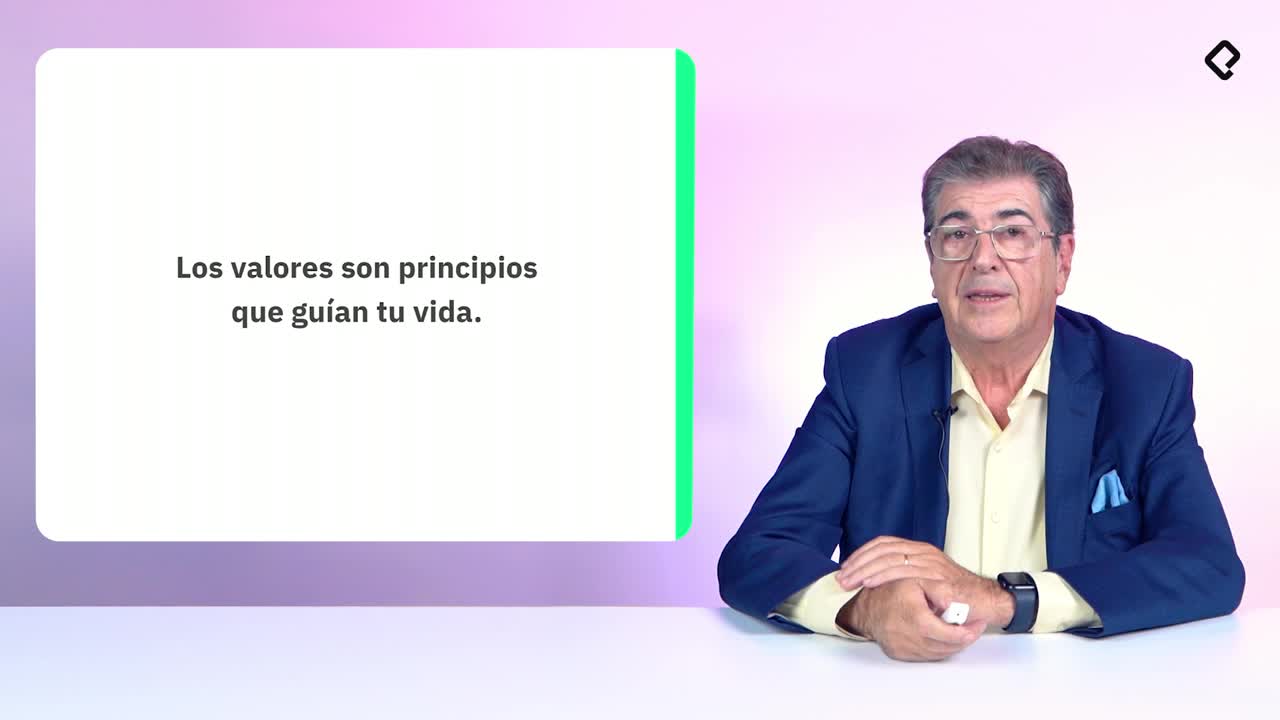
Values are the principles that guide your life. They show up in how you treat your family, how you behave with friends, how you perform at work, and how you move through the world every single day. That's why recognizing them is not a one-time exercise but a lifelong practice of self-honesty.
The interesting part is that you don't invent your values out of thin air. You discover them by paying attention to your own reactions and choices.
What is a personal value? It's a guiding principle you choose that shapes how you act with your family, friends, and work, every moment of your life.
How can you identify your most important values?
There's no test that hands you the answer. You uncover your values by asking yourself the right questions and listening closely to what comes up.
Try reflecting on these prompts:
- Which people do you admire and why.
- Which causes make you feel passionate.
- What situations make you feel good.
- What situations make you feel bad.
- What message would you leave to the world.
Each answer is a clue. Together, they point to the values you already carry, even if you've never named them out loud.
Why honesty with yourself is non negotiable
Recognizing your values means being honest with yourself, no filters. If you skip that honesty, you end up chasing principles that look good on paper but don't actually move you. And here's where it gets interesting: when you finally name them, you can start aligning your daily decisions with them, and that alignment is what produces real wellbeing.
What happens when you live with values that harm you?
Not every value serves you. Some values guide you toward a better life, and others quietly damage it. Living with negative values has serious consequences, so part of the work is sorting which ones help and which ones hurt.
The task is twofold: keep the values that support you and replace the ones that are causing damage. That swap doesn't happen by accident; it happens because you decided to look.
Can your values change over time? Yes. Values evolve through your life, and sometimes two of them clash, so you have to choose the one that makes you feel better.
What to do when your values don't match
Sometimes one part of you pulls in one direction and another part pulls the opposite way. You don't know what to do because your values aren't lining up. In those moments, the question is simple but powerful: which of these values makes me feel better when I act on it? That answer becomes your compass.
How do you put your values into practice today?
Start small and make it concrete. Stand in front of the mirror and ask yourself: what are my three most important values as I move through this life? Write them down. Share them. Test them against your real choices this week.
When your actions, your words, and your values point in the same direction, you stop feeling that internal friction. You begin to live in coherence, and that's where wellbeing actually lives.
Drop your three most important values in the comments and tell us why those made the cut.