Contenido del curso


Propósito y pasión

Creatividad práctica para el día a día
Relaciones que suman

Estrategias para la calma interior


Mindfulness as a Daily Focus Exercise
Resumen
Mindfulness is the practice of stepping out of autopilot to focus fully on what you're doing right now. It matters because most of us live distracted, missing the flavor of our food, the colors of a walk, or the calm of a quiet moment. If you want less stress and more presence, this practice is for you.
What does mindfulness really mean in everyday life?
Mindfulness is not a vague spiritual concept. It's an active exercise: you consciously pull your attention out of the mental noise and place it on the experience happening in front of you.
Think about walking through a park. Instead of replaying your to-do list, you notice the trees, the smell of the flowers, the greens, the way your feet move. That shift, from scattered thinking to focused attention, is the entire point.
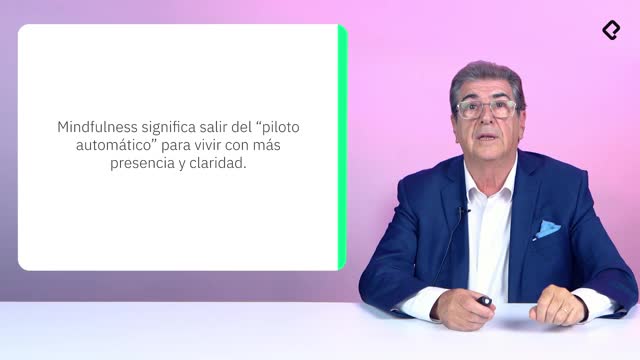
What is mindfulness in simple words? It's the practice of focusing your full attention on what you're doing in the present moment, using all your senses, instead of letting your mind run on autopilot.
Living on autopilot doesn't just mean going through the motions. It means doing one thing while thinking about ten others, which kills the enjoyment of whatever you're actually living.
Why do we lose presence so easily?
We perform most of our actions in stereo. You eat while watching TV. You shower while planning tomorrow. You work while replaying a conversation from yesterday. The result is that you rarely taste, see, or feel what's right in front of you.
Ask yourself a simple question while eating: do you actually notice the flavor, the color, the smell, the texture? In most cases, the honest answer is no. Mindfulness is, in a way, a method to control your thoughts and bring them back to one place.
How can you start practicing mindfulness this week?
The first step is choosing one activity where you'll deliberately apply mindfulness. Just one. Then commit to bringing all your senses into that activity so nothing else crosses your mind while you do it.
Some practical entry points:
- Eating a meal without screens, paying attention to flavor, smell, and color.
- Walking outside and noticing the environment around you.
- Showering and feeling the water, the temperature, the sounds.
- Waiting in line or in a lobby without reaching for your phone.
That last one is powerful. Waiting moments are gold for mindfulness. Forget the phone, forget the messages, and simply look at what's in front of you while you breathe and relax.
How long should I practice mindfulness each day? There's no fixed minimum. Start by applying it to one daily activity this week, like eating or walking, and expand from there based on how it feels.
What benefits can you expect from a consistent practice?
People who practice mindfulness consistently report two clear outcomes: a noticeable sense of happiness and a significant reduction in stress. You also reclaim something subtle but valuable, the ability to live each moment as it actually happens, instead of half experiencing it.
And here's the key reminder: peace is not somewhere else. Peace is inside you. No new location, app, or escape will hand it to you. The shift happens when you decide to be present.
Why does mindfulness need to be treated as an exercise?
Because it's easy to nod along, think what a great idea, and then never actually do it. Mindfulness is a skill, and like any skill, it requires repetition and a deliberate reminder to practice.
You might finish reading this and feel inspired. That's not enough. The invitation is to put it into practice, test it in your real life, and then decide whether it serves you. The judgment comes after the experience, not before.
Apply it across the situations you already navigate every day. The more you train your attention, the more your life starts to feel calmer, fuller, and genuinely lived.
If you've tried mindfulness before or you're starting this week, share which activity you picked to practice with full attention.