Expanding your vocabulary with descriptive words is one of the most effective ways to communicate clearly and confidently in English. Knowing the right adjective for each situation helps you express opinions about people, places, things, and even your professional life with precision and variety.
What are descriptive words and why do they matter?
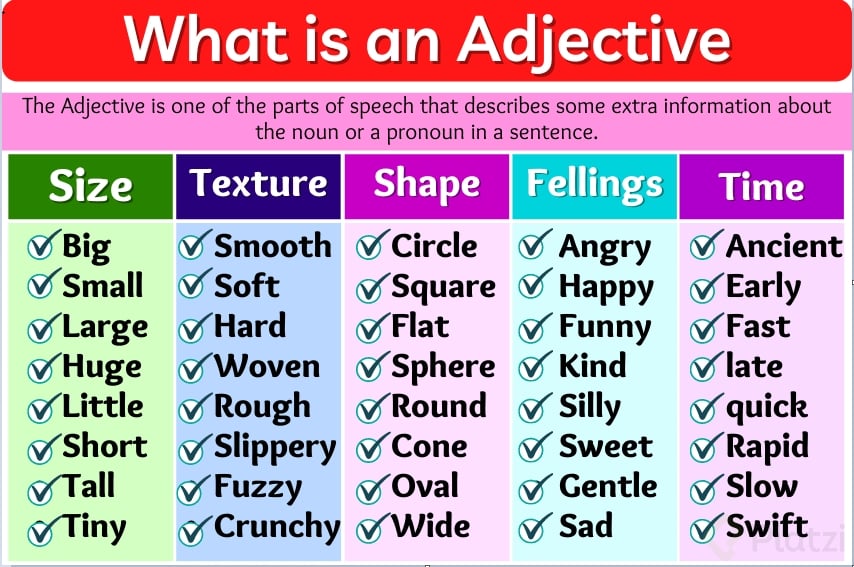
Descriptive words, also known as adjectives, are terms that give us more information about nouns [0:28]. A noun, as a quick reminder, is a person, a place, or a thing. Adjectives modify those nouns to add detail, emotion, or opinion. Mastering a solid set of adjectives allows you to go beyond basic sentences and sound more natural in everyday conversations.
How can you describe people in English?
When talking about someone's physical aspect, you can use words like:
- Handsome: typically used for men with an attractive appearance.
- Gorgeous: a strong word meaning extremely beautiful or attractive.
When referring to personality, useful adjectives include:
- Wise: someone who shows good judgment and deep understanding.
- Committed: a person who is dedicated and reliable [1:00].
Which adjectives work best for places and things?
For places, consider these options [1:12]:
- Cozy: a place where you feel comfortable and warm.
- Huge: an alternative to saying "very big."
- Dangerous or safe: opposite words that describe the level of risk in a location.
For things, you can use:
- Heavy: something that weighs a lot.
- Easy: not difficult to do or understand.
- Expensive or cheap: words that describe cost, from high to low.
How do you describe your job using the right adjectives?
Professional life comes with its own set of descriptive vocabulary [1:36]:
- Challenging: something difficult but in a positive way, implying growth and opportunity.
- Rewarding: when the work brings satisfaction because the contribution feels meaningful.
- Demanding: an adjective for tasks or roles that require a lot of effort and energy.
- Well-paid: used to describe a good salary or income within a company.
These four adjectives cover a wide range of job experiences, from motivation to compensation.
What makes "nice," "fun," and "funny" so tricky?
The adjective nice is extremely common, but its meaning shifts depending on the context [2:10]. When you say "George is a very nice man," you are focusing on his personality, making nice a synonym of kind. However, when applied to places, things, or jobs, nice works more like a synonym of good or great, often referring to the physical aspect or general quality of something.
Are "fun" and "funny" really synonyms?
Many learners confuse these two adjectives, but they are quite different [2:48]:
- Fun describes something enjoyable, an activity where you have a good time.
- Funny describes something that makes you laugh.
A practical example clarifies this distinction perfectly: "This activity is very fun" means you enjoy doing it. But the activity is not funny because it does not make you laugh. On the other hand, a joke or a comedy movie can be funny because they are designed to produce laughter [3:10].
Understanding this difference helps you choose the precise word and avoid a very common mistake among English learners.
Now it is your turn to practice. Try describing yourself, your city, and your job using the adjectives covered here. Mix familiar words with new ones and share your sentences in the comments section — reading other people's descriptions is a great way to pick up even more vocabulary.