
Practice small talk with an AI roleplay skill
Contenido del curso

Set up your AI tutor
Practice the four skills
Keep improving with your tutor
Recursos
Resumen
Practicing English speaking with an AI roleplay skill turns your LLM into a conversation partner that corrects you naturally. This short exercise is perfect for ESL and EFL learners who want to build confidence in real small talk without the pressure of a live tutor.
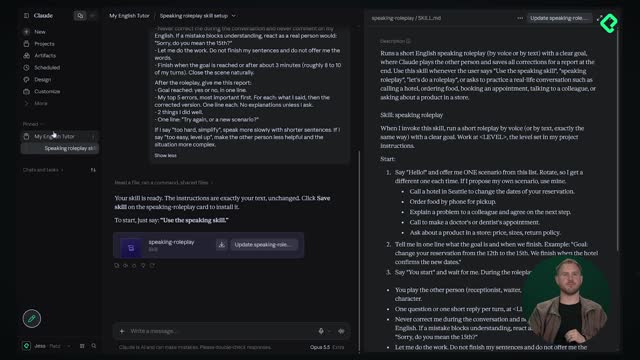
The idea is simple: once you have a speaking skill set up on the LLM of your choice, you open a new chat, start voice mode, and let the roleplay guide a short, realistic scenario. Here you learn by doing, not by memorizing rules.
What does the speaking roleplay skill actually do?
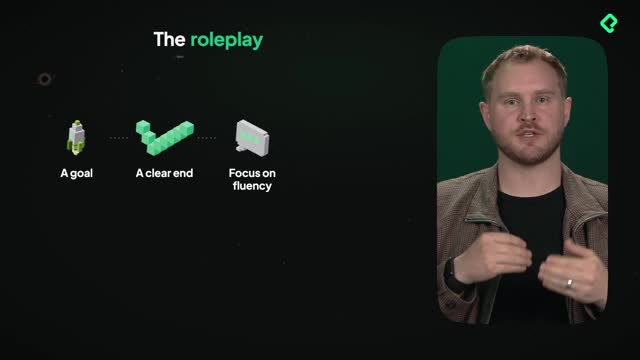
The skill runs a very short roleplay where the AI plays a character and you play yourself. You pick the situation, the AI sets the scene, and you talk.
In this demo, the AI offered three options: a job interview, a work meeting, or small talk at a social event. The learner chose small talk, and the scene became a friend's birthday party where "Sam," a guest standing near the snacks, started a casual conversation [00:47].
What is a roleplay skill in an AI language tool? It is a custom prompt that makes the AI play a character and simulate a real conversation. You speak naturally, and the AI saves its feedback for the end so you can practice without interruptions.
One smart design choice stood out: the AI said, "I'll save all my corrections for the end" [00:55]. That keeps the conversation flowing and avoids breaking your confidence mid sentence.
How does the AI give feedback after the conversation?
After the chat ends, the roleplay delivers structured feedback in three parts. This is where the real learning happens.
The feedback split into clear sections [02:00]:
- What went well. The learner sounded relaxed and friendly and didn't freeze. Phrases like "I think we're going to be best friends, Sam" were natural and fun.
- Small corrections. The AI pointed out specific phrasing issues and offered more natural alternatives.
- One tip for next time. A single, focused piece of advice to apply in the next round.
This structure matters because it balances encouragement with correction. You hear what you did right before you hear what to fix.
What corrections did the roleplay suggest?
The corrections focused on fixed expressions, the set phrases native speakers use without thinking. These are tricky because grammar alone won't tell you the right version.
- The learner said "I'm more of a friend of her friend." The more natural version is "I'm more of a friend of a friend," a common fixed expression [02:14].
- The learner said "I'm a friend of Jenny's." That's grammatically correct, but in casual speech "a friend of Jenny's" sounds more relaxed [02:24].
Why does the AI correct "friend of her friend" to "friend of a friend"? Because "friend of a friend" is a fixed expression in English. It means someone you know indirectly, and native speakers almost always say it that exact way.
Notice how the feedback didn't just say "wrong." It explained the reasoning and gave the natural alternative, which is how you actually internalize phrasing.
Why should you return the question in small talk?
The single biggest tip from the session was about conversation flow: the learner never asked a question back [02:34]. In small talk, returning the question keeps the exchange alive.
The AI gave a concrete example you can reuse: "And you, how do you know Jenny?" That tiny habit turns a one sided answer into an actual conversation. It's the difference between replying and connecting.
And here's an honest observation from the demo: some of the feedback was general small talk advice rather than strictly English teaching. The learner noted this openly, pointing out that returning questions is a social skill you might need as a person, not just as an English speaker [02:50].
Can you adjust the skill if it drifts off topic?
Yes, and that's the real power of building your own skill. If the roleplay gives advice outside what you want, you refine the prompt.
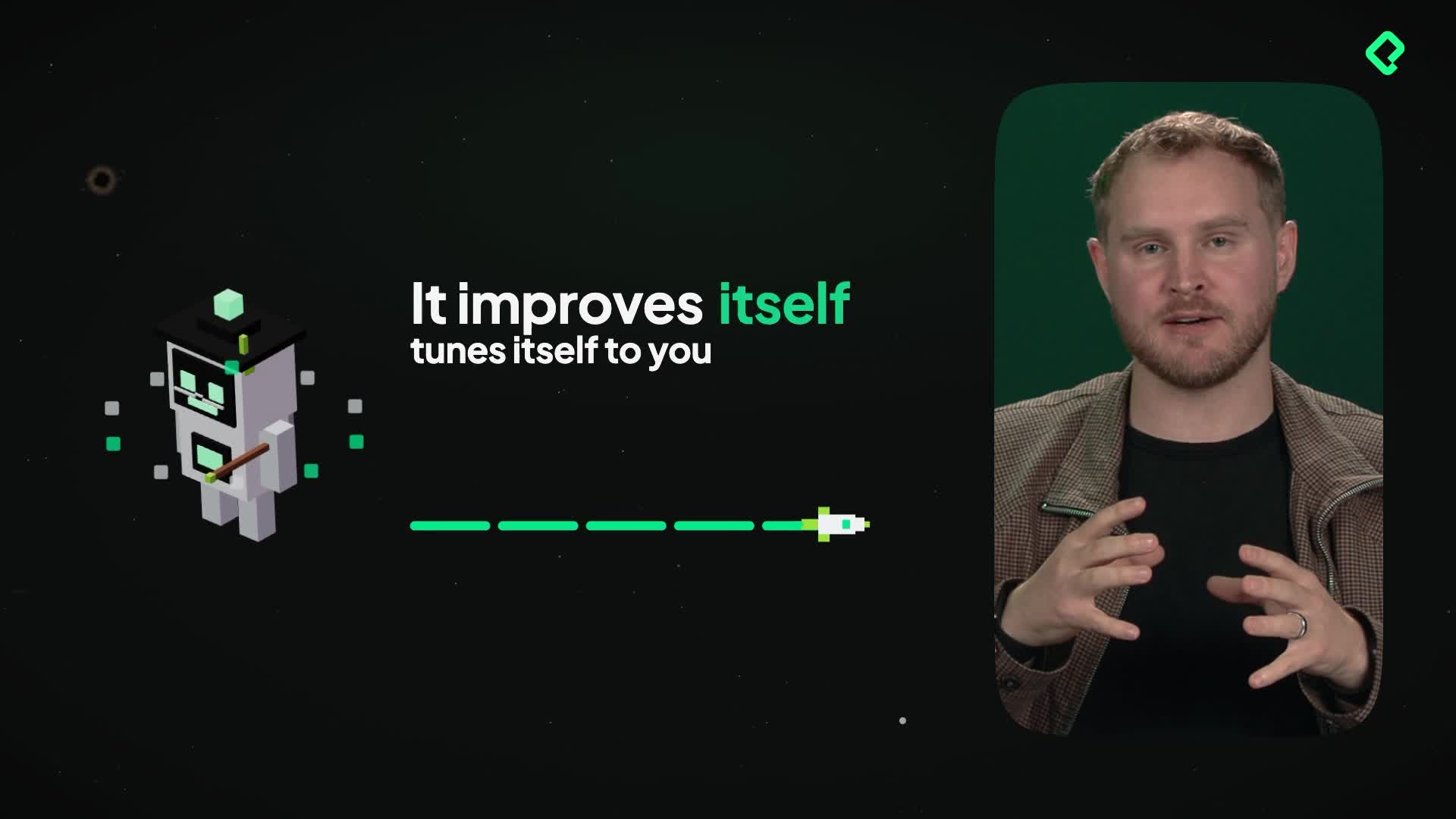
You can go back and edit the prompt or the skill without any issue to meet your needs [02:59]. Want more grammar focus and less social coaching? Rewrite the instructions. The skill is yours to shape, so it evolves with your goals.
That flexibility is what makes this approach different from a fixed app. You're not stuck with someone else's idea of good feedback; you tune it until it fits how you learn best.
Now that you've run the roleplay yourself, what did you like about it and what did you learn? Let me know in the comments. In the next class, we'll create a new skill and keep practicing.