OOP in Python: Modeling Real World Systems

Resumen

Object-oriented programming in Python turns scattered functions into organized systems that mirror real life. If you want to build software that scales like the apps used in banks, e-commerce, or social networks, this approach is the foundation you need to master.

What is object-oriented programming in Python?

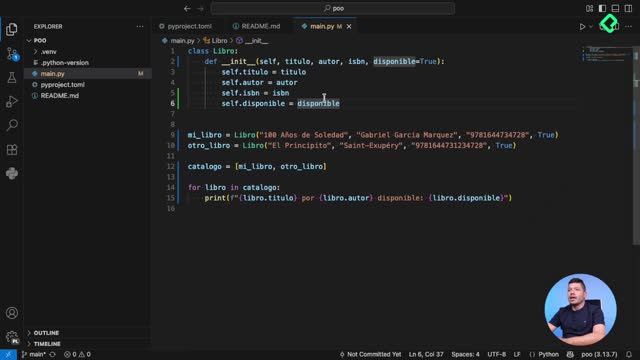
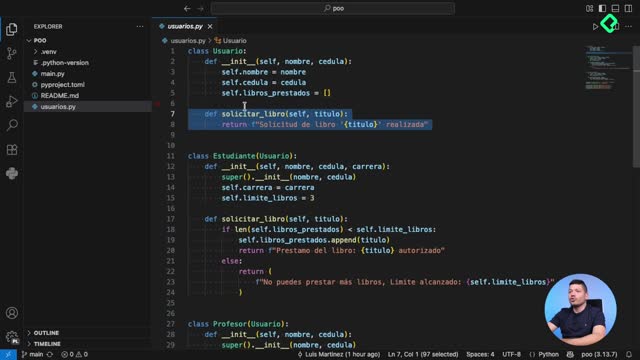
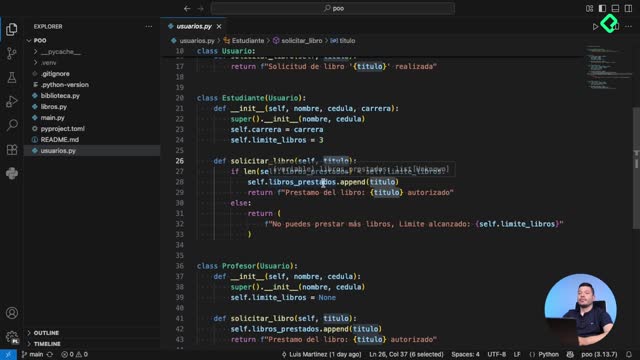
Object-oriented programming, or OOP, is a way of writing code where you model real-world entities as digital structures. In Python, you build these structures using classes, instances, attributes, and methods. Think of a library: a book is not just text on a page. It has a title, an author, and a status that tells you whether it is available or on loan. A user is not just a name either. They carry a borrowing limit, a major if they are a student, or a department if they are a professor.

With OOP, you take those traits and behaviors and translate them into code. Each entity becomes a self contained unit with its own data and its own actions. That is the leap from writing instructions to designing systems.

What is a class in Python? A class is a blueprint that defines the attributes and methods an object will have. From one class you can create many instances, each with its own values.

Why does OOP matter for building real software?

Writing code without structure works for small scripts, but it falls apart when projects grow. OOP solves that problem by giving you a clear pattern to organize logic, reuse components, and keep your codebase maintainable as it scales.

The four building blocks you will use again and again are:

  • Classes, which act as the template for your objects.
  • Instances, which are the concrete objects you create from a class.
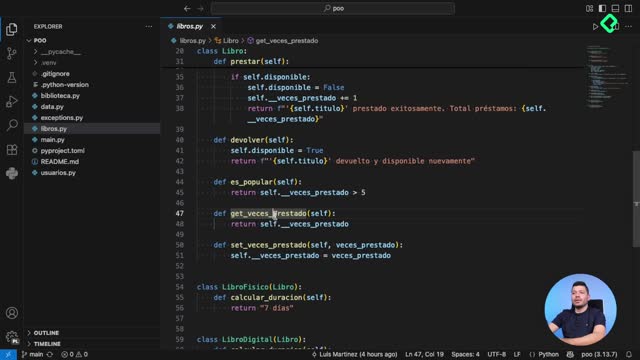
  • Attributes, which store the data each object holds.
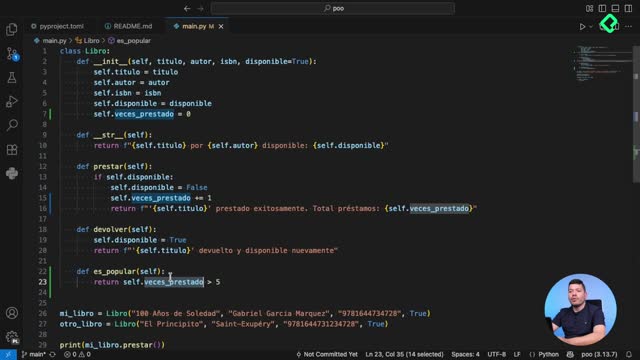
  • Methods, which define what each object can do.

This pattern is not academic theory. It is the same architecture behind banking platforms, online stores, social networks, and government systems. Once you understand it in Python, you can apply it almost anywhere.

Why use OOP instead of just functions? Functions alone create chaos in large projects. OOP groups related data and behavior together, making your code easier to read, test, and extend.

How does OOP apply to a real project like a library system?

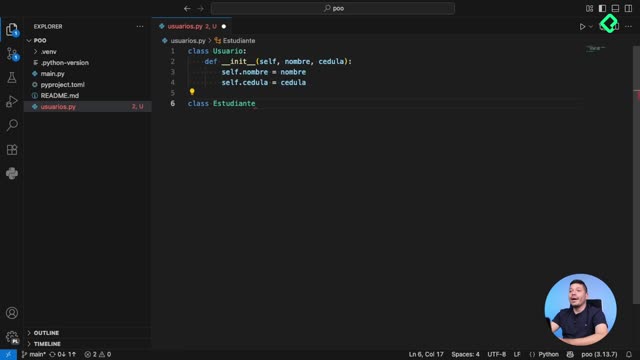
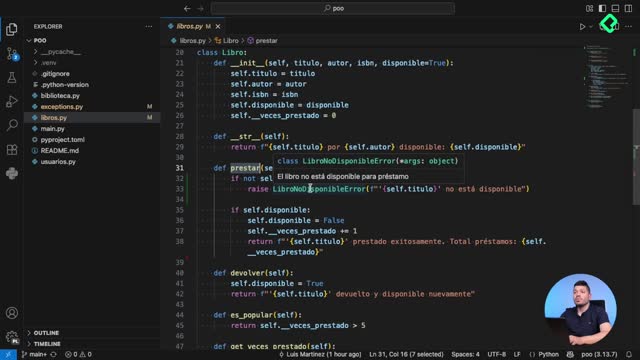
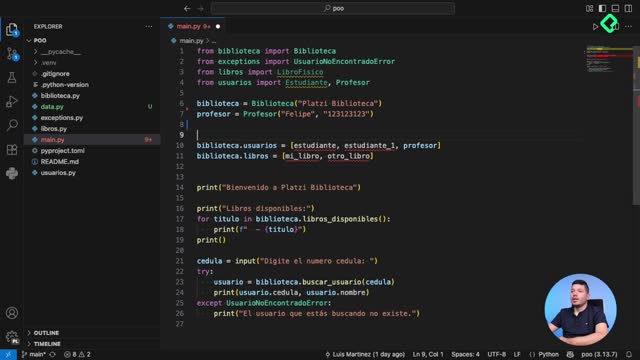
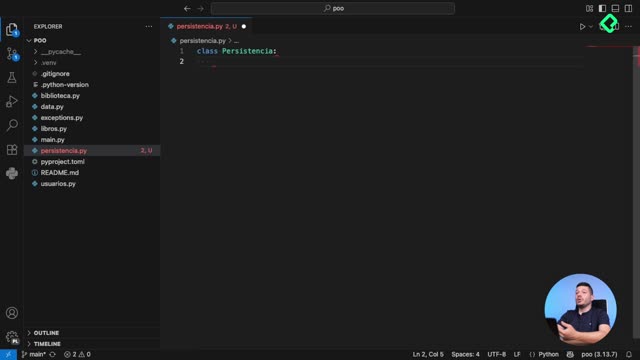
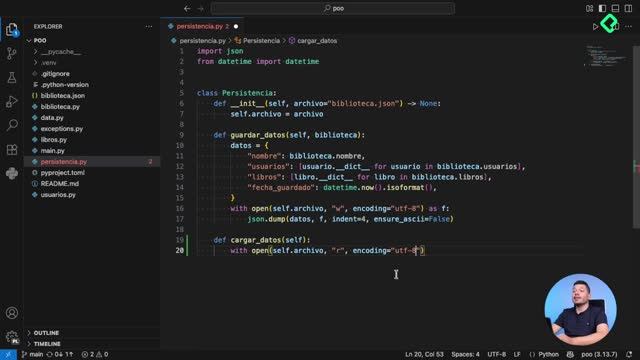
The project you will build is a loan management software for a library, and it follows the exact same logic used in professional applications across industries. A book becomes an object with its own attributes and behaviors. A user becomes another object, with rules that depend on whether they are a student or a professor.

When these objects interact, you get a working system: users borrow books, books update their availability, and the software keeps everything consistent. That is the difference between writing code and engineering a solution.

The goal here is not to memorize syntax. It is to learn how to design software that solves real problems in a way that is efficient, scalable, and maintainable. Once you internalize this mindset, you stop seeing programming as isolated lines and start seeing it as a way to build systems that reflect the world around you.

What entity from your daily life would you turn into a class first? Share your idea in the comments.

      OOP in Python: Modeling Real World Systems