Formación de Adjetivos Superlativos en Inglés
Contenido del curso

Superlativos en Inglés


Expresa cantidades en Inglés
- 6

Uso de "Some", "A Lot Of" y "Lots Of" en Inglés
03:49 min - 7

Uso de Artículos con Sustantivos Contables e Incontables
07:25 min - 8

Sustantivos Contables e Incontables en Contexto
03:00 min - 9

Uso de Cuantificadores con "Of" en Inglés
04:34 min - 10

Usos de Sustantivos Contables e Incontables en Inglés Básico
03:28 min - 11

Práctica de conversación en inglés (contexto cotidiano)
00:00 min
Comparativos en Inglés
- 12
Adjetivos Comparativos en Inglés: Reglas y Ejemplos Prácticos
01:04 min - 13

Comparatives with Long Adjectives in English
04:00 min - 14

Where to Place Adverbs of Frequency
04:43 min - 15

Formación de Adverbios que Terminan en "LY"
03:46 min - 16
Formación de Adverbios en Inglés con -ly
01:02 min - 17

Adjetivos y Adverbios en Inglés: Uso y Pronunciación
04:04 min - 18

Adjectives vs Adverbs: 10-Sentence Quiz
05:08 min
Expresiones útiles en Inglés
- 19

Uso de "Should" para Ofertas y Consejos en Inglés
03:16 min - 20

Uso de "of" para Expresar Posesión y Atribución en Inglés
02:46 min - 21

Uso de "with" y "without" para posesión y atribución
02:43 min - 22

Negación de Intenciones y Deseos en Inglés
03:37 min - 23

Diferencias entre "must" y "have to" en inglés
04:28 min - 24

Uso de "should", "must" y negaciones en inglés básico
03:43 min - 25
Práctica de conversación en inglés (contexto cotidiano)
00:00 min
Uso del gerundio en Inglés


Sigue practicando

Recursos
Resumen
Understanding how to express the highest or lowest degree of a quality is essential for communicating clearly in English. Superlatives allow you to compare one thing against all others in a group, and mastering their formation depends on a few simple rules tied to the number of syllables in an adjective.
What is a superlative and why does it matter?
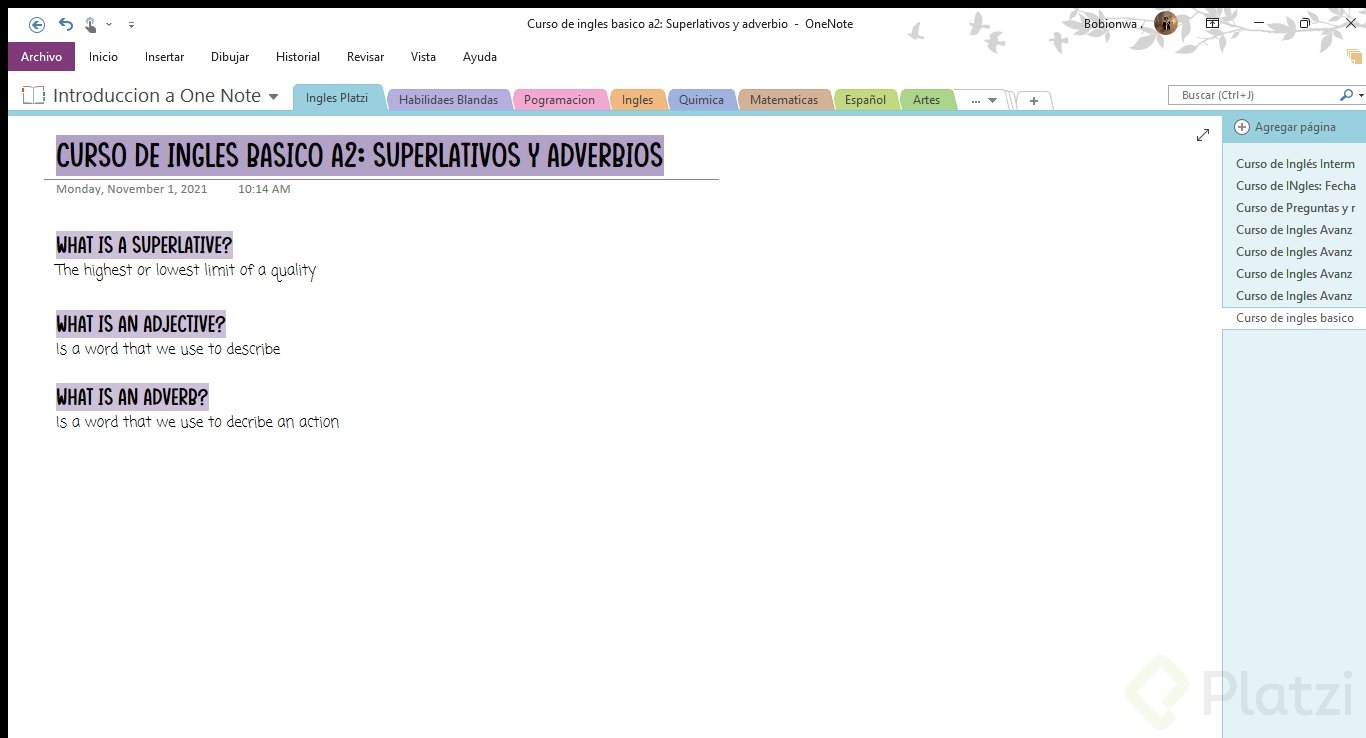
A superlative represents the highest or lowest limit of a quality [0:44]. You build superlatives using adjectives — words that describe a noun such as a person, place, or thing — and adverbs, which describe how an action is performed [0:56]. For instance, beautiful place uses an adjective, while I cook well uses an adverb. The goal is to modify these words so they express an extreme degree.
The basic structure is straightforward: the + superlative adjective + noun [2:16]. For example, the biggest animal or the nicest person. Before moving on, it helps to think of ten different adjectives on your own — tall, short, big, small — and try converting them into superlative form as you read.
How do you form superlatives based on syllable count?
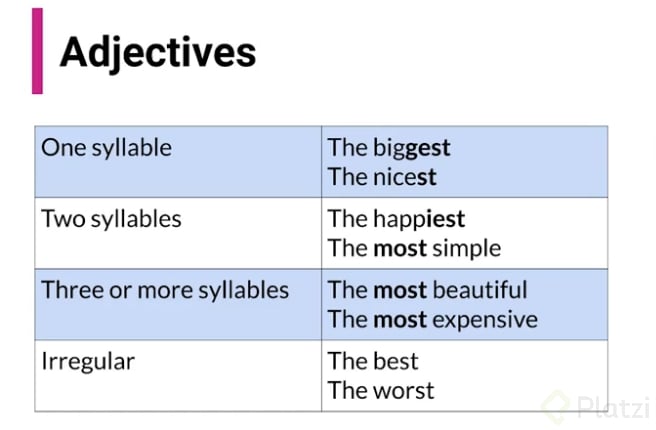
The number of syllables in an adjective determines the rule you follow [2:50].
One-syllable adjectives
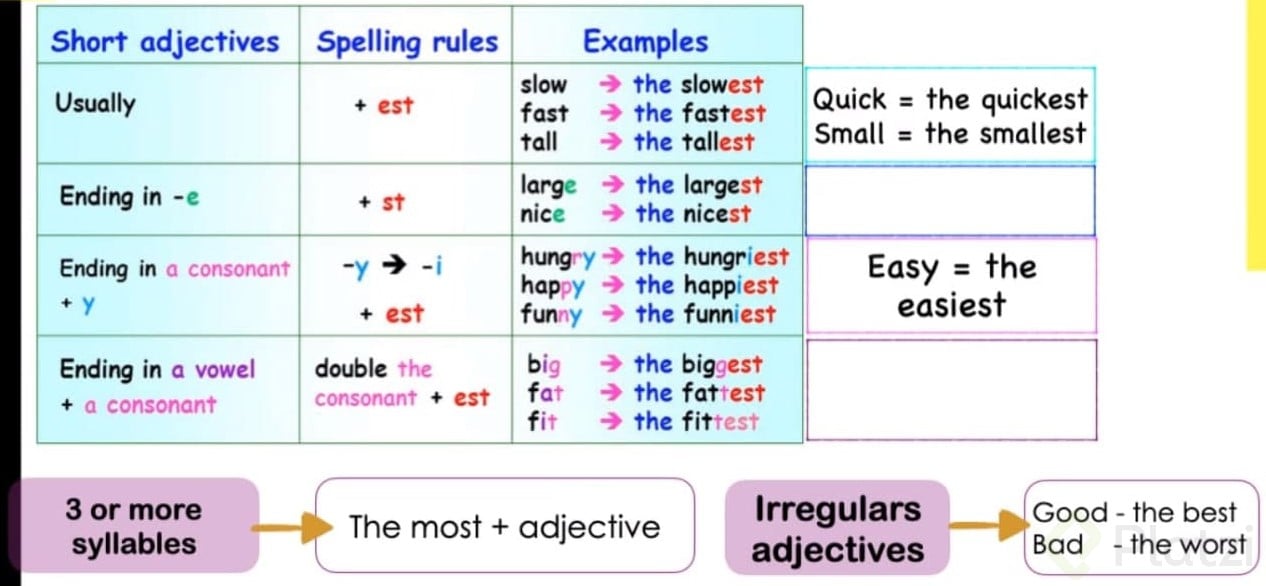
Add -est to the end of the word [3:24].
- Big becomes the biggest: "The blue whale is the biggest animal in the world."
- Nice becomes the nicest: "You are the nicest person that I know."
Two-syllable adjectives
Here you need to pay closer attention [3:54].
- If the adjective ends in -y, change the y to i and add -est. Happy becomes the happiest: "Sam is the happiest kid I know" [6:24].
- Some two-syllable adjectives, like simple, accept both forms. You can say the most simple or the simplest — both are correct [4:14].
- For the remaining two-syllable adjectives, such as perfect, always use the most before the adjective [4:40].
Three or more syllables
Always place the most before the adjective [4:54].
- Beautiful becomes the most beautiful: "This is the most beautiful view that I have seen."
- Expensive becomes the most expensive: "That's the most expensive car that I have seen."
What about irregular superlatives?
Irregular adjectives do not follow the standard rules [5:16]. Two of the most common examples are:
- Good → the best (not the goodest): "This is the best book I have read" [6:34].
- Bad → the worst (not the baddest).
Memorizing these exceptions is important because they appear constantly in everyday English.
To reinforce what you have learned, take the ten adjectives you brainstormed earlier and apply the correct superlative rule to each one. Then write a full sentence using every superlative form. If any rule feels unclear, reviewing the syllable guidelines above will help solidify the pattern.
Share your ten superlative sentences in the comments — practicing with real examples is the fastest way to make these structures feel natural.
Formación de Adjetivos Superlativos en Inglés