Uso de "Should" para Ofertas y Consejos en Inglés
Contenido del curso

Superlativos en Inglés


Expresa cantidades en Inglés
- 6

Uso de "Some", "A Lot Of" y "Lots Of" en Inglés
03:49 min - 7

Uso de Artículos con Sustantivos Contables e Incontables
07:25 min - 8

Sustantivos Contables e Incontables en Contexto
03:00 min - 9

Uso de Cuantificadores con "Of" en Inglés
04:34 min - 10

Usos de Sustantivos Contables e Incontables en Inglés Básico
03:28 min - 11

Práctica de conversación en inglés (contexto cotidiano)
00:00 min
Comparativos en Inglés
- 12
Adjetivos Comparativos en Inglés: Reglas y Ejemplos Prácticos
01:04 min - 13

Comparatives with Long Adjectives in English
04:00 min - 14

Where to Place Adverbs of Frequency
04:43 min - 15

Formación de Adverbios que Terminan en "LY"
03:46 min - 16
Formación de Adverbios en Inglés con -ly
01:02 min - 17

Adjetivos y Adverbios en Inglés: Uso y Pronunciación
04:04 min - 18

Adjectives vs Adverbs: 10-Sentence Quiz
05:08 min
Expresiones útiles en Inglés
- 19

Uso de "Should" para Ofertas y Consejos en Inglés
Viendo ahora - 20

Uso de "of" para Expresar Posesión y Atribución en Inglés
02:46 min - 21

Uso de "with" y "without" para posesión y atribución
02:43 min - 22

Negación de Intenciones y Deseos en Inglés
03:37 min - 23

Diferencias entre "must" y "have to" en inglés
04:28 min - 24

Uso de "should", "must" y negaciones en inglés básico
03:43 min - 25
Práctica de conversación en inglés (contexto cotidiano)
00:00 min
Uso del gerundio en Inglés


Sigue practicando

Recursos
Resumen
Knowing how to make offers and give advice is essential for everyday English communication. The word should is one of the most versatile tools you can use in these situations, and mastering it will make your conversations sound more natural and polite.
How do you use "should" to make an offer?
When you want to offer help or suggest doing something for someone, you can use should in a question form [1:28]. This structure is simple and effective.
- "Should I go with you?" — You use this when someone tells you they don't want to go somewhere alone. By asking this question, you are offering your company.
- "Should we help you with your homework?" — Imagine someone is stressed with a difficult assignment. This question shows willingness to assist [2:15].
A typical response to these offers could be "Yes, thanks. That would be great," which is a polite and common way to accept help in English.
How do you use "should" to give advice?
Beyond offers, should works perfectly for giving recommendations or suggestions [2:38]. You can use it in three sentence types:
- Affirmative: "You should go to the doctor." — This is appropriate when someone says they are not feeling well.
- Negative: "He shouldn't drink so much." — Here, shouldn't is the contraction of should not, and it warns against a specific behavior [3:03].
- Questions: "Where should we go?" — This asks for a recommendation or opinion from the other person.
Notice that should keeps the same form regardless of the subject. Whether you say "I should," "you should," or "he should," the word never changes. This makes it much easier to remember and apply.
What is the difference between an offer and advice with "should"?
The key distinction lies in the sentence structure. When you make an offer, should appears in a question where you are the one doing the action: "Should I help you?" When you give advice, should usually appears in a statement directed at someone else: "You should rest."
How can you practice using "should" in real situations?
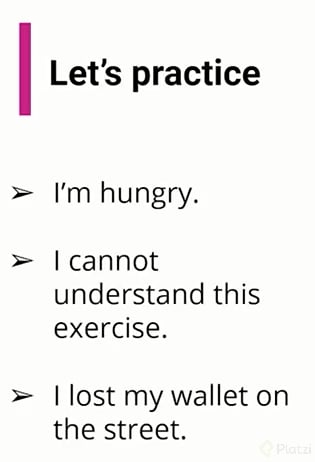
Three practical scenarios help reinforce this concept [3:33]:
- "I'm hungry." — You could respond with advice like "You should eat something" or an offer like "Should I make you a sandwich?"
- "I cannot understand this exercise." — A good response might be "You should ask your teacher" or "Should we study together?"
- "I lost my wallet on the street." — You could say "You should go back and look for it" or "Should I help you find it?"
These examples show how flexible should is. With the same word, you can express concern, willingness to help, and practical recommendations.
Why is "should" important for English learners?
Using should correctly demonstrates politeness and social awareness in English. It is softer than commands like "Go to the doctor!" and more direct than complex phrases. It sits in a comfortable middle ground that native speakers use constantly in both casual and professional settings.
Try creating your own responses to the three situations above and share them in the comments. Practice makes all the difference when learning to use modal verbs naturally.
Uso de "Should" para Ofertas y Consejos en Inglés