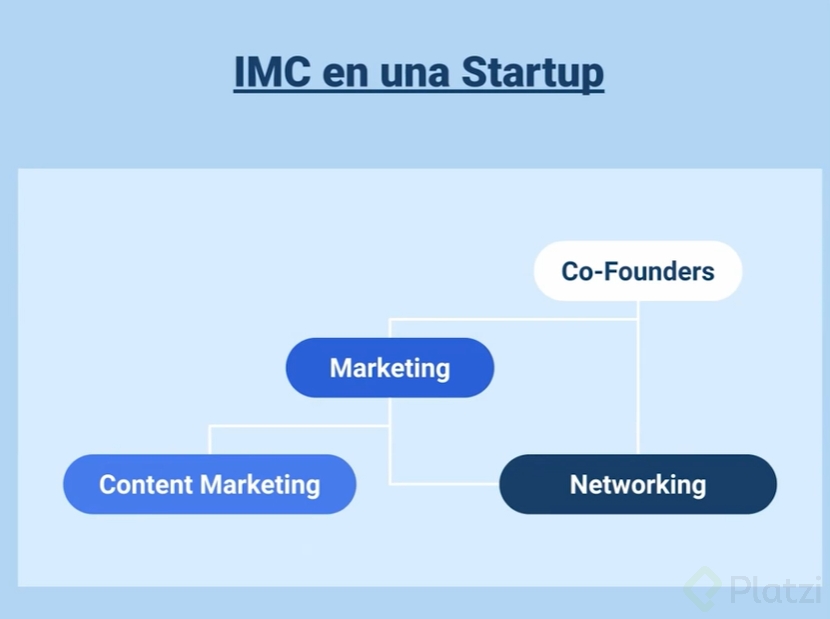
Esto va a sonar re lambón, pero este curso no me deja de sorprender ya que tiene elementos que esperaba ver y no tienen otros cursos, estamos integrando los elementos del marketing en un proceso y con una estructura y roles claramente definidos.
Es el curso ideal hecho realidad y llevamos 7 clases, no me imagino que viene💚
🚀 Structure your integrated communications team (IMC) 🧑🤝🧑
🔑 Key Concepts:
The "T-Shaped" vs. "Pi-Shaped" Talent Model: Forget the old agency model of siloed "social media managers" and "SEO specialists." In a high-growth startup, you need Pi-shaped (π) team members—deep expertise in one core discipline (e.g., paid media) plus working proficiency in two adjacent domains (e.g., copywriting and data analysis). This creates redundancy and cross-coverage—your paid specialist can draft ad copy when the copywriter is out, and can pull a basic SQL query to check campaign performance without waiting for Data. The structure is not a rigid org chart; it's a skills matrix with deliberate overlap.
The "Pod" System Over Functional Silos: Structure your IMC team into cross-functional pods, each owning a customer segment or a business outcome (e.g., "Enterprise Acquisition Pod," "SMB Retention Pod"), not a channel. Each pod contains a hybrid of: (1) a Strategist (owns the narrative and 5C context), (2) a Creator (copy + design + video), (3) a Distributor (paid/organic channel execution), and (4) a Analyst (attribution, dashboarding, experimental design). Pods are autonomous—they can launch campaigns without waiting for central approval—but operate within brand guardrails set by a tiny central "Brand Core" team. This reduces decision latency from weeks to hours.
The "Orchestrator" Role (Not a Manager): The team lead is not a traditional CMO who approves every asset. They are an Orchestrator—their job is (1) resource allocation (moving budget/headcount between pods based on 5C signals), (2) cross-pod learning sync (weekly "battle reviews" where pods share failures/wins), and (3) external radar (tracking competitor moves, platform changes, cultural shifts). They don't micromanage creative; they manage velocity and coherence. In a startup of <50 people, this Orchestrator might be the founder or Head of Growth—wearing multiple hats, but fiercely protecting the integration.
🏭 Industry & Startup Application:
Real-World Example (B2B Fintech Series A): A company offering embedded banking APIs structures their IMC team as 3 pods + 1 Core:
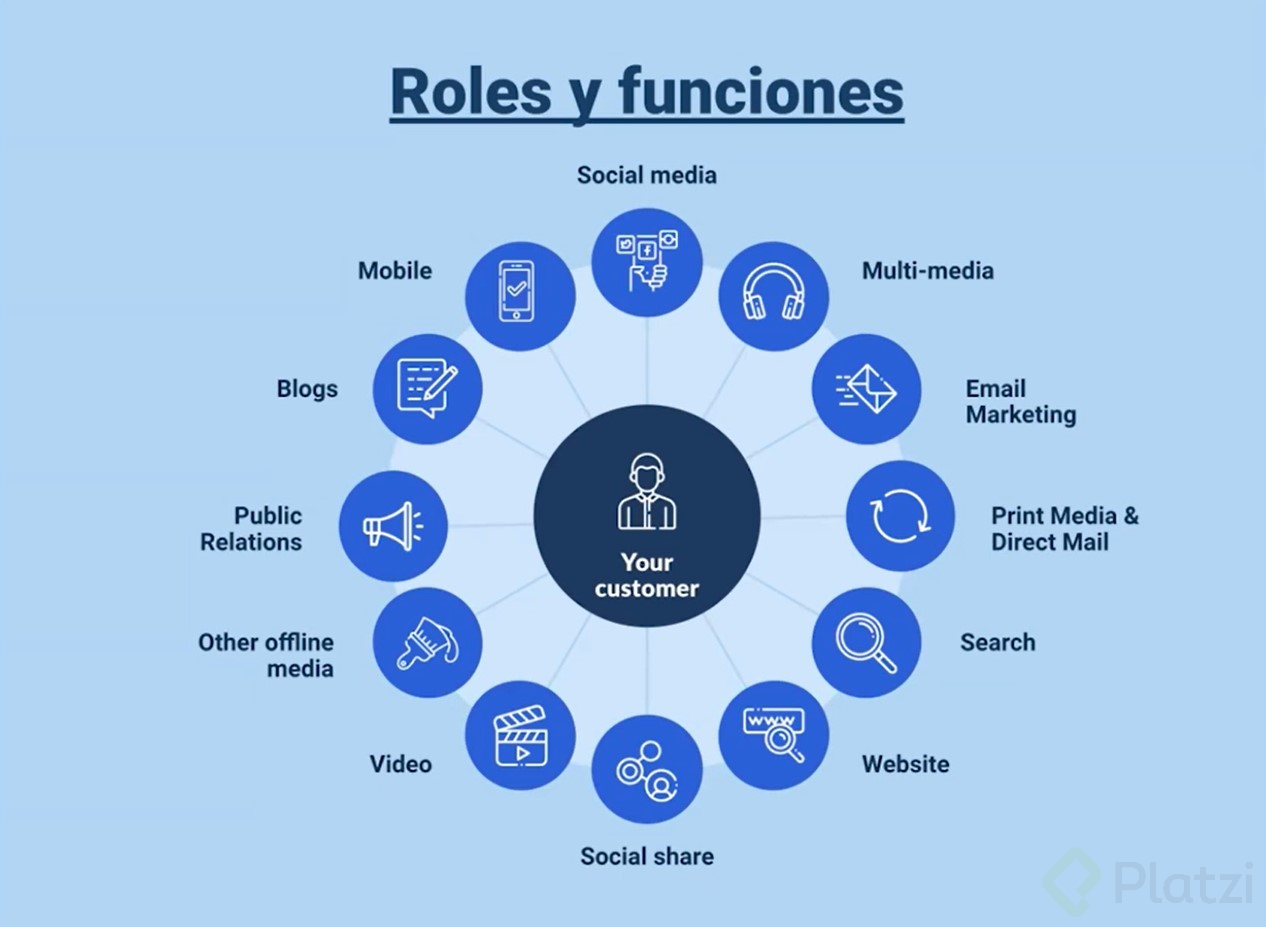
Pod 1 (Developer Acquisition): Targets individual engineers via GitHub, Stack Overflow, and technical newsletters. Pod members: a former DevRel (Strategist), a technical writer (Creator), a paid specialist for Reddit/LinkedIn (Distributor), and a data analyst tracking API call volume as the success metric.
Pod 2 (Enterprise Sales Enablement): Targets CFOs and VPs of Engineering via LinkedIn, industry reports, and direct mail. Pod members: a former management consultant (Strategist), a designer for high-fidelity decks (Creator), an SDR coordinator (Distributor), and an analyst tracking meeting-to-demo conversion.
Pod 3 (Customer Retention & Advocacy): Targets existing users via email, community Slack, and webinars. Pod members: a former customer success lead (Strategist), a video/content producer (Creator), a community manager (Distributor), and an analyst tracking NPS and expansion revenue.
Brand Core (2 people): A brand director + a data engineer. They maintain the Communication Stack (from previous class), run the weekly pre-mortem sessions, and maintain a unified attribution dashboard that all pods use. They do not create content—they create constraints and clarity.
Result: In 6 months, they scaled from 3 to 15 markets without doubling headcount. Why? Pods could independently adapt their messaging per region (e.g., Pod 1 in Germany used a more formal tone, Pod 1 in Brazil used WhatsApp as a channel) while the Brand Core ensured the core value prop remained invariant. Decision time for a new campaign dropped from 2 weeks to 6 hours.
Why it matters for Product, Growth, or Strategy: This structure embeds IMC into the company's operating system, not a separate department. When product ships a new feature, the relevant pod can immediately craft comms without a "marketing handoff" bottleneck. For growth, this means your experimentation velocity skyrockets—each pod runs 5–10 micro-experiments per week, feeding learnings back to the Core, which then updates the global playbook. For strategy, it means your team is anti-fragile—if one pod's channel collapses (e.g., Apple's privacy changes kill your paid targeting), the other pods absorb the slack, and the Core reallocates budget dynamically.
🔮 Future Steps & Project Hooks:
Personal Project Idea: Design a "Pod Constitution" for a hypothetical 10-person IMC team at a Series A startup. For each pod, define:
Mission: One sentence (e.g., "Acquire and activate SMBs in the healthcare vertical").
Roster: Assign specific roles (you can fictionalize names or use archetypes).
Decision Rights: What can the pod decide without Core approval? (e.g., "Change ad copy up to 3x per week," "Shift 10% of budget between channels").
Sync Cadence: When does the pod meet internally (daily standup?) vs. with the Core (weekly review?).
Then, simulate a crisis—e.g., a competitor drops prices by 30%. Write a 1-page response plan for how your pods would reallocate resources without waiting for a CMO. This is your leadership stress test.
Next Step to Explore: Once your team structure is defined, the advanced step is "Incentive Design for IMC Alignment." Traditional marketing bonuses reward channel performance (e.g., "paid social ROAS"). That incentivizes silos. Instead, design a team bonus that rewards pod-level outcomes (e.g., "Pod 1: increase LTV/CAC by 20%") and a cross-pod sharing bonus (e.g., "If Pod 2 uses a playbook from Pod 1 and succeeds, both pods get a bonus"). This aligns behavior with integration. Explore "Game Theory for Team Incentives" —specifically, Shapley Value allocation, which fairly distributes credit for shared outcomes across pods. That's how you turn a structure into a culture of collaboration.





 lock
 lock
 lock
 lock
 lock
 lock
 lock
 lock
 lock
 lock
 lock
 lock
 lock
 lock
 lock