






DANIEL SANTIAGO MOLINA IBAÑEZ
get used to : "acostumbrarse" am/is/are used to: "estar ya acostumbrado a algo"

Cristobal Nyram
Flavors="sabores"

Jose Francisco Melara Aguirre
ok
Si aún no conoces tu nivel de inglés, ve a nuestro Test de Inglés de Platzi y conócelo en minutos. :rocket:
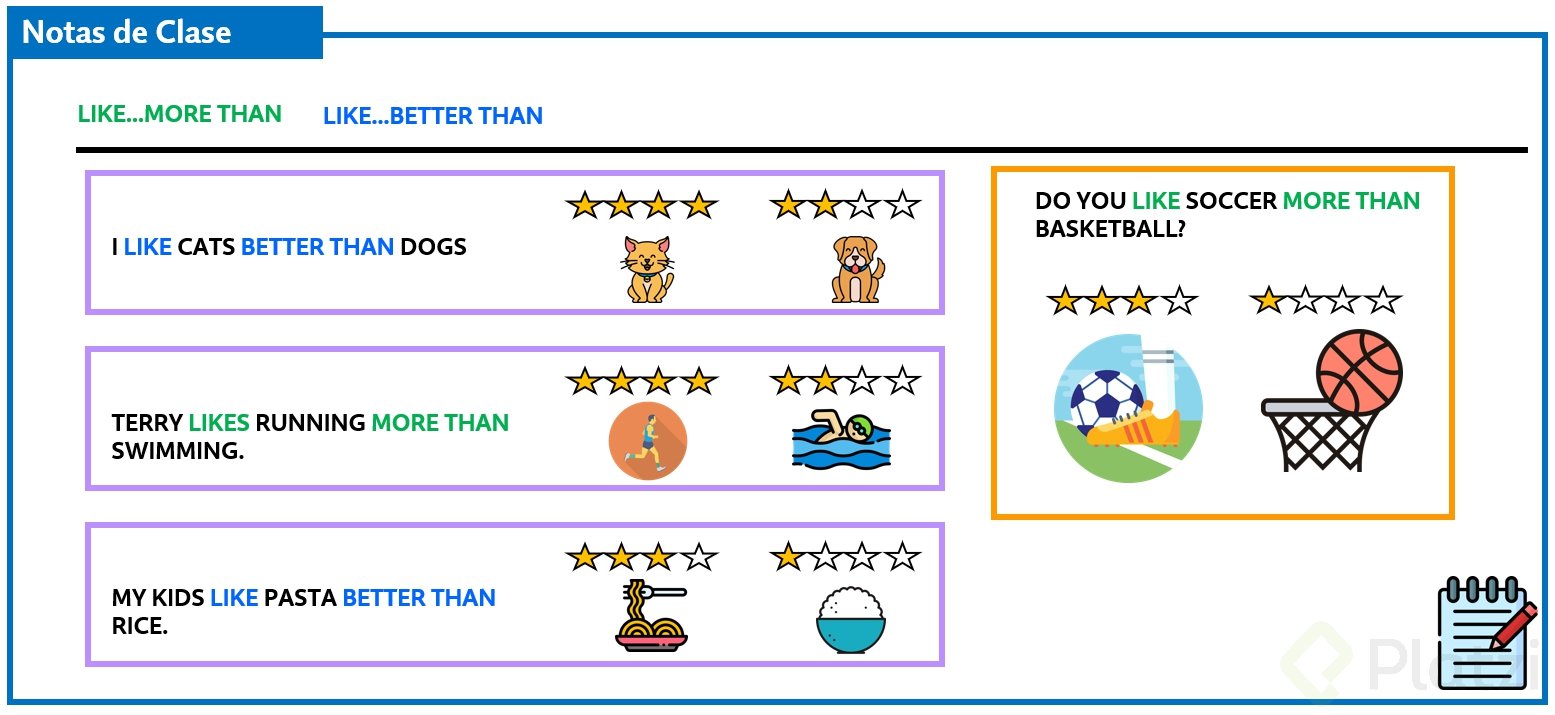
Lee el texto y presta atención al uso de (not) (the) same as y like better/more than:
I have lived in two countries in South America: Brazil and Colombia. Every country has its particularities, but at the same time, they have more things in common than we imagine.
Living in Brazil is not the same as living in Colombia, but you can get used to it fast. People in Colombia are friendly. They can make you feel good in every environment. Also, there is great food there, but I still like Brazilian food better than Colombian. The flavors are not quite the same.
The economy is also similar in both countries, but Brazil is more expensive. You can earn the same working in both countries, but you end up spending more in Brazil. So, in this way, I like living in Colombia more than in Brazil.
Another aspect I can mention is the weather. Brazil is such a big country that you can find all kinds of weather. Some cities are hotter than others. Some others are really cold during winter. Colombia is not the same as Brazil in this aspect. You don’t feel the weather change very much there. If the city is hot, it is like that the entire year. The same happens if the city is cold.
It’s hard to choose one I like better than the other.
DANIEL SANTIAGO MOLINA IBAÑEZ
get used to : "acostumbrarse" am/is/are used to: "estar ya acostumbrado a algo"
Cristobal Nyram
Flavors="sabores"
Jose Francisco Melara Aguirre
ok

Eduard Giraldo Martínez
I feel very excited because I understood 90% of the text. I read very fast and I am very happy! 🚀
#NeverStopLearning 👾

Laura Chavez
Congrats!!! 👏🏻👏🏻👏🏻👏🏻👍🏻👍🏻👍🏻🎊🎊🎊🎉🎉🎉

Diego Alejandro Moreno Pedroza
Good work!!!

Pedro Quiñonez Verdugo
Speaker practicing

jerome sebastian contreras poveda

Jacqueline Gomez
I cannot choose because I have not visited Brazil.

Yarelis Yarineth Melgar Frías
hahahah me too!
"Get used to" significa "acostumbrarse" a algo nuevo o diferente. Ejemplo: "I'm getting used to living in a new city". Por otro lado, "am/is/are used to" indica que ya estás acostumbrado a algo. Ejemplo: "I am used to waking up early". En el contexto de tu curso, estas estructuras son útiles para describir experiencias y adaptaciones en situaciones como vivir en diferentes países, como se menciona en el texto sobre Brasil y Colombia.
Alvaro Yovanny Dorado Yepez
The author compares several aspects between Brazil and Colombia:
These comparisons highlight cultural and economic differences along with personal preferences.

Jesús Emmanuel López Guerrero
In the 4th paragraph it says : but I still like Brazilian food better than Colombian. is it also correct to say but I still like Brazilian food more than Colombian. or it is not correct?

Fernando Campos
Hi 👋🏼 For sure, you are right. You can say I still like Brazilian food more than Colombian.
Jesús Emmanuel López Guerrero
Thank you my firend :D

Óscar Solá García
Buena clase, siempre que quería decir "Is not the same as" decía, " is not the same that". Pura asimilación pero clases de este estilo que parecen simples a priori me ayudan a pulir errores

BRISA PAOLA JAIMEZ AGUIRRE
¿Es posible usar "more" por "better"?
¡Totalmente! Puedes usar like [algo] more than y, en la mayoría de los contextos cotidianos, funciona exactamente igual que better. La elección entre more y better a menudo se reduce a un ritmo de pronunciación o a una simple costumbre regional del hablante. Sin embargo, un pequeño truco mental es que more a veces puede dar una sutil sensación de "cantidad" de gusto, mientras que better se enfoca en la "calidad" de la preferencia. Por ejemplo, si dices I like living here more than there, estás expresando un mayor volumen de satisfacción general. Ambas son herramientas excelentes y perfectamente intercambiables para enriquecer tu vocabulario al debatir tus opciones favoritas.
José de Jesús Flores Lepe
i guess this helps

Nahun Fernando Oseguera Villalobos
Every practice helps, keep it up

Andrea Ruby Gutierrez Romo
Usar like [algo] better than le da a tu inglés un tono mucho más nativo y fluido cuando hablas de tus preferencias personales. Aunque podrías usar el verbo prefer, la estructura con better es la reina absoluta de las conversaciones cotidianas e informales. Piensa en cuando estás en un restaurante y debes elegir entre dos platos deliciosos; decir I like pizza better than burgers suena directo, natural y amigable. Además, te permite separar el verbo de la comparación, colocando el objeto en el medio, lo cual es una estructura muy común en el inglés hablado. Es tu mejor herramienta para expresar gustos sin sonar como un libro de texto rígido.

José Daniel García Méndez
Thanks Andrea! This is very important.
Óscar Solá García
¿ Cuál es la diferencia entre Like better y Like more than ?
Fernando Campos
Hi 👋🏼 I think they are synonyms and you can use any of them. I found this discussion about the topic.
Óscar Solá García
Many thanks Fernando!

Raúl Adolfo Sánchez Rodríguez

Lisi Leonor Cavagna
He is comparing Brazil and Colombia, because he has been living in this two latin American countries. Some aspects of living in Brazil are not the same than the aspects living in Colombia but, he thinks, that this two countries have somethings similar. He thinks Brazilian food is better than Colombian. Living in Brazil is more expensive than living in Colombia. Living in Colombia is cheaper than living in Brazil. So, in this aspect, he prefers Colombia. If he thinks about weather, Brazil is such an extensive country so it has a lot of weathers. In Colombia, not happen the same, the weather doesn't change very much in the entire year. He feels is hard to choose or compare one his likes better than the other.

Hogla Marina
It’s hard to choose one I like better than the other. I think the same. I understood 70% I go for more knowledge.

Miguel Ángel Chávez Mera
Let’s go!

Manuel Alejandro Iglesias Meza
kinds = tipos

Maryoli Mosqueda
Lee el texto y presta atención al uso de (not) (the) same as y like better/more than:
I have lived in two countries in South America: Brazil and Colombia. Every country has its particularities, but at the same time, they have more things in common than we imagine.
Living in Brazil is not the same as living in Colombia, but you can get used to it fast. People in Colombia are friendly. They can make you feel good in every environment. Also, there is great food there, but I still like Brazilian food better than Colombian. The flavors are not quite the same.
The economy is also similar in both countries, but Brazil is more expensive. You can earn the same working in both countries, but you end up spending more in Brazil. So, in this way, I like living in Colombia more than in Brazil.
Another aspect I can mention is the weather. Brazil is such a big country that you can find all kinds of weather. Some cities are hotter than others. Some others are really cold during winter. Colombia is not the same as Brazil in this aspect. You don’t feel the weather change very much there. If the city is hot, it is like that the entire year. The same happens if the city is cold.
It’s hard to choose one I like better than the other.