
Creativity as a Trainable Skill
Contenido del curso

Desbloqueos creativos
Convergencia: Técnicas de generación de ideas
- 8
Técnicas de generación de ideas para resolver problemas creativos
00:40 min - 9

Cubing: Six Angles to Better Ideas
07:21 min - 10

Técnica Crazy 8s
03:35 min - 11
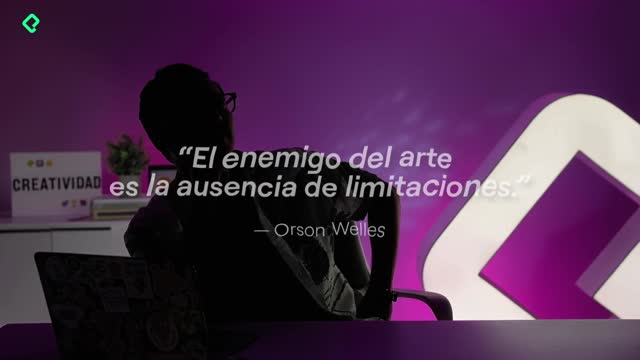
How Creative Limits Spark Better Ideas
02:31 min - 12
Reverse Thinking to Solve Any Problem
03:01 min - 13
5 AI Prompts for Solo Creative Feedback
07:57 min - 14

Six Thinking Hats for Stuck Teams
02:22 min
Incubación

Storytelling: cómo presentar tu idea
Sostenibilidad Creativa: Mantener el Hábito
Recursos
Resumen
Creativity is not a gift reserved for a few. It is a process you can train, apply and use to solve real problems, whether you code, design, lead a team or start a project from scratch. Understanding what creativity really is changes how you approach every challenge in your day to day.
Eduardo Salles, in his book El proceso creativo, describes the creative act as connecting dots: linking ideas or concepts to solve a problem or bring something new to the table. The further apart those concepts seem, the more creative the result feels. Someone once joined the idea of a fish with a human and gave us the mermaid. You don't need to reinvent the wheel, but you do need a steady creative flow you can rely on.
What are the most common myths about creativity?
There is a lot of noise around what creativity is and who gets to be creative. Let's clear it up.
Is creativity an innate talent only some people have?
No. Creativity works like a muscle. You train it, you exercise it and anyone can practice it. The idea that there are creative people and non creative people is one of the most damaging myths out there because it stops you before you even start.
Is creativity a talent or a skill? It's a skill. You build it through practice, repetition and exposure to new ideas, the same way you'd train at the gym.
Do the best ideas appear when there are no limits?
False again. Having no limits often leads to analysis paralysis: you feel you could do anything, so you end up doing nothing. Setting constraints actually fuels better creative practice because they give your brain a frame to push against.
Do great ideas only come from lone geniuses?
Not really. Creativity is a team sport. Working with others, or building systems that bring in points of view different from your own, strengthens and nourishes your ideas. The myth of the solo genius hides all the collaboration that happens behind every big breakthrough.
Why is creativity a powerful tool for your work?
Creativity isn't decoration. It's a working tool with concrete benefits, and here's where it earns its place in your toolkit.
- It's a process, not a talent. Creativity means finding combinations of things that already exist to imagine solutions and test new answers. If you're starting a project or stuck on a problem, creative tools help you move forward.
- It turns problems into opportunities. Whether you're in tech development, writing code or drawing, a clear creative process helps you spot where things are failing and find a way around them.
- It generates competitive advantage. In a world flooded with information and an overflow of news and options, a distinct way of thinking gives you an edge.
- It's trainable and applicable. The emphasis is on applicable: not just theory, but practical exercises you can use tomorrow, no matter your field.
Can creativity be learned at any age? Yes. Since it's a process based on connecting existing ideas, anyone willing to practice can develop it, regardless of background or profession.
How does creativity actually solve problems?
The core mechanic is simple: connect points that seem distant and see what emerges. That's how a fish plus a human became a mermaid, and that's how you take a stuck project and find an unexpected path forward.
If you lead a team, are part of one or work solo, the same logic applies. You look at what already exists, you combine, you test and you iterate. The further the dots, the more original the outcome tends to feel.
What's the first step to think more creatively? Define the problem. Ask yourself what you actually need to solve before jumping into ideas. Clarity on the question shapes the quality of the answer.
So let's start where every creative process should start: what do you need to solve? What is the problem? Tell me in the comments what you're working on right now.