Reverse Thinking to Solve Any Problem
Contenido del curso




Desbloqueos creativos



Convergencia: Técnicas de generación de ideas
- 8

Técnicas de generación de ideas para resolver problemas creativos
00:40 min - 9

Cubing: Six Angles to Better Ideas
07:21 min - 10

Técnica Crazy 8s
03:35 min - 11

How Creative Limits Spark Better Ideas
02:31 min - 12

Reverse Thinking to Solve Any Problem
Viendo ahora - 13

5 AI Prompts for Solo Creative Feedback
07:57 min - 14

Six Thinking Hats for Stuck Teams
02:22 min
Incubación

Storytelling: cómo presentar tu idea



Sostenibilidad Creativa: Mantener el Hábito


Recursos
Resumen
What if imagining the worst possible solution to a problem could lead you straight to the best one? That is the core idea behind the reverse thinking technique, a creative method that pushes your mind to the opposite side of a challenge to unlock fresh answers. It sounds absurd, and that is exactly where its power lives.
How does the reverse thinking technique actually work?
The goal is simple: shift your current thinking somewhere else, and the farthest place you can send it is the exact opposite direction. By flipping the problem, you free your brain from the obvious paths and force new angles to appear.
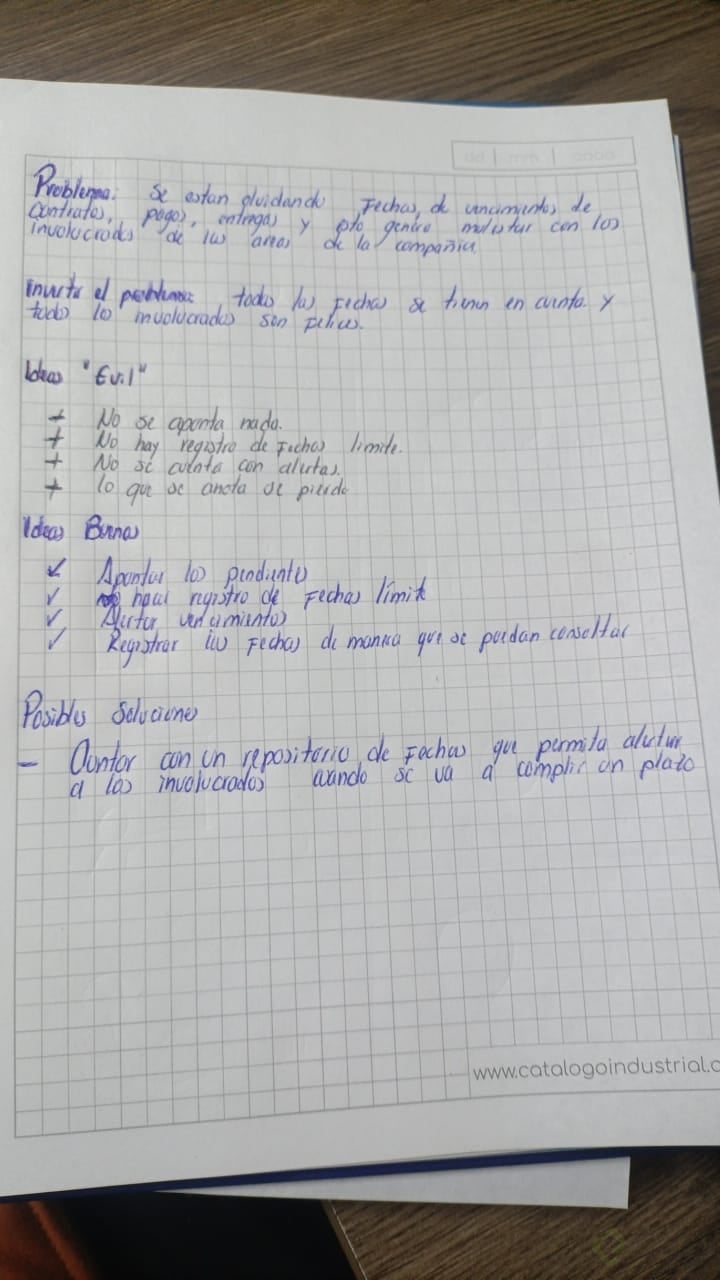
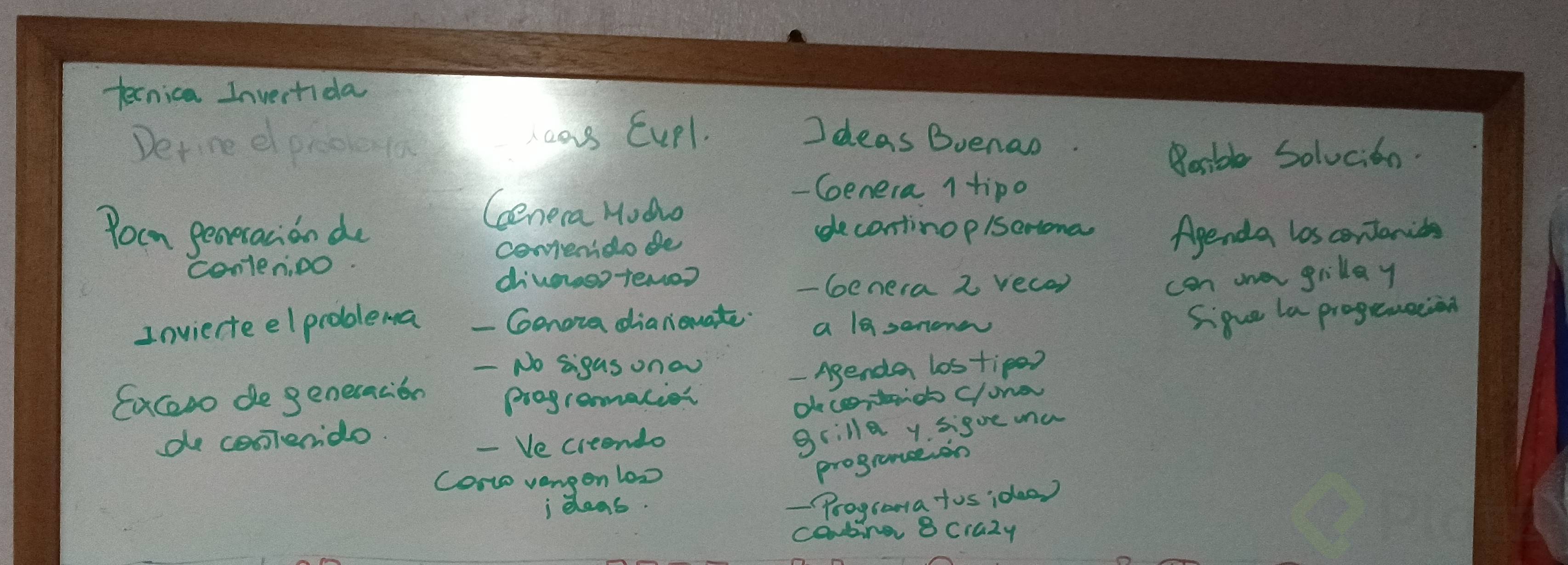
Start by defining the problem clearly. Imagine your office needs more punctual meetings because they keep running long and feel out of control. You write that down in the problem box, and from there the fun begins.
What is reverse thinking? It is a creativity method where you invert your problem, brainstorm bad solutions to that flipped version, and then turn those bad ideas into useful ones.
Why should you flip the problem into its evil version?
Think of the Evil Kermit meme: there is a good Kermit and an evil one whispering chaos. Your problem works the same way. Take your original challenge and write its evil twin right next to it.
Once you and your team enter evil mode, brainstorm the worst possible solutions to that inverted problem. For the meeting example, the list could look like this:
- Cover many unrelated topics in the same meeting.
- Skip the agenda and improvise everything.
- Invite people who have nothing to do with the project.
- Let everyone talk at the same time.
If the proposals make you laugh, gasp, or feel a little scared because they sound that bad, you are on the right track. That reaction is the signal the exercise is working.
Why does brainstorming bad ideas help? Because giving yourself permission to be terrible removes the pressure of getting it right and reveals patterns you would normally censor.
How do you turn evil ideas into real solutions?
Once the evil list feels full, drop the evil mode and flip each item back into something useful. The transformation is direct and almost mechanical, which is part of the charm.
- Cover many topics in one meeting becomes each meeting should address only one topic.
- No agenda, improvise becomes define an agenda with the points to cover.
- Invite unrelated people becomes only invite the people involved in the project.
- Everyone talks at once becomes set a structure and an order for participation.
Each evil idea has a mirror that points toward a healthier practice. You are not inventing rules from scratch; you are reading the inverse of chaos.
Which converted ideas deserve to become possible solutions?
Not every flipped idea will be useful, and that is fine. Some will be obvious, some will be irrelevant, and a few will feel like real candidates. Move those into your possible solutions box.
You can also combine two or three of the converted ideas into a single proposal. A meeting policy that mixes one topic per session, a clear agenda, and a defined speaking order is stronger than any of those rules alone.
When should I use reverse thinking? Use it when you feel stuck, when the team keeps repeating the same suggestions, or when a problem feels too familiar to see clearly.
What problem can you flip into its evil version today?
The challenge is straightforward: take a real problem you are facing right now and write its evil twin. Maybe your onboarding is slow, your customer responses feel cold, or your team keeps missing deadlines. Whatever it is, imagine the version designed to make it worse on purpose.
Drop your current problem and its evil version in the comments, and try running the full exercise with your team. The ridiculous path is often the one that takes you somewhere new.
Reverse Thinking to Solve Any Problem