





In customer service
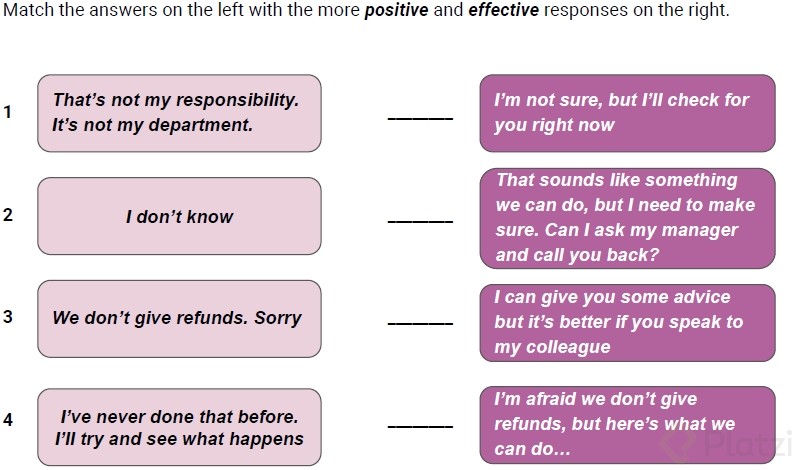
We don't need to know all the answers, but we can always use a positive tone and a proactive attitude.
That's the key
Cuando un cliente escucha un "no" sin alternativas, la frustración es casi inmediata. En el mundo del customer service, saber transformar mensajes negativos en respuestas útiles y empáticas marca la diferencia entre una experiencia frustrante y una que genera confianza. Dominar el tono positivo en inglés no solo mejora la comunicación, sino que reduce las reacciones negativas en situaciones difíciles.
¿Cómo transformar respuestas negativas en mensajes positivos?
Una de las situaciones más comunes es no tener la respuesta que el cliente busca. La frase "I don't know" suena cortante y poco profesional. Una forma de suavizarla es decir "I'm not sure" [01:28], que transmite honestidad sin sonar tan directo. Pero el verdadero cambio ocurre al añadir una acción concreta: "I'm not sure, but I can check for you" [01:48].
Esta técnica se basa en algo sencillo: acompañar cada respuesta negativa con una acción que demuestre disposición a ayudar. El cliente percibe que alguien se está haciendo cargo de su problema, y eso reduce significativamente la frustración.
La entonación también juega un papel fundamental [02:10]. Hacer una pausa antes de ofrecer la solución — "I'm not sure... but I can check for you" — refuerza el mensaje positivo y le da peso a la parte constructiva de la respuesta.
¿Qué expresiones clave funcionan en situaciones difíciles?
En el ejemplo práctico, una clienta quiere devolver una camisa y pide un refund (reembolso) [03:19]. Verónica responde con una frase muy efectiva:
Esta estructura es poderosa porque reconoce la limitación sin detenerse ahí. Inmediatamente ofrece alternativas: un cambio de talla o store credit (crédito en tienda). El énfasis al pronunciar esta frase debe estar en la parte positiva: "but here's what I can do" [04:20].
La palabra refund [04:30] es el término profesional para pedir la devolución del dinero. Es más apropiado que decir "Can I get my money back?" en un contexto de servicio al cliente.
Otra expresión valiosa es "I'll check for you" [04:05], usando la contracción I'll que indica una acción futura inmediata. Comunica compromiso y proactividad.
¿Qué significa right now y por qué es tan útil?
Los clientes quieren soluciones rápidas. La expresión "I'll do that for you right now" [05:00] transmite inmediatez y demuestra que el problema es una prioridad. Right now significa "en este momento" y funciona como una expresión de poder en customer service porque genera confianza instantánea.
¿Qué hacer cuando no puedes resolver el problema de inmediato?
En el escenario de la gift card (tarjeta de regalo), Verónica no encontró la respuesta sobre si podía usarse en España. En lugar de dejar al cliente sin solución, dijo:
Esto demuestra tres cosas:
¿Cómo practicar estas técnicas de tono positivo?
La clave está en seguir un patrón simple cada vez que debas dar una respuesta negativa:
Estas herramientas convierten interacciones potencialmente conflictivas en momentos donde el cliente siente que alguien realmente se preocupa por ayudarle. ¿Has tenido alguna situación en la que transformar el lenguaje cambió completamente la reacción de un cliente? Comparte tu experiencia.

Curso de Inglés para Servicio al Cliente
Clase 9 / 19
Curso de Inglés para Servicio al Cliente
Clase 9 / 19
Cuando un cliente escucha un "no" sin alternativas, la frustración es casi inmediata. En el mundo del customer service, saber transformar mensajes negativos en respuestas útiles y empáticas marca la diferencia entre una experiencia frustrante y una que genera confianza. Dominar el tono positivo en inglés no solo mejora la comunicación, sino que reduce las reacciones negativas en situaciones difíciles.
Una de las situaciones más comunes es no tener la respuesta que el cliente busca. La frase "I don't know" suena cortante y poco profesional. Una forma de suavizarla es decir "I'm not sure" [01:28], que transmite honestidad sin sonar tan directo. Pero el verdadero cambio ocurre al añadir una acción concreta: "I'm not sure, but I can check for you" [01:48].
Esta técnica se basa en algo sencillo: acompañar cada respuesta negativa con una acción que demuestre disposición a ayudar. El cliente percibe que alguien se está haciendo cargo de su problema, y eso reduce significativamente la frustración.
La entonación también juega un papel fundamental [02:10]. Hacer una pausa antes de ofrecer la solución — "I'm not sure... but I can check for you" — refuerza el mensaje positivo y le da peso a la parte constructiva de la respuesta.
En el ejemplo práctico, una clienta quiere devolver una camisa y pide un refund (reembolso) [03:19]. Verónica responde con una frase muy efectiva:
Esta estructura es poderosa porque reconoce la limitación sin detenerse ahí. Inmediatamente ofrece alternativas: un cambio de talla o store credit (crédito en tienda). El énfasis al pronunciar esta frase debe estar en la parte positiva: "but here's what I can do" [04:20].
La palabra refund [04:30] es el término profesional para pedir la devolución del dinero. Es más apropiado que decir "Can I get my money back?" en un contexto de servicio al cliente.
Otra expresión valiosa es "I'll check for you" [04:05], usando la contracción I'll que indica una acción futura inmediata. Comunica compromiso y proactividad.
Los clientes quieren soluciones rápidas. La expresión "I'll do that for you right now" [05:00] transmite inmediatez y demuestra que el problema es una prioridad. Right now significa "en este momento" y funciona como una expresión de poder en customer service porque genera confianza instantánea.
En el escenario de la gift card (tarjeta de regalo), Verónica no encontró la respuesta sobre si podía usarse en España. En lugar de dejar al cliente sin solución, dijo:
Esto demuestra tres cosas:
La clave está en seguir un patrón simple cada vez que debas dar una respuesta negativa:
Estas herramientas convierten interacciones potencialmente conflictivas en momentos donde el cliente siente que alguien realmente se preocupa por ayudarle. ¿Has tenido alguna situación en la que transformar el lenguaje cambió completamente la reacción de un cliente? Comparte tu experiencia.
In customer service
We don't need to know all the answers, but we can always use a positive tone and a proactive attitude.
That's the key
I really needed to learn to use a positive tone, I keep telling my cx bad news all the time!
Positive tone
I'm not sure...
But I can check for you.
Power Expression
I'll do that for you right now
In case anyone is interested, I have the translation of the conversation; C: Hi I want to buy a gift card.
V: Hello, sure.
V: What amount would you like?
C:$80.00 but I have a question. The gift card is for a friend. He's going back to Spain soon. So I know you have stores there. Can he use the gift card in Spain?
V: Oh, good question. I'm not sure about that, but I can check that for you,
C: OK.
V: Well that but I can check that for you.
C:OK. Thanks. Oh, and I also want to return the shirt I bought.
V: Sure. Can you tell me what you want to return it?
C: It's too big.Can I get my money back.
V:I'm afraid I can't give you a refund. But here's what I can do. I'll help you exchange the shirt for a different size or give you store credit to buy other things in the store. Is that OK?
C:I really wanted my money back, but I guess store credit is OK.
V:Yeah. Sorry. OK.
V:Now about the gift card question. I'm sorry it's taking a little long to find out. Can I call or e-mail you later today with the answer?
C:Yeah, that's fine.
V:Great.Now let's get you some store credit for that shirt.
Mastering customer service situations involves (...) transforming language into a more positive, more helpful.
Once I was in Tulum with a small group of French tourists, the itinerary indicated that we should visit an archaeological site, but day was closed for restoration. The tourists were upset that the site was closed. But when I offer a small discount and compensated them with two visits to some caves and a sacred cenote, the tourists immediately changed their tune and became cheerful.
This topic reminded me that in customer service, we do not always build trust by solving the problem exactly the way the customer expects, but by showing our commitment to finding the best possible alternative. Expressions such as “I'm afraid I can't give you a refund, but here's what I can do” or “I'm not sure, but I can check for you” completely change the perception of the conversation because they shift the focus from the limitation to the solution. I have found that when customers sense willingness to help, follow-up, and a sense of urgency through phrases like “I'll do that for you right now,” tension decreases and trust grows. The key lesson is that positive language is not about avoiding the word “no”; it is about pairing every limitation with a concrete action, a viable alternative, and a clear commitment. In customer service, the customer experience is often defined less by the problem they face and more by how we make them feel throughout the process of helping them.
Caption:
"Customers may not always remember the answer they received, but they will remember how you made them feel while working toward a solution. Positive language transforms limitations into trust and challenges into opportunities to deliver exceptional service." ✨🚀
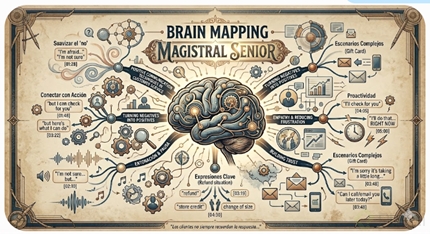
flashcard práctica sobre Técnicas de Comunicación Positiva en Atención al Cliente para que la uses como recurso de repaso rápido:
Frente (Pregunta): How can you transform a negative response into a positive customer experience?
Reverso (Respuesta):
· Suaviza el “no”: I'm afraid… / I'm not sure…
· Conecta con acción: …but I can check for you / …but here's what I can do
· Enfatiza la solución: pon el tono en la parte positiva.
· Expresa inmediatez: I'll do that for you right now.
· Ofrece seguimiento: Can I call or email you later today with the answer?
👉 Clave: El cliente no siempre recuerda la respuesta exacta, pero sí cómo lo hiciste sentir durante el proceso.
✨ Consejo de práctica: Imagina un escenario difícil (refund, demora, falta de información) y reformula tu respuesta aplicando este patrón: limitación + alternativa + compromiso claro.
I'll check for you.
I 'll check for you.

Maria Camila Rodriguez Moreno

Mauren García

Felipe Fajardo Quintero

Andrés Felipe Barreto Hernandez

alfredo antonio martinez albayero

Edith Andrea

Tania Vannessa Pérez de Santos

Daniel Steven Carrera Osorno
José Juan Salazar Cruz

María del Consuelo Irastorza Vázquez

María Arely Realegeño de Recinos
María Arely Realegeño de Recinos
María Arely Realegeño de Recinos
Lissette Esmeralda Menjívar de Pérez
In customer service
We don't need to know all the answers, but we can always use a positive tone and a proactive attitude.
That's the key
I really needed to learn to use a positive tone, I keep telling my cx bad news all the time!
It's not about hiding the bad news. Try to focus on finding the best way to let them know what happened while offering your best resolution for that problem.
Positive tone
I'm not sure...
But I can check for you.
Power Expression
I'll do that for you right now
In case anyone is interested, I have the translation of the conversation; C: Hi I want to buy a gift card.
V: Hello, sure.
V: What amount would you like?
C:$80.00 but I have a question. The gift card is for a friend. He's going back to Spain soon. So I know you have stores there. Can he use the gift card in Spain?
V: Oh, good question. I'm not sure about that, but I can check that for you,
C: OK.
V: Well that but I can check that for you.
C:OK. Thanks. Oh, and I also want to return the shirt I bought.
V: Sure. Can you tell me what you want to return it?
C: It's too big.Can I get my money back.
V:I'm afraid I can't give you a refund. But here's what I can do. I'll help you exchange the shirt for a different size or give you store credit to buy other things in the store. Is that OK?
C:I really wanted my money back, but I guess store credit is OK.
V:Yeah. Sorry. OK.
V:Now about the gift card question. I'm sorry it's taking a little long to find out. Can I call or e-mail you later today with the answer?
C:Yeah, that's fine.
V:Great.Now let's get you some store credit for that shirt.
Can you give me my money back? you have to use a positive tone, been politely like this: I´m not sure but, I´ll check for you, or Let me check for you. In the case we can´t refund money, we need to offer another solution
Mastering customer service situations involves (...) transforming language into a more positive, more helpful.
Once I was in Tulum with a small group of French tourists, the itinerary indicated that we should visit an archaeological site, but day was closed for restoration. The tourists were upset that the site was closed. But when I offer a small discount and compensated them with two visits to some caves and a sacred cenote, the tourists immediately changed their tune and became cheerful.
This topic reminded me that in customer service, we do not always build trust by solving the problem exactly the way the customer expects, but by showing our commitment to finding the best possible alternative. Expressions such as “I'm afraid I can't give you a refund, but here's what I can do” or “I'm not sure, but I can check for you” completely change the perception of the conversation because they shift the focus from the limitation to the solution. I have found that when customers sense willingness to help, follow-up, and a sense of urgency through phrases like “I'll do that for you right now,” tension decreases and trust grows. The key lesson is that positive language is not about avoiding the word “no”; it is about pairing every limitation with a concrete action, a viable alternative, and a clear commitment. In customer service, the customer experience is often defined less by the problem they face and more by how we make them feel throughout the process of helping them.
Caption:
"Customers may not always remember the answer they received, but they will remember how you made them feel while working toward a solution. Positive language transforms limitations into trust and challenges into opportunities to deliver exceptional service." ✨🚀
flashcard práctica sobre Técnicas de Comunicación Positiva en Atención al Cliente para que la uses como recurso de repaso rápido:
🎯 Comunicación Positiva en Customer Service
Frente (Pregunta): How can you transform a negative response into a positive customer experience?
Reverso (Respuesta):
· Suaviza el “no”: I'm afraid… / I'm not sure…
· Conecta con acción: …but I can check for you / …but here's what I can do
· Enfatiza la solución: pon el tono en la parte positiva.
· Expresa inmediatez: I'll do that for you right now.
· Ofrece seguimiento: Can I call or email you later today with the answer?
👉 Clave: El cliente no siempre recuerda la respuesta exacta, pero sí cómo lo hiciste sentir durante el proceso.
✨ Consejo de práctica: Imagina un escenario difícil (refund, demora, falta de información) y reformula tu respuesta aplicando este patrón: limitación + alternativa + compromiso claro.
I'll check for you.
I 'll check for you.
I'm check for you.
Positive tone
I'm not sure about that but I'll check for you
Power Expression
I'll do that for you right now