Recursos
Resumen
Learning how to practice English interviews with AI is the skill this course puts in your hands, and it matters because interviews are high pressure moments where fluency and confidence decide the outcome. If you are preparing for a job interview in English, this is built for you.
Your guide is Jess Harris, an English teacher with over 15 years of experience and the founder of Platzi English Academy, a program that has had over one million students. That track record sets the tone: you are learning from someone who has helped a massive community get comfortable speaking English.
What will you actually learn in this interview course?
The focus is practical. Instead of memorizing grammar rules in isolation, you put your English to work in realistic interview situations using artificial intelligence as your practice partner.
The core path covers four concrete abilities:
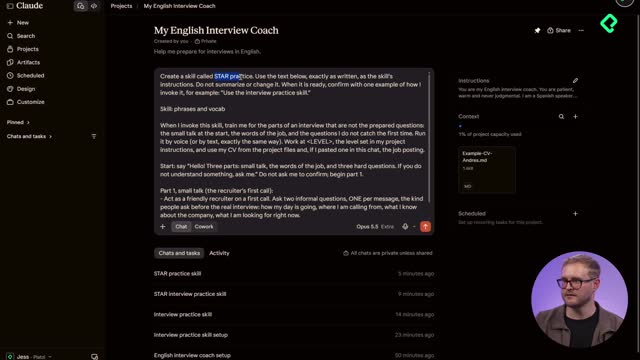
- Create a project that organizes your interview practice.
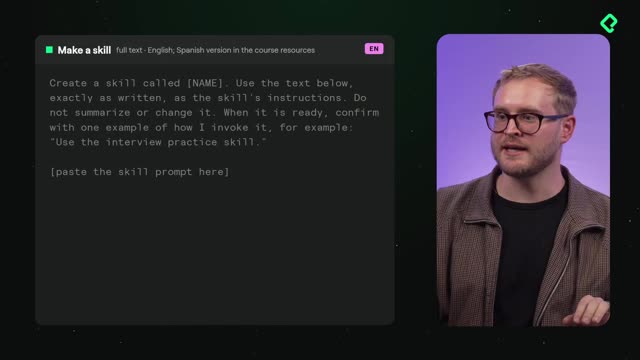
- Build skills focused specifically around interviewing.
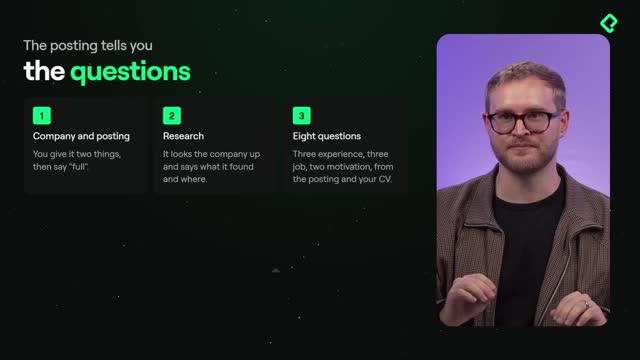
- Practice voice interviews out loud, not just in writing.
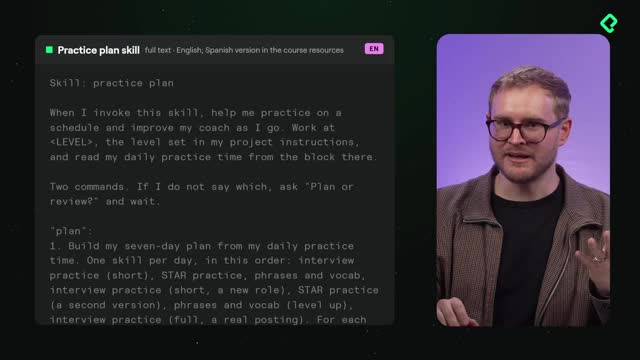
- Improve your performance over time by repeating and refining.
And here is what makes it stick: you also pick up vocabulary and phrases that show up again and again in real interviews. That is the difference between sounding memorized and sounding natural.
How can I practice English interviews on my own? Use an AI tool to build interview focused skills, then run voice interviews where you answer questions out loud. Repeat the sessions and review your answers to improve over time.
Why use artificial intelligence to practice interviews?
AI gives you something a textbook never could: a responsive partner available whenever you want. You can run a voice interview, hear the questions, and answer as if the moment were real.
The big advantage is repetition without limits. As Jess puts it, this is something you can use forever to practice as much as you want. You are not waiting for a tutor or a scheduled class; you set the pace.
Why practice voice interviews instead of writing? Interviews happen out loud, so practicing with your voice trains pronunciation, pacing, and confidence under pressure, which writing alone cannot build.
Are these interview skills useful beyond English class?
Yes, and this is where it gets interesting. The skills you build here transfer across contexts. You can aim them at English learning specifically, or stretch them toward general interview practice, depending on how you want to take it.
That flexibility means your effort compounds. Whether your goal is passing an English certification conversation or nailing a real job interview, the same muscle, speaking clearly under question, is the one you are training.
Who is this course for? Anyone preparing for interviews in English, from job seekers to English learners who want realistic speaking practice they can repeat on their own schedule.
The invitation from Jess is simple and direct: stop waiting, start the course, and become a pro at interviews in English. If you have ever felt nervous answering questions in English, drop a comment with the interview situation you most want to practice.