Contenido del curso
Módulo 2: Escucha Activa y Monitoreo
Módulo 3: Taxonomía, alertas y notificaciones
Módulo 4: AI y gestión de crisis
Módulo 5: Diseño del Protocolo de Crisis
Módulo 6: Recuperación, Aprendizaje y Futuro
Why Fake News Hits Before You React

Resumen
Fake news travels six times faster than real news on social media, and people are 70% more likely to share it. That single fact reframes how you should think about digital crisis management: by the time a crisis hits, disinformation has already taken the lead, and your reputation depends on how fast and how clearly you respond.
Why does every digital crisis start the same way?
Every crisis begins with the same ingredients: posts, rumors, fake news, and deepfakes. The noise builds, panic spreads, and the algorithm rewards outrage before truth. But inside that chaos there is always a signal, and whoever learns to read it controls the narrative.
In the digital world, you don't avoid crises, you manage them. Your only real shields are three: calculated silence, speed, and strategic truth. Lean too hard on one and you lose the others.
What is strategic truth in crisis communication? It's the discipline of saying what is verified, when it's verified, and only as much as your audience needs to keep trust. Not spin, not silence, just timing plus accuracy.
What does it mean that 70% of crises are latent?
Around 70% of organizational crises are latent, meaning they are known problems that were never addressed in time. That number changes the job description of anyone managing reputation: you're not a firefighter, you're a mapper.
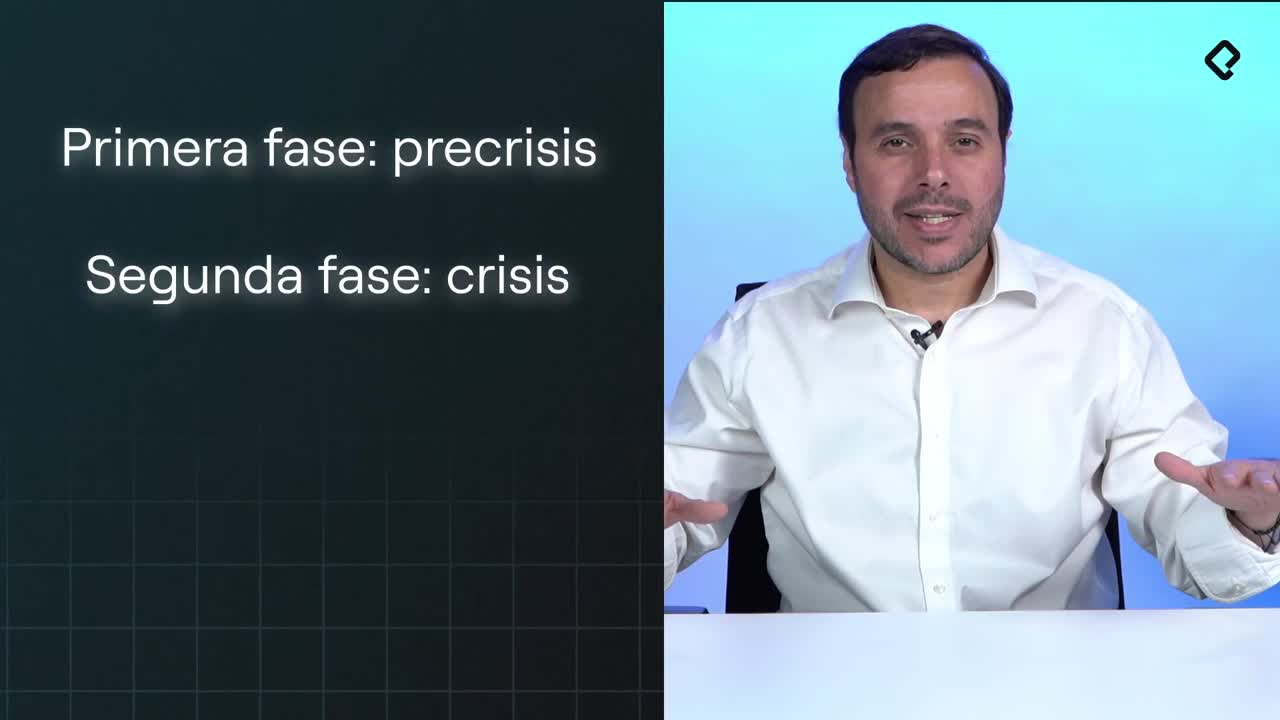
The pre-crisis stage is where battles are actually won. And it's won with three concrete tools:
- Configured alerts that monitor mentions, sentiment and unusual spikes.
- Decision trees that tell your team who acts, when, and with what authority.
- Pre-approved messages ready to deploy in minutes, not hours.
When the hit lands, time stops being your ally. Improvising at minute zero is how small problems become trending topics.
How is artificial intelligence changing the threat?
The most dangerous front today comes from artificial intelligence. Deepfakes, AI generated fake news and bot networks can fabricate a scandal before your team even opens Slack. Falsehood travels faster than truth, and the infrastructure behind it is industrial.
Around 32% of global web traffic is linked to fake profiles capable of amplifying outrage and distorting trends. That's not a fringe problem, that's one in three interactions potentially manipulated.
What is a deepfake and why does it matter for brands? A deepfake is synthetic audio or video generated with AI that imitates a real person. For brands it matters because a fabricated clip of your CEO can go viral before you can prove it's fake.
How do strong brands respond under algorithm stress?
Solid brands aren't defined by avoiding crises, they're defined by how they respond when the algorithm is stressing them. And here comes the part most teams miss: reputation is not image, it's sustained trust.
Image is what people see in a campaign. Trust is what they remember when something goes wrong. Early detection, fast verification and a clear protocol are what protect that trust when six-times-faster fake news is already in motion.
What's the difference between reputation and image? Image is the perception you project; reputation is the trust people accumulate over time based on how you behave, especially under pressure.
The takeaway is practical: map your latent risks, automate your alerts, prepare your decision tree, and treat AI generated disinformation as a baseline threat, not an exception. From here, you'll build an actionable kit ready to handle the next crisis. Tell me in the comments which of these three shields, silence, speed or strategic truth, you find hardest to apply in your own work.