13 Prepositions of Place to Describe Where You Live
Contenido del curso

Habla de preferencias personales en Inglés


Habla de tu familia en Inglés



Habla de prendas de vestir en Inglés


Habla de tu rutina personal en Inglés


Habla de lugares y compras en Inglés


¡Practica tu Inglés!

Recursos
Resumen
If you want to answer the question where do you live? in English, you need prepositions of place. These little words tell you exactly where an object sits in relation to another, and they are essential for describing your home, your neighborhood, and everything around you. This lesson is perfect for beginner English learners building their first vocabulary about family and location.
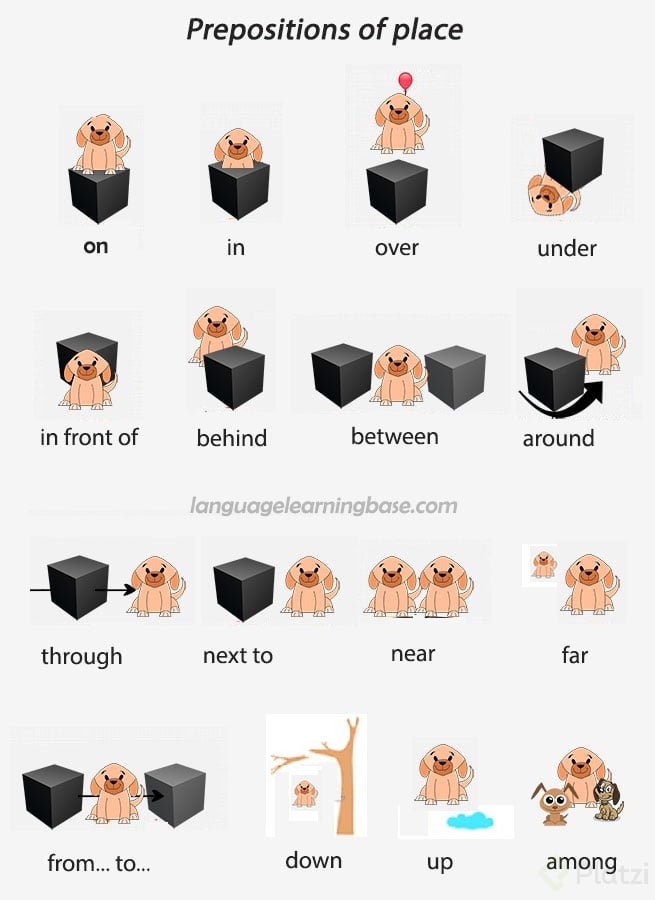
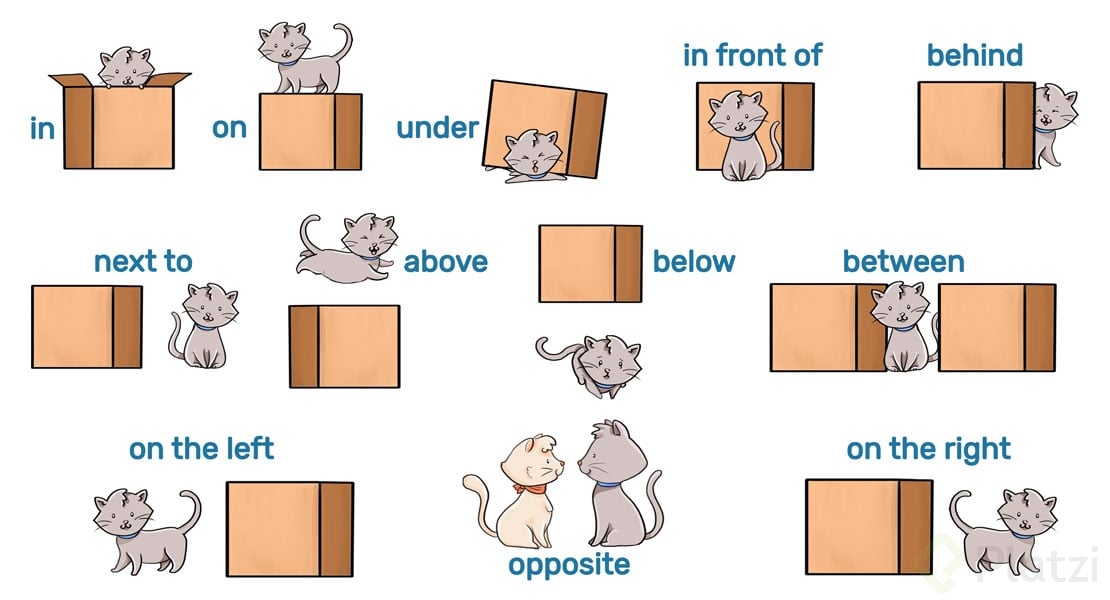
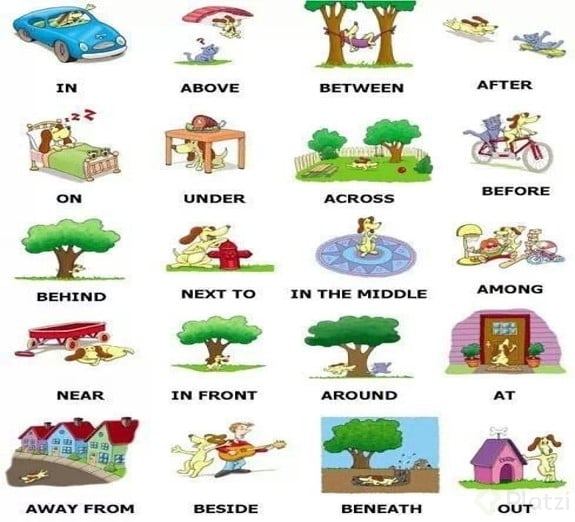
The class introduces 13 prepositions of place through visual examples: on, in, above, below, over, under, in front of, across from, behind, between, next to, to the left of, and to the right of [00:24]. It sounds like a long list, but once you connect each word to a clear image, they stick fast.
Which prepositions describe an object touching or floating?
The first trick is noticing space and contact. Some prepositions mean two objects are touching; others mean there is space between them.
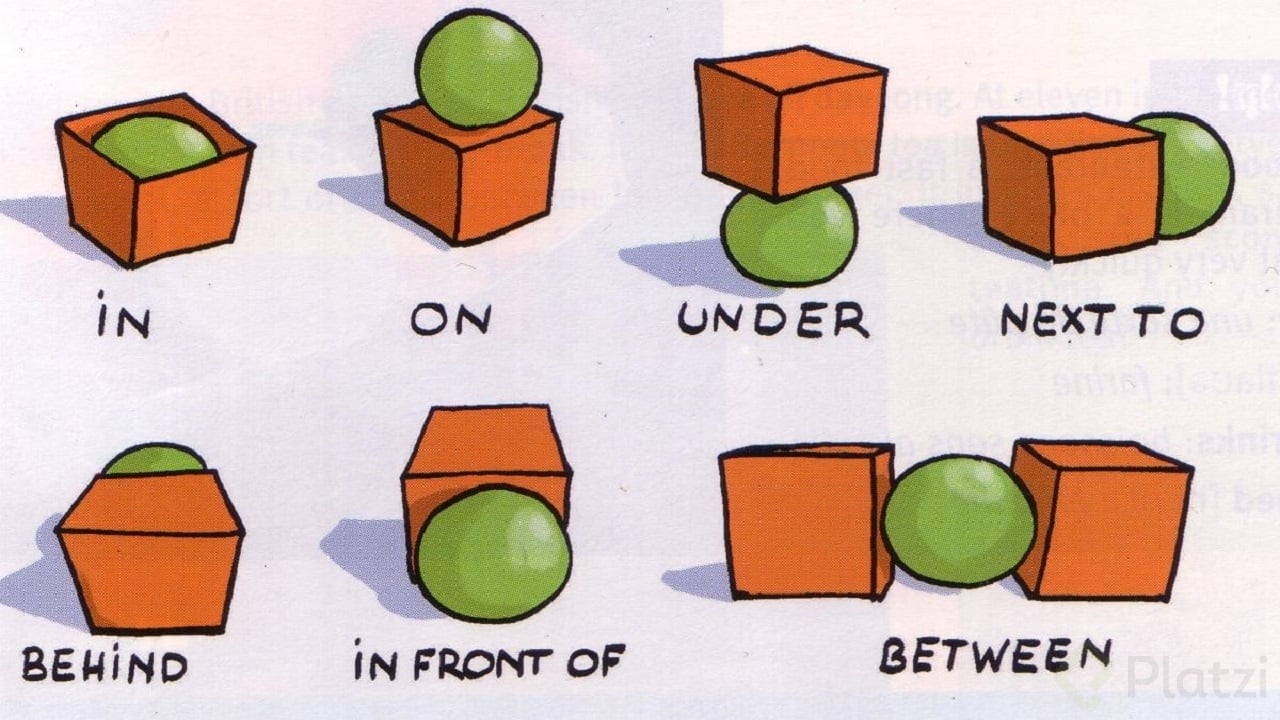
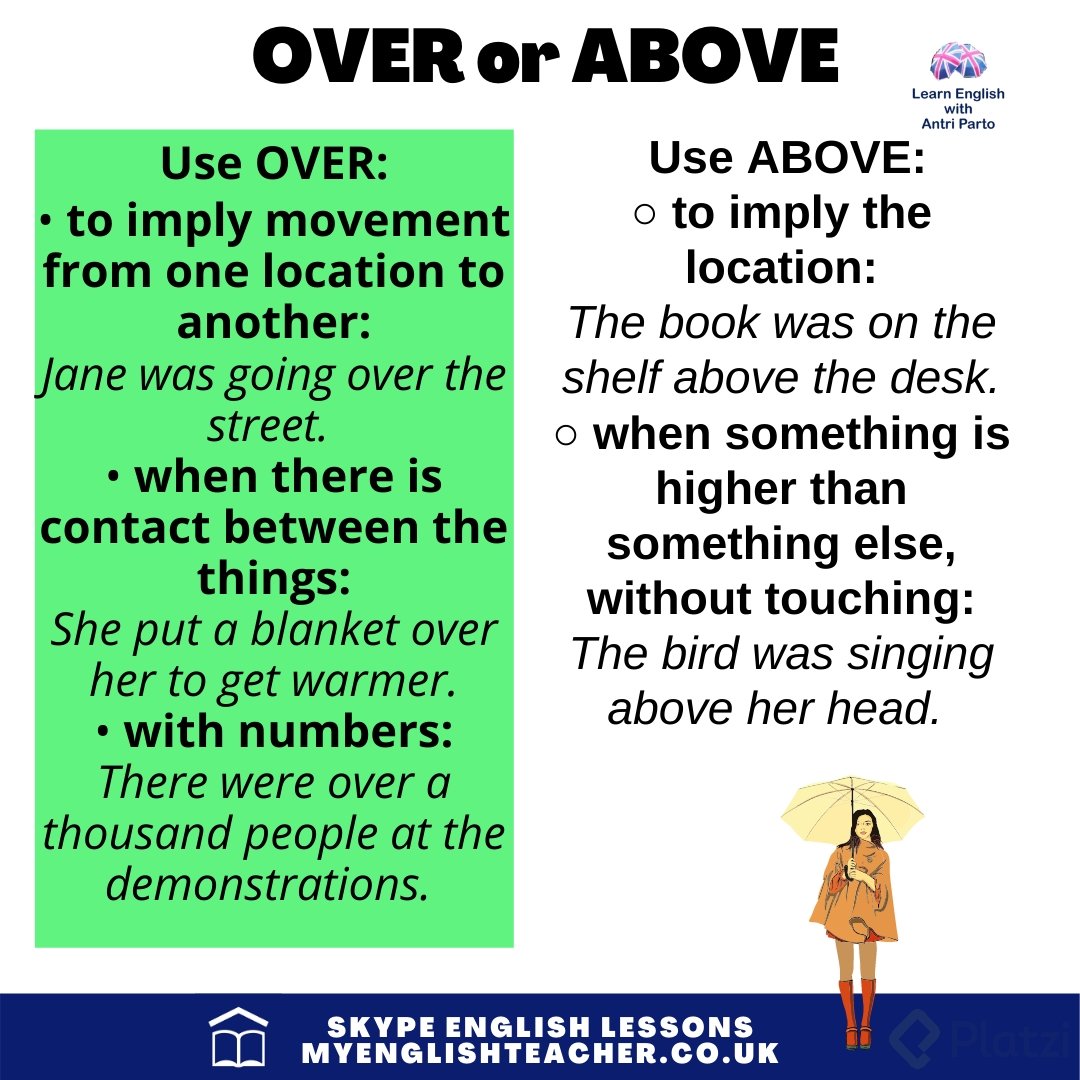
When the ball rests directly on the box, touching its surface, you say the ball is on the box [01:07]. When there is space between the ball and the box and they are not touching, the ball is above the box [01:24]. And here is a subtle one: when a rectangle covers the surface of the box with only a little space, it is over the box [01:39].
The same logic works underneath. Below means there is more space between the objects, while under means there is less space [02:05]. Look at these paired words carefully because they are easy to confuse.
What is the difference between below and under? Both mean an object is lower than another. You use below when there is more space between them, and under when the objects are closer together or one covers the other.
How do I show position from front, back, and sides?
Once you understand vertical space, the next step is describing horizontal positions using a reference point.
When the ball moves so you can see it clearly ahead of the box, it is in front of the box [01:49]. When the ball looks hidden because the box blocks it, it is behind the box [02:24]. And when one object sits right beside another, it is next to the box [01:57].
With apples, books, and boxes, the lesson reinforces these same words. The apple can be between two boxes, meaning it sits in the middle of them [03:00]. The apple can be in front of the book, then behind the book, showing how position changes the preposition [03:17].
Sides need their own vocabulary. Using a table as a reference point, the yellow chair is to the left of the table, and the blue chair is to the right of the table [04:34]. Notice how you always need a point of reference to say left or right.
How do I describe places across a street?
Since the goal is answering where do you live?, you also need to talk about buildings, streets, and neighborhoods.
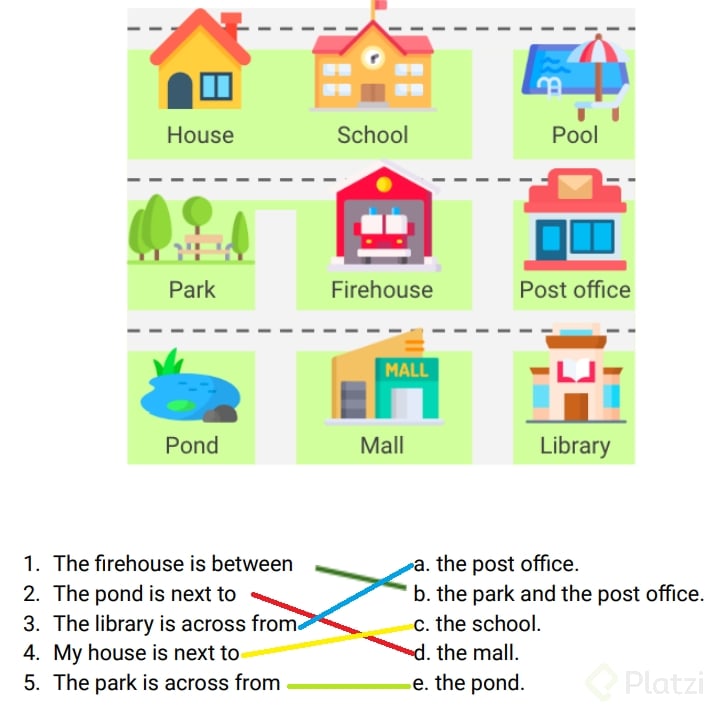
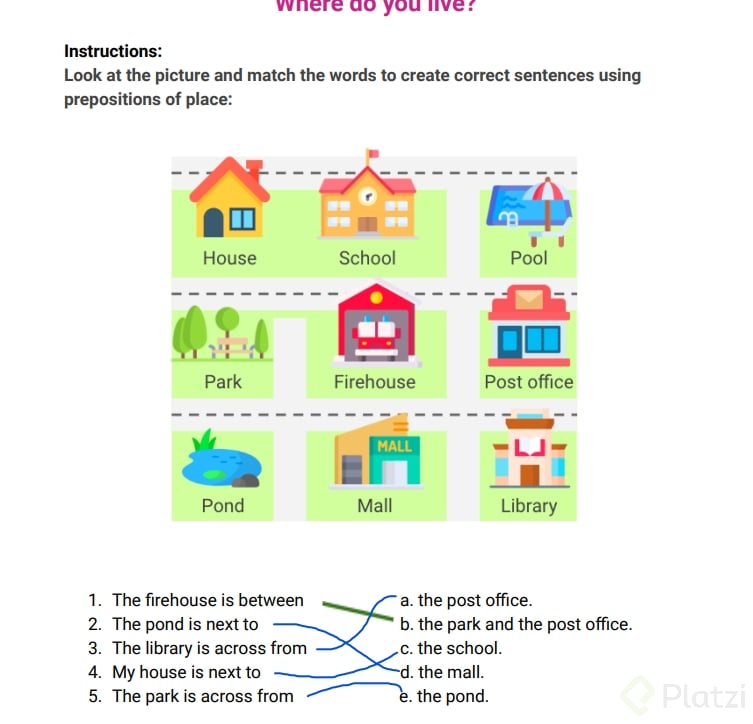
When two places are separated by a street, you say they are across from one another [05:14]. In the example, a park and a school are divided by a street, so the park is across from the school. If you want to reach the park, you have to cross the street, and that is exactly why across from fits [05:30].
When do I use across from? Use across from when two places or objects face each other with something in between, usually a street. Example: the pool is across from the post office.
The neighborhood map ties everything together. A pool can be across from the post office, and a mall can be between the pond and the library [08:34]. These are the real-life sentences you will build every day.
Can I describe the same object in two ways?
Yes, and this flexibility is one of the most useful things in the lesson. The same position can often be expressed with more than one preposition, depending on the reference point you choose.
Look at these practical examples pulled from the class:
- A plant can be next to the sofa or to the left of the sofa, both correct [06:32].
- A laptop is not on the floor if a rug is in between; it is on the rug [07:16].
- A glass of water sits in front of the keyboard when placed ahead of it [06:55].
- An apple can be under or below a table when the image is just a reference and not a real object [03:36].
That last point matters: with drawings and reference images, both under and below can work because you are estimating space rather than measuring it.
How do I finally answer where do you live?
Now you can combine several prepositions into one natural sentence. Using the neighborhood map, you can say: My house is next to the school and across from the park [09:41].
That single sentence uses two prepositions of place, a reference point for each, and answers the million-dollar question of the whole module. When you describe your own home, pick clear landmarks like a school, a store, or a park and connect them with the right preposition.
Try writing your own sentence about where you live using at least two of these prepositions. Which ones describe your neighborhood best? Share your example and keep practicing with the activities in your worksheet.
13 Prepositions of Place to Describe Where You Live