Editing a podcast is the stage where your raw recording becomes a real episode, and it works a lot like editing a written text. Here you will learn the two foundational layers of podcast editing and the export formats that keep your show sounding professional across platforms.
What is narrative editing in a podcast and why does it matter?
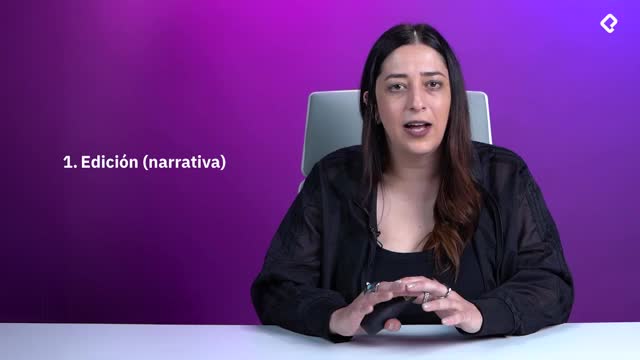
Before touching effects, music beds or any post production, you start with narrative editing. This is the moment when you take your fríos (the recorded voices without any processing) and shape them so they make sense, follow your script and hit the duration you planned.
This layer aligns your recording with the escaleta you built earlier and protects your editorial pillars. It is rarely the most talked about step, but it is arguably the most important, because it makes sure your episode communicates exactly what you decided to communicate from day one.
What does narrative editing actually do? It removes redundancies, cuts filler ideas, trims long silences and lets you fact check anything you or your guests said before it ever reaches your audience [02:00].
How can you practice narrative editing with a simple exercise?
In the resource box you will find a text designed for a five minute recording. The challenge has two rounds:
- Record the full text, around five minutes.
- Edit it down to a clean three minute version.
- Push it further into a tight two minute cut.
The goal is to feel, in your own hands, how trimming filler and redundancies sharpens your message without breaking the story.
How do you do a clean up of fríos without losing quality?
Once the narrative is locked, you move to the next layer: cleaning the fríos. If narrative editing is rewriting, this stage is closer to corrección de estilo. It is technical, detailed and the part that gives your podcast a professional finish [04:30].
First, a quick distinction. The crudos are the raw signal coming straight from the microphones. The fríos are the exported voice tracks, ready to be edited, still without music, effects or processing.
What is the difference between crudos and fríos? Crudos are the raw mic signal. Fríos are the exported voice tracks you actually edit, still clean of music and effects.
What should you remove during fríos cleanup?
This pass is where you refine the audio line by line. Focus on:
- Long, unnatural silences that slow the listener down.
- Ambient noise that sneaked in during recording.
- Filler words and muletillas that add no value.
- Mistakes followed by a retake, keeping only the good version.
Be careful: only cut when it does not break a word or distort the natural rhythm of speech.
Which AI tools help clean podcast audio?
There are paid options, free options and features already built into your DAW. A common one is gate noise, which closes the door to ambient sound whenever no one is speaking, so background noise disappears between phrases [06:10].
More advanced tools go further and reconstruct voice clarity, remove reverb or isolate speech. The full list lives in the resource box, so you can test which one fits your workflow.
Which export formats should you use for your podcast episodes?
The most frequent question at this stage is simple: in what format do I export? The recommendation you will hear almost everywhere is to export in two formats: WAV and MP3 [08:00].
Each one plays a different role in your distribution chain, and using both protects your quality while keeping your files compatible with hosting platforms.
WAV or MP3 for podcasts? Export a WAV as your high quality master and an MP3 as the lighter file you upload to platforms. Keep both, always.
Why export first in WAV and then in MP3?
WAV keeps maximum audio quality, which also means a heavier file. MP3 compresses the audio, lowering the weight so it fits the limits and conditions that podcast platforms require for uploads.
The smart workflow looks like this:
- Finish your final edit.
- Export a WAV version and store it as your master backup.
- Export an MP3 from that same final mix.
- Distribute the MP3 across your hosting and podcast platforms.
That way you always have a pristine copy to come back to, while your audience streams a file optimized for fast delivery. With these two layers of editing and your export plan ready, you have the foundation to step into sound design and fine post production in the next class. Tell me in the comments how the five to three to two minute exercise went for you.