When to Shorten Going To into Gonna
Curso de Inglés Intermedio B1: Expresiones de Tiempo y Cantidad
Contenido del curso

Nouns and Pronouns
- 2

Comprensión Oral: Diálogo y Preguntas Clave
05:41 min - 3

Pronombres Indefinidos en Inglés: Uso, Prefijos y Sufijos
12:06 min - 4

Práctica de pronombres indefinidos en inglés
05:17 min - 5

Pronombres Indefinidos Variables y Uso de "Else"
05:24 min - 6

Countable vs Uncountable Nouns en inglés
05:09 min - 7

Sustantivos Contables e Incontables en Inglés
11:12 min - 8

Much, many o a lot of: cuál usar
05:00 min
Get Ready to Describe!
- 9

Adjetivos em inglês para descrever pessoas
04:38 min - 10

Comparativos en inglés: er, more y less
08:47 min - 11

Comparaciones con "as adjetivo as" en inglés
06:15 min - 12

Reflexive Pronouns: When Myself Really Matters
05:14 min - 13

Práctica de listening con adjetivos en inglés
05:42 min - 14

Práctica de conversación en inglés (cotidiano / día a día)
00:00 min
Knowledge, Needs and Future Plans
- 15

Uso de "By" y "With" en Inglés: Ejemplos y Diferencias
06:19 min - 16

Uso de "Have to" para Expresar Obligaciones y Normas
04:24 min - 17

Uso de "know how to" y "know-how" en inglés
04:18 min - 18

When to Shorten Going To into Gonna
Viendo ahora - 19

Entrevistas con el Equipo de Platzi: Comunicación y Estrategias
05:27 min
Experiences with Present Perfect Simple
- 20

Cómo usar el present perfect en inglés
09:15 min - 21

Uso de "Since" y "For" en el Presente Perfecto
06:04 min - 22

Preposiciones de tiempo en inglés: since, until y más
07:11 min - 23

Diferencias entre "yet", "still", "already" y "just" en inglés
05:04 min - 24

Comprensión Oral: Practica y Respuestas en Conversaciones Reales
04:29 min - 25
Uso del Presente Perfecto Simple en Inglés
00:18 min - 26
Práctica de conversación en inglés (contexto profesional)
00:00 min
Conclusion

When to Shorten Going To into Gonna
Resumen
If you have ever wondered when to use going to and when you can shorten it to gonna, this breakdown is for you. Understanding going to vs gonna helps English learners speak more naturally and avoid one of the most common mistakes: using the reduction in the wrong place. This is perfect for ESL students who want to sound fluent in casual conversation.
Here is the big idea: there are three different ways to use going to, but you can only reduce it to gonna in one specific situation. Let's unpack that.
What are the three uses of going to in English?
The phrase going to shows up in three distinct scenarios, and each one carries a different meaning [00:23].
- Movement toward a place. For example, I'm going to the office or I'm going to my mom's house [00:31].
- A past intention or plan that may have changed. For example, I was going to travel, but the flight was canceled [00:44].
- Future plans and intentions. For example, I am going to visit my mom [00:57]. This last one is the main focus here.
Notice how the same two words shift meaning depending on context. That flexibility is exactly why learners get confused, and why the reduction rule matters so much.
When can you use the reduction gonna?
Here comes the part that trips everyone up. You can only use gonna when the next word is an action [01:15].
Think of it like this: gonna wants a verb right after it. Say I'm gonna study, I'm gonna work, or I'm gonna travel and you are fine. This reduction lives in very informal contexts, so you will hear it constantly in everyday speech.
Can you always replace going to with gonna? No. You can only use gonna when an action verb follows. If the next word is a place, like I'm going to the office, you must keep the full form.
One of the best places to spot this reduction is music. As the lesson points out, One day I'm gonna be a star [01:36] sounds natural because be is an action.
Why do song lyrics use gonna so often?
Song lyrics love reductions because they match how people actually talk. The lesson quotes a famous line: Bad boys, whatcha gonna do? Whatcha gonna do when they come for you? [01:47].
Inside that fragment hides a second reduction: whatcha, which stands for what are you. It is a great reminder that informal English is full of these blended, shortened forms.
How do you build sentences with going to for movement?
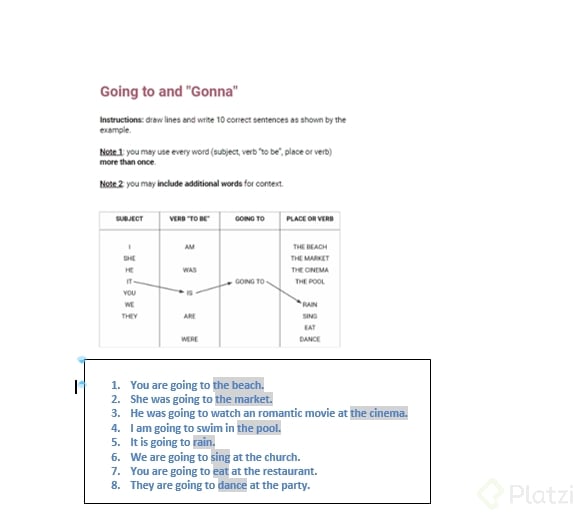
When you talk about moving toward a place, the structure is clean and simple: subject + verb to be + going to + place [02:29].
- He is going to the supermarket [02:37].
- We are going to Mary's house [02:44].
But watch out. You cannot say I'm gonna the movies or I'm gonna the supermarket [02:55]. Since there is no action verb after going to here, the reduction is simply wrong.
How do you talk about a past plan that changed?
The second scenario uses the past form of to be. The structure becomes subject + was or were + going to + verb [03:15].
- She was going to sell her car, but she changed her mind [03:24].
- They were going to travel next month, but they decided not to [03:37].
The key signal here is was or were, which tells you the plan lived in the past and may no longer be happening.
What does was going to mean in English? It describes a plan or intention you had in the past that changed or did not happen. Example: I was going to call you, but I forgot.
How do you express future plans with going to?
This is the star of the show. To talk about future plans and intentions, use subject + am, is, or are + going to + verb [03:53].
- My sister is going to plan my wedding becomes my sister is gonna plan my wedding [04:03].
- I'm going to travel next week becomes I'm gonna travel next week [04:19].
- We aren't going to go to that restaurant becomes we aren't gonna go to that restaurant [04:26].
Because each example has an action verb after going to, the reduction works perfectly in all of them.
When can I say gonna instead of going to? Only when a verb follows, and only in informal speech. I'm gonna eat is correct, but I'm gonna the store is not.
How do you spot gonna in a real passage?
The lesson walks through a great example that mixes both rules [04:36]: He was gonna take a shower because he was going to the office. Here, going to the office stays in full form because it points to a place, not an action.
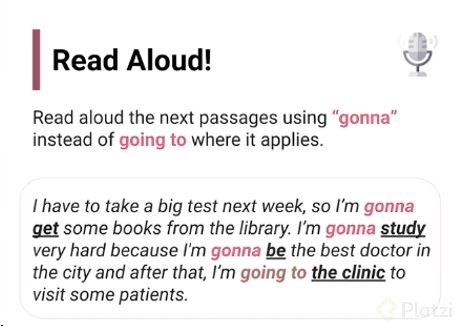
A second passage makes it click even more [05:07]: I'm gonna get some books from the library. I'm gonna study very hard because I'm gonna be the best doctor in the city, and after that, I'm going to the clinic to visit some patients. Every gonna is followed by a verb, while going to the clinic keeps the full form because it signals movement to a place.
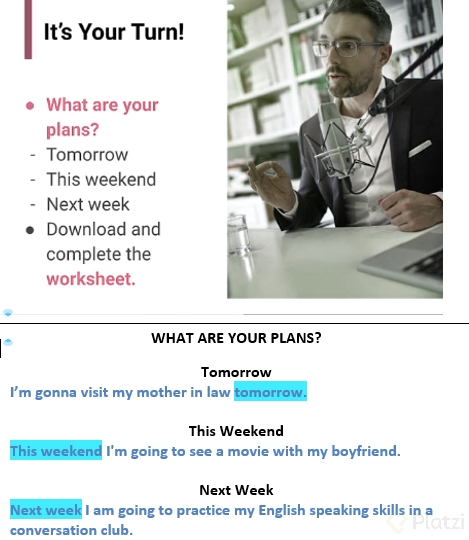
Now it's your turn. What are your plans for tomorrow, this weekend, and next week? Write as many as you can using going to and gonna, and share them in the comment section below.