Contenido del curso



Desbloqueos creativos



Convergencia: Técnicas de generación de ideas
- 8

Técnicas de generación de ideas para resolver problemas creativos
00:40 min - 9

Cubing Method for Better Brainstorming
07:21 min - 10

Técnica Crazy 8s
03:35 min - 11
Creativity Grows With Fewer Options
Viendo ahora - 12

Solving Problems by Thinking Backwards
03:01 min - 13

Five AI Prompts to Beat Creative Blocks
07:57 min - 14

Six Thinking Hats Method Explained
02:22 min
Incubación

Storytelling: cómo presentar tu idea



Sostenibilidad Creativa: Mantener el Hábito


Creativity Grows With Fewer Options
Resumen
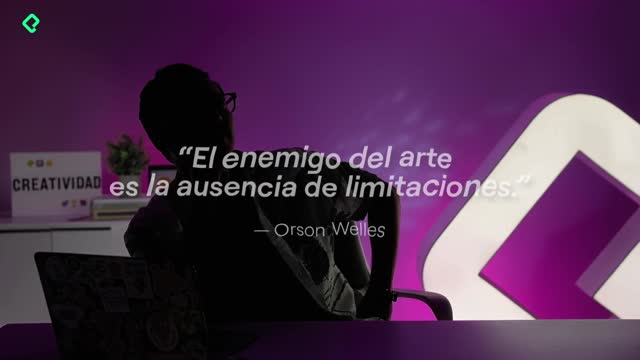
What if I told you that the more limits you set for yourself, the more creative you can become? We tend to romanticize creative freedom, but creativity actually thrives under restrictions. Orson Welles nailed it when he said: "The enemy of art is the absence of limitations."
Why do creative constraints unlock better ideas?
When you have unlimited freedom, you face so many options that you end up trapped in analysis paralysis. Constraints force you to be resourceful with the little you have, and that pressure is exactly where ingenuity shows up.
Think about playing with Legos. With just a handful of basic pieces, you can build endless combinations. Or think about cooking: someone who really knows their way around a kitchen can take five ingredients from the pantry and turn them into ten different breakfasts.
What is the role of constraints in creativity? Constraints reduce decision overload and push you to prioritize, reimagine and communicate ideas in sharper ways. Less freedom often means more original output.
How can you apply self imposed limits to a recurring task?
Here comes the interesting part: you can train this skill with something you already do every week. The exercise is simple, but the shift it produces is real.
Pick one recurring task from your job or current project. It can be a report you write often, a presentation you deliver or a meeting you lead. Any task you already know by heart works perfectly.
Now add arbitrary restrictions that you choose yourself. Some examples to spark ideas:
- Use a maximum of three slides in your presentation.
- Keep your meeting under five minutes from start to finish.
- Build your report using only images, no text.
These are just starting points. The rules are yours to design, and the stranger they feel, the better the creative push.
What happens when you execute the task with new rules?
At first it will feel awkward, almost like forced labor. That friction is the whole point. A task you already master, performed under new rules, forces you to invent fresh ways of executing it.
You might discover that your three slide presentation is clearer than your usual ten. Or that your five minute meeting actually drives more decisions than the one that used to take an hour.
What do I do if my self imposed rules are not working? Change them. Restrictions are tools, not punishments. If a rule blocks you instead of pushing you, modify it, swap it or replace it with a new one until the constraint produces the creative tension you need.
What should you reflect on after the exercise?
The goal is not to suffer through arbitrary rules. The goal is to use limitation as a lens that forces you to prioritize what matters, reimagine the format and communicate your idea better.
Ask yourself three quick questions after finishing:
- What did I cut that I thought was essential?
- What new approach appeared because I had no other option?
- Which of these new habits is worth keeping even without the constraint?
What restrictions did you choose for your task? Drop them in the comments along with your experience doing something familiar under brand new rules, so others can see how you tackled it. In the next class we will flip the logic completely and use the worst possible idea to find the best one.