Contenido del curso



Desbloqueos creativos


Convergencia: Técnicas de generación de ideas
- 8
Técnicas de generación de ideas para resolver problemas creativos
00:40 min - 9

Cubing Method for Better Brainstorming
07:21 min - 10

Técnica Crazy 8s
03:35 min - 11
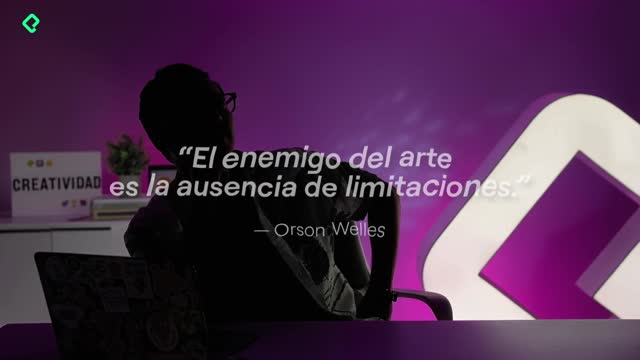
Creativity Grows With Fewer Options
02:31 min - 12
Solving Problems by Thinking Backwards
03:01 min - 13

Five AI Prompts to Beat Creative Blocks
07:57 min - 14

Six Thinking Hats Method Explained
02:22 min
Incubación

Storytelling: cómo presentar tu idea



Sostenibilidad Creativa: Mantener el Hábito


Elevator Pitch Under 2 Minutes with POP
Resumen
A solid elevator pitch can decide whether you connect with a client, an investor, or a future collaborator. Building one forces you to compress your idea, expose blind spots, and prove your project is clear enough to survive in the wild. If you can pull it off in under two minutes, you have a tool that opens doors anywhere.
Why does a short pitch work better than a long one?
You might think more time means more chances to convince. In reality, the opposite happens. When you over explain, you lose focus and your listener checks out. You also start hiding weak spots inside a wall of words you never noticed.
Richard Branson said that if you cannot fit your idea on a napkin, it probably is not ready. It sounds like one of those internet quotes, but it lands. A tight space forces clarity, and clarity is what sells.
Think of your elevator pitch as a movie trailer. You have a few seconds to hook someone so they want to see the full thing.
What is an elevator pitch? It is a short presentation, under two minutes, that explains what you do, why it matters, and why someone should care, all in plain language.
How does the POP structure help you build a clear pitch?
In [02:14] the class introduces the POP structure, a simple framework to bring your idea down to its essentials without losing the core. Each letter is a building block you fill in one at a time.
- P for Problem. What is the central problem you are solving.
- O for Opportunity. Why this problem is actually an opportunity worth chasing.
- P for Plan. How you are going to solve it.
- P for Proof. What evidence, validation, or traction backs you up.
Here is how the instructors filled it in for their own creativity course. The problem: many people could enjoy their work more if they used creative tools, but they believe creativity is only for creatives. The opportunity: creativity is not a mysterious talent, it is a learnable skill. The plan: a practical online course that teaches creative methods step by step. The proof: more than ten years working on creative projects, plus over 200 podcast episodes on the topic.
Filling this template gives you two wins at once. You get clarity on why you are doing the project, and you spot the credentials that make you the right person to do it.
What three questions must your pitch answer?
Around [04:30], a quick checklist appears that mirrors what your listener is silently asking. No matter if you pitch using three acts or POP, run your draft through these:
- Why should I care. The relevance for the person listening.
- Why should I believe in you or your solution. Your credibility, data, and credentials.
- Why should I join or support this idea. What that person actually gains by saying yes.
If one of these is missing, your pitch is not ready yet. It is that simple.
What are the do's and don'ts when writing your pitch?
Once your structure is solid, the writing stage decides whether your pitch sounds human or robotic. The class breaks it into a short list of practical moves.
Do this:
- Balance emotion and logic. Mix the human side with the data side so the pitch feels real.
- Rehearse until it flows. You want it natural, not stiff.
- Know your audience. A potential investor, a client, and a collaborator each need a slightly different tone, even if the facts stay the same.
Avoid this:
- Heavy technicalities. Trying to sound professional with jargon usually backfires in a short pitch. Use the simplest language possible.
- Memorizing word by word. Nerves push you to lock in a perfect script, and then you sound cartonado, like a cardboard cutout reading lines.
How long should an elevator pitch be? Under two minutes. Long enough to cover problem, opportunity, plan, and proof, short enough to feel like a trailer instead of a full movie.
How does a finished elevator pitch sound in real life?
Near [07:45] the instructors perform their own pitch out loud, and it is a clean example of POP plus the three questions in action. The opening states the problem: many people could do better work if they used creative methods, but they think they are not creative. Then comes the credibility: more than ten years working on creative projects with all kinds of profiles. After that, the plan: a practical course that teaches methods to think better, solve problems, and communicate ideas. And finally the invitation: you do not need to draw or be an artist, just bring curiosity, and your work will be easier, more efficient, and more enjoyable.
Notice how every sentence does a job. Nothing floats. That is the real test of a pitch that works.
What is the POP structure for a pitch? A four part framework: Problem, Opportunity, Plan, Proof. It helps you compress any idea into a short, clear pitch without losing what makes it valuable.
The elevator pitch is more than a sales tool. It is a stress test for your idea. If you can deliver it in under two minutes and your listener nods, your concept is alive. Now bring your own project down to pitch form, keep it under two minutes, and drop it in the comments so we can see it.