
Eisenhower Matrix to Prioritize Your Week

Resumen

You have more to do than hours in the day, and while you can't stretch time, you can choose how to spend it. Learning how to prioritize tasks smartly is the skill that separates people who feel busy from those who feel productive, and it starts with one distinction most of us blur every single day.

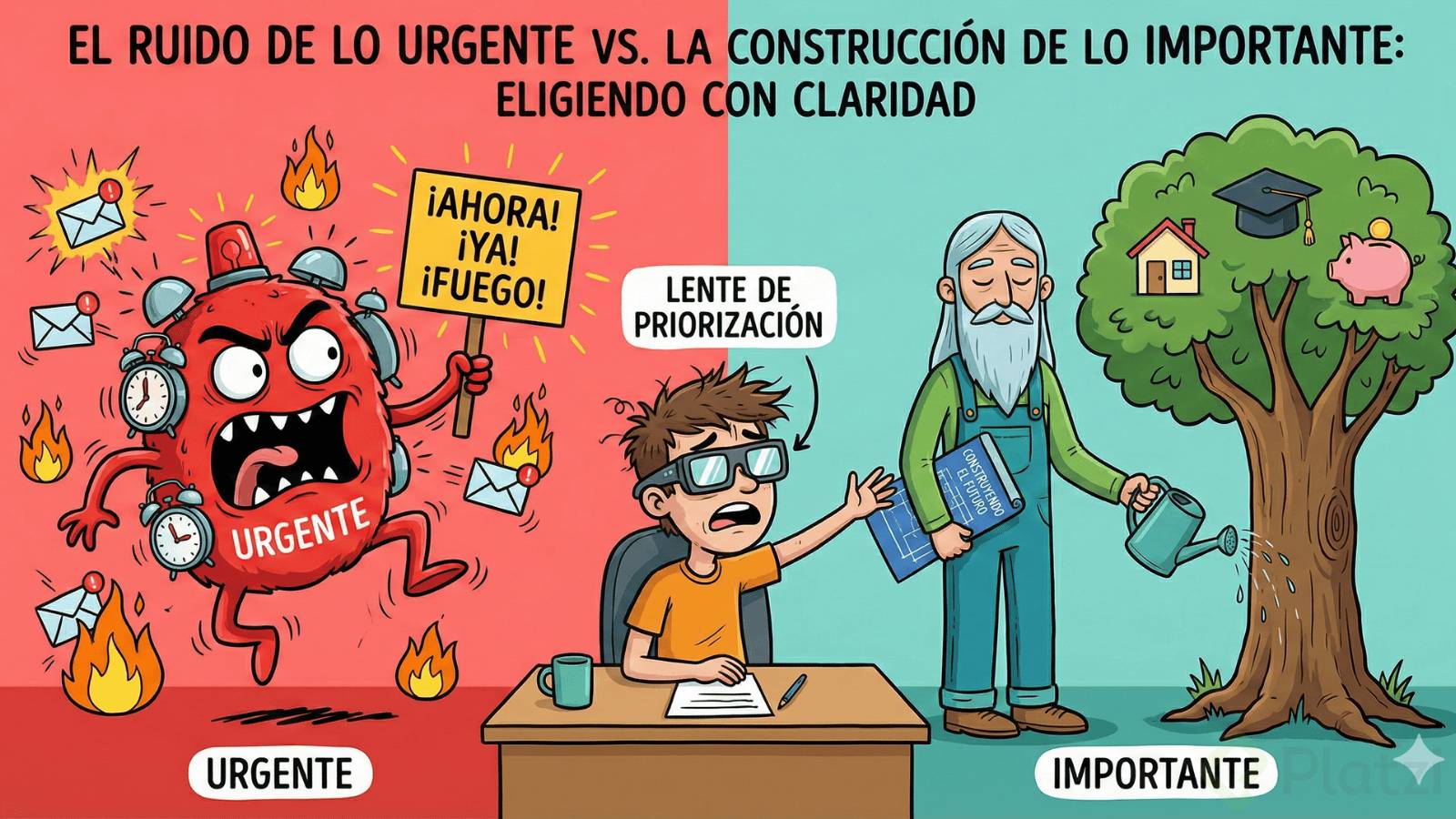
Prioritizing isn't about doing more. It's about doing the right thing at the right moment. And the reason most people feel overwhelmed is simple: they can't tell the difference between what's urgent and what's important.

What is the difference between urgent and important tasks?

These two words sound similar, but they pull your attention in very different directions.

An urgent task demands immediate attention. It has short deadlines or quick consequences if you ignore it. An important task, on the other hand, creates impact in the medium or long term and contributes directly to your goals, results or well being.

Here's a quick rule you can use today:

  • If it affects your future objectives, it's important.
  • If it forces you to act today, it's urgent.
  • If it does both, it goes to the top of your list.

And watch out, because urgent tasks love to disguise themselves as important ones.

What is an urgent task? It's any activity with a short deadline or immediate consequence if ignored, like answering a client email before a meeting. Urgency is about time pressure, not value.

How does the Eisenhower Matrix help you prioritize?

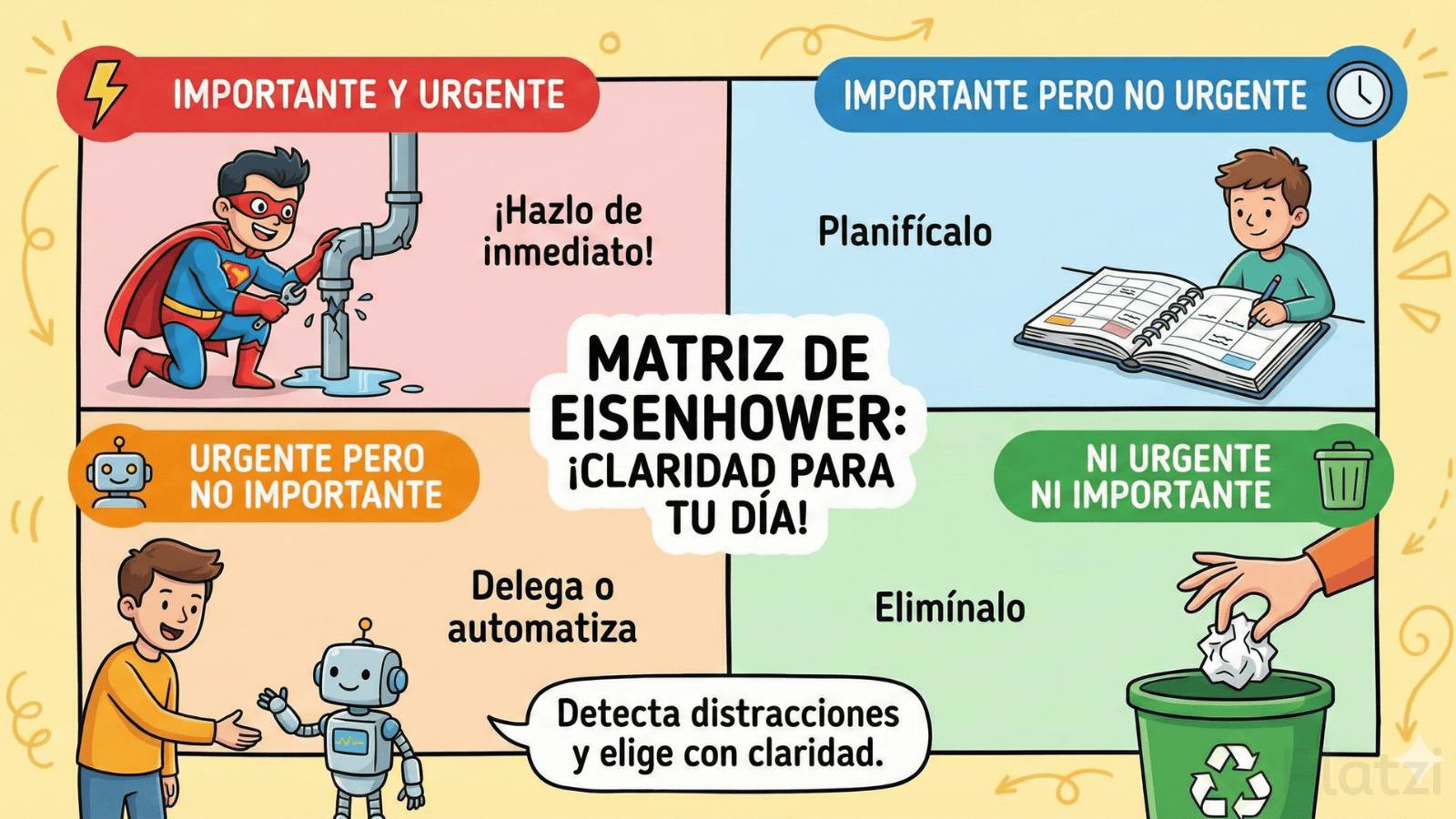
The Eisenhower Matrix is a visual way to decide what deserves your attention first and what can wait. Picture a grid with four sections, and drop each of your tasks into one of them.

  • Important and urgent: do it immediately.
  • Important but not urgent: plan it.
  • Urgent but not important: delegate it or automate it.
  • Neither urgent nor important: eliminate it.

When you place your tasks inside this grid, you stop reacting and start choosing. You'll see at a glance which tasks deserve your energy and which ones are just noise dressed up as productivity.

What are quick wins and why do they matter?

Quick wins, or early victories, are simple actions with low effort and high impact. Tackling them first gives you an immediate sense of progress and the momentum you need to face harder work later in the day.

Think of them as the warm up before the heavy lifting. A short reply that unblocks a teammate, a five minute decision you've been postponing, a quick edit that closes a loop. Small on the clock, big on momentum.

What is a quick win? It's a low effort, high impact task you complete early to build momentum. It doesn't solve everything, but it gives you energy to tackle bigger priorities.

How do you apply the Pareto principle to your tasks?

The Pareto Law, also known as the 80/20 rule, reminds you that roughly 20% of your efforts produce around 80% of your results. Not every task on your list carries the same weight, and pretending they do is what burns you out.

Some activities generate huge progress with little effort. Those are the ones you protect in your calendar, no matter what. The rest, the tasks that eat your time and give back very little, you reduce them, delegate them or eliminate them.

Apply this filter every week and you'll see your results multiply without working more hours. The math is uncomfortable but freeing: most of what fills your day isn't moving you forward.

What is the 80/20 rule in productivity? It's the idea that 20% of your tasks produce 80% of your results. Identify that vital 20% and protect it, then trim or delegate the rest.

How can you start prioritizing your week today?

Write down every task you currently have on your plate. Then pick one of the tools you just learned and apply it.

You could classify everything using the Eisenhower Matrix, mark your quick wins for tomorrow morning, or run your list through the 80/20 filter to find the few tasks that actually move the needle. Any of the three will give you a clearer week than yesterday.

In the resources section you'll find the guide to prioritize smartly, with templates for the Eisenhower Matrix and the early victories framework so you can plug in your own goals.

Share your results in the comments and tell me which tool worked best for you. In the next class we'll cover the natural next step: how to delegate tasks effectively so you multiply your impact without losing control.