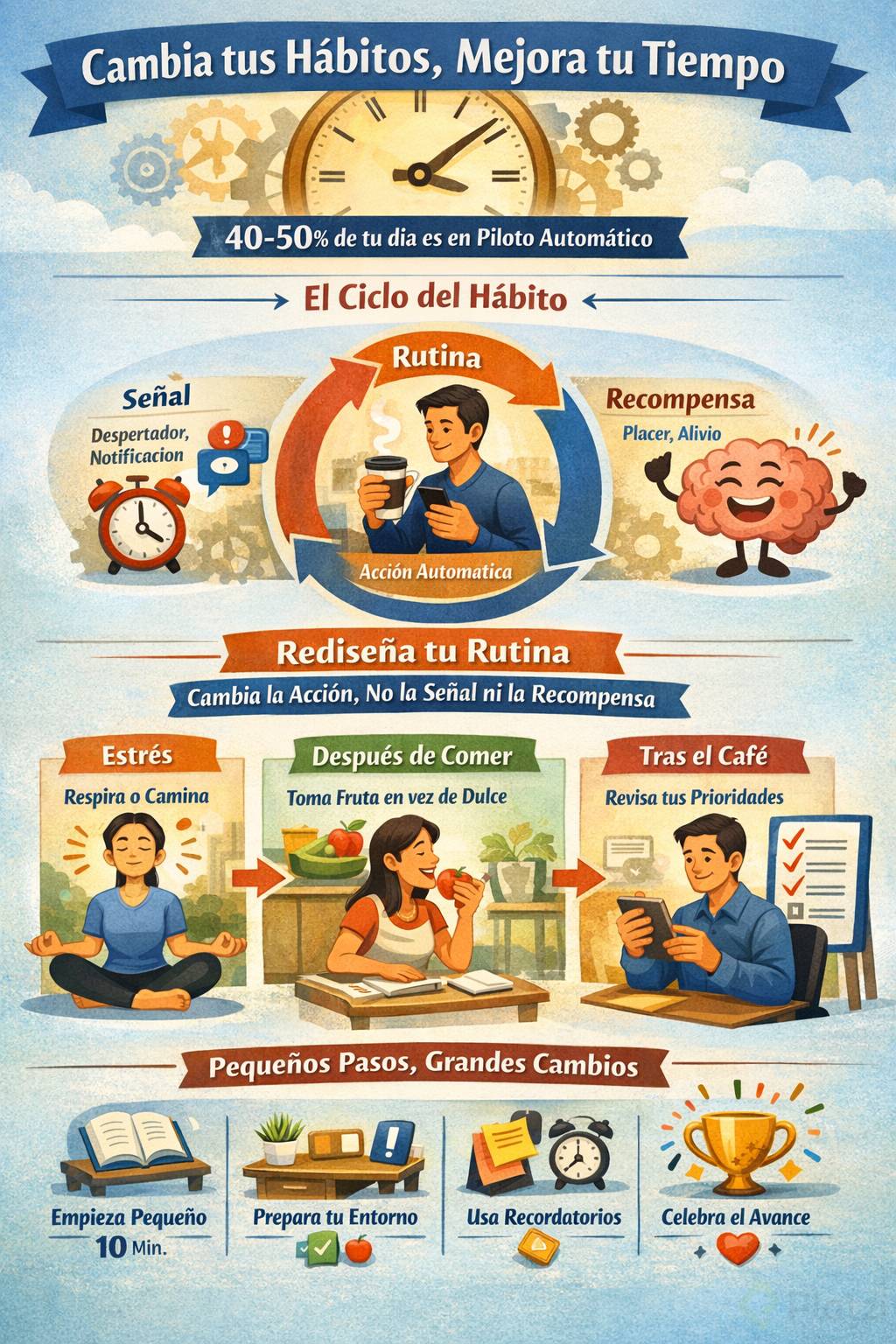
The way you spend your time is shaped by your daily habits, and understanding the habit loop is the first step to taking back control. Every small action, from how you start your morning to how you end your night, forms a pattern that either pushes you forward or holds you back. And here is the part most people miss: between 40% and 50% of what you do each day happens on autopilot.
What is the habit loop and why does it matter?
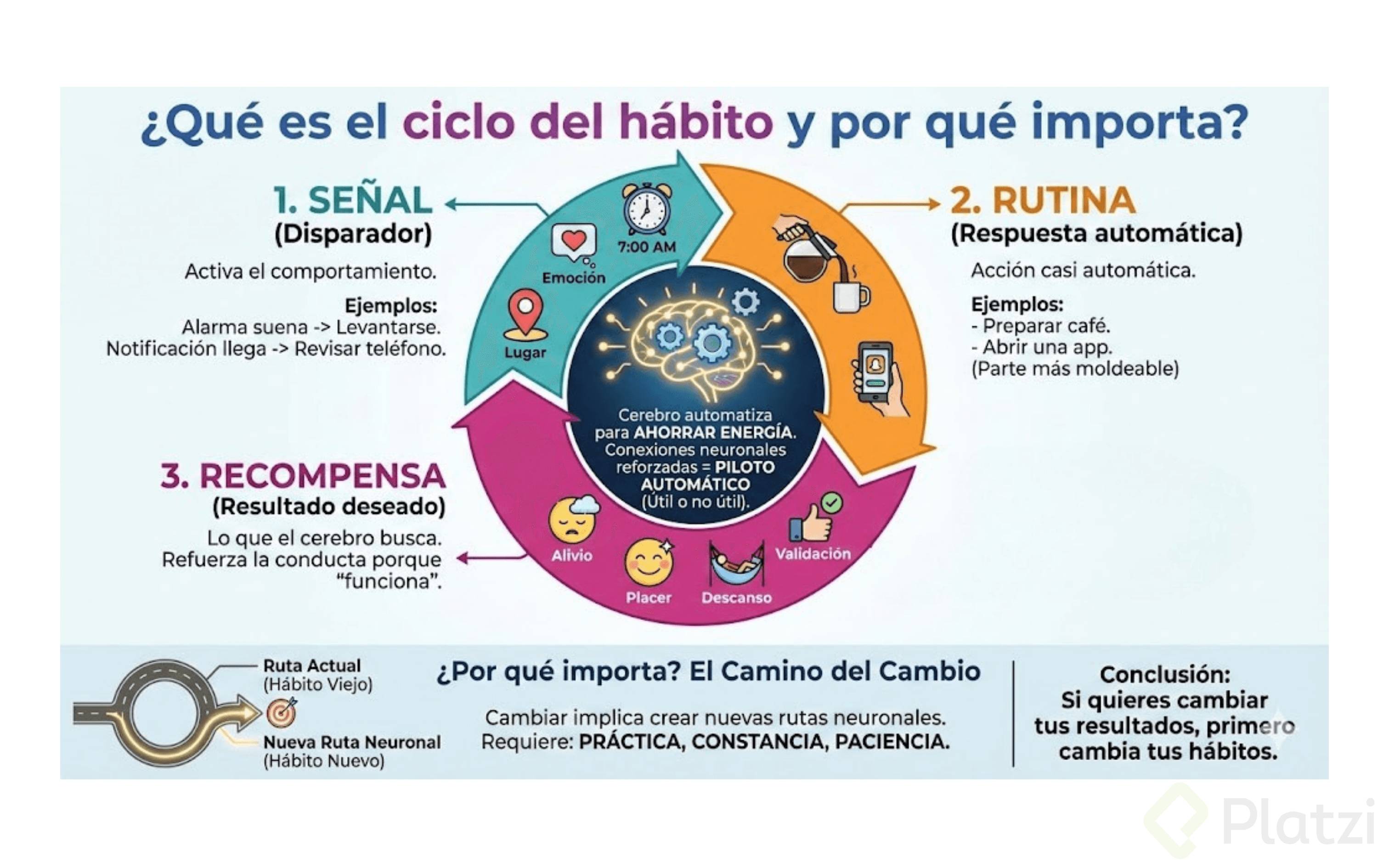
Every habit you have runs on the same three part structure. Your brain builds this loop to save energy, which is why some behaviors feel impossible to break.
The loop has three components working together:
- Cue: the trigger that activates the behavior. It can be a time of day, an emotion, a place or a person. Think of your alarm sounding or a notification popping up on your phone.
- Routine: the action you take almost without thinking. Getting out of bed, brewing coffee, checking the message. This is the visible part of the habit and the most flexible one.
- Reward: the result or sensation your brain links to the action. Relief, pleasure, rest or validation. This is what keeps the loop alive.
Each time you repeat the cycle and get the same reward, you reinforce the neural connection that tells your brain this works, do it again.
What is the habit loop? It is a three step pattern of cue, routine and reward that your brain uses to automate behaviors. Once the loop is wired, the action happens with almost no conscious effort.
How does your brain turn behavior into autopilot?
With every repetition, your brain links cue, routine and reward, and strengthens the neural circuits that connect them. Over time, that connection becomes so efficient that the behavior runs without effort. Your mind hits autopilot.
This is great when the habit serves you. It is frustrating when it does not. That same efficiency explains why useful habits feel hard to install and unhelpful ones feel impossible to drop.
Changing a habit means building new neural routes, and like any training, it takes practice, consistency and patience.
Why is so much of your day automatic?
If 40 to 50% of your daily actions happen automatically, then most of your time is not driven by conscious decisions. It is driven by routines you programmed without realizing it. That is why, if you want to change your results, you need to start by changing your habits.
How do you redesign a habit without eliminating it?
Here is the good news: you do not need to kill your bad habits. You need to redesign them. The rule is simple and powerful.
Keep the cue, keep the reward, change the routine.
Let me show you how this plays out in real life.
- Stress example: every time you feel stressed (cue), you scroll social media (routine) to distract yourself (reward). Instead of forcing yourself to stop, swap the routine for a five minute walk or a deep breathing pause. You still get the relief, but with a healthier response.
- Afternoon sugar example: after lunch (cue), you crave something sweet (routine) for that hit of pleasure or energy (reward). Replace it with a coffee, a piece of fruit or a short walk. You keep the pause and the enjoyment, but trade the guilt for wellbeing.
How do I change a bad habit without willpower? Identify the cue and the reward, then swap only the routine. Your brain still gets what it wants, and the new behavior installs faster because two thirds of the loop stay the same.
What are practical tips to install new habits today?
Redesigning your routine works better when you stack small, intentional moves. Try these five tactics:
- Start small. Do not try to change everything at once. If you want to read more, ten minutes a day is enough.
- Design your environment. Leave visible what you want to encourage and hide what you want to avoid. Put a book on your desk and store your phone in a drawer.
- Use visible reminders. A sticky note, an alarm or an app can act as the cue that keeps the new habit present.
- Anchor the new habit to an existing one. For example: after I drink my morning coffee, I will review my priorities for the day.
- Celebrate small wins. Every step forward reinforces the reward and locks in the habit.
These tactics work because they respect how your brain actually learns, instead of fighting against it.
How do you apply this to your own routine?
Grab the Design your new habit template from the class resources and pick one habit you want to change or improve. Write down its cue, its current routine and the reward you get from it. Then swap the routine for a new action that moves you closer to your goals.
Run the experiment for one week and pay attention to how you feel. Share your reflections in the comments so we can learn from each other.