Thinking Like a Project Manager at Work

Resumen

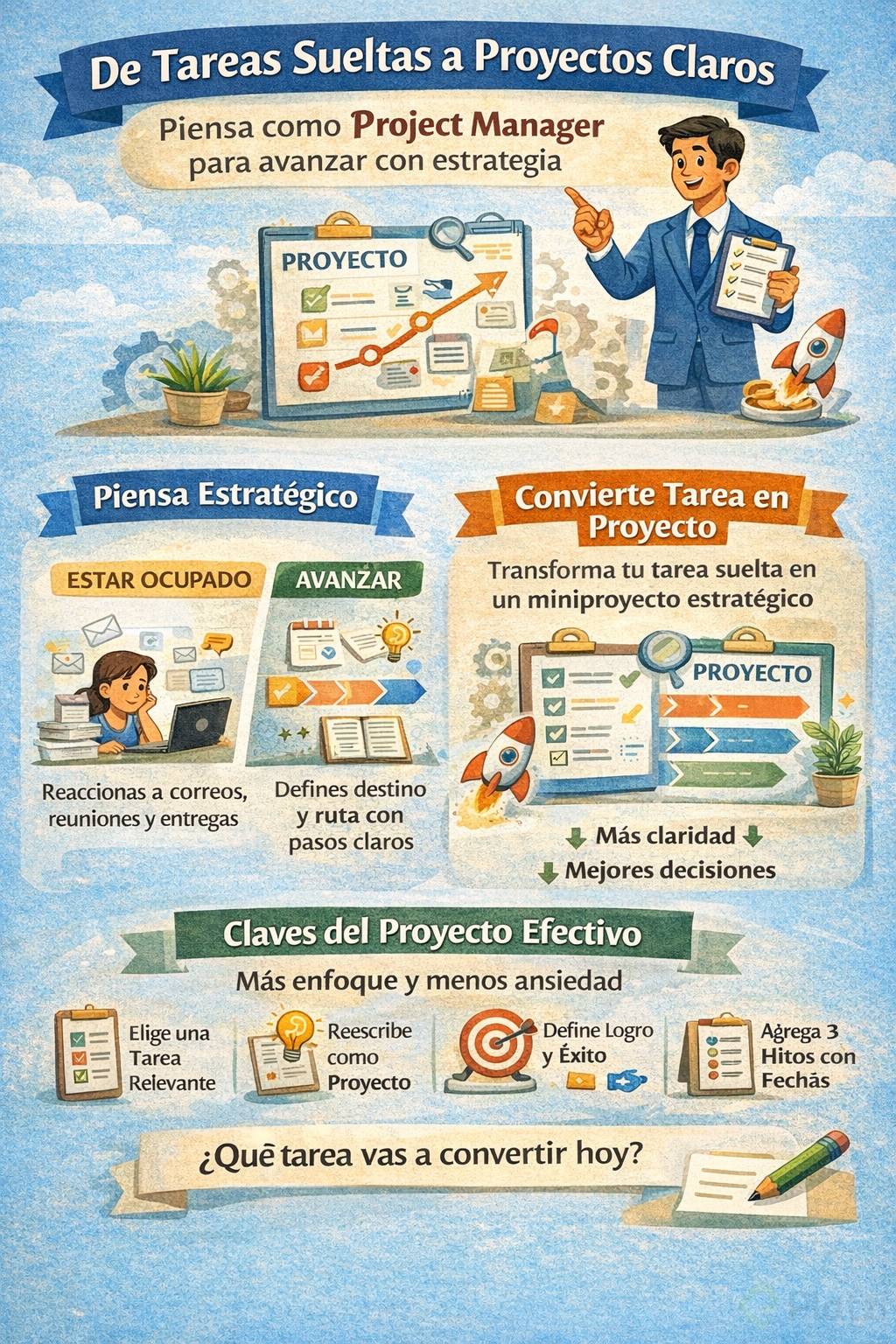
The difference between being busy and actually moving forward isn't how many tasks you check off, it's how you structure them. When you start thinking like a project manager, isolated to-dos turn into projects with a clear destination, and that shift changes the way you work and the results you get.

Why does thinking like a project manager change your results?

A reactive mindset sees the day as a pile of disconnected tasks: answer emails, prep a deck, sit through three meetings. A project manager mindset reframes that exact same scenario as something bigger.

Instead of I have to prepare a presentation, you'd say: I'm running a strategic communication project that includes research, message design, material production and coordination with the committee to get approval. Same workload, different lens. And here's the interesting part: when you change how you think, you change how you act.

What's the difference between being busy and being effective? Being busy means reacting to tasks as they come. Being effective means defining the destination, mapping the route and adjusting along the way.

How do I turn a task into a real project?

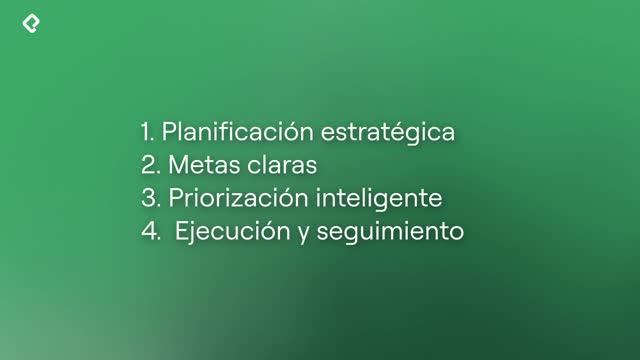
To make the shift, you need a structure. Five elements turn any pending task into something you can actually manage.

  • Define clear objectives. Not make a presentation, but convince the committee to approve the proposal. Clarity reduces anxiety [00:54].
  • Establish success criteria. How will you know you made it? For example: approval with an assigned budget [01:08].
  • Map your resources: time, information, tools and allies you'll need [01:18].
  • Anticipate risks and prepare simple plan Bs. What could go wrong? [01:25].
  • Break the work into phases and milestones with clear dates so you see progress week by week [01:34].

This structure is what separates someone who improvises from someone who delivers. A good PM doesn't wing it.

What are success criteria and why do they matter?

Success criteria are the concrete signals that tell you the project worked. They're not vague feelings like it went well; they're measurable outcomes such as a signed approval, a budget assigned or a deadline met.

Without them, you don't know when to stop or whether you actually won. With them, you have a finish line.

What is a milestone in a project? It's a checkpoint with a date attached. Milestones split a big project into manageable stages so you can track progress instead of waiting until the end.

How do I practice this with a real pending task?

Head to the resources section of this class and download the Mini Proyecto PM template [01:42]. Then walk through these steps with one task that actually matters to you.

  1. Pick a relevant pending task.
  2. Rewrite it as a project: what exactly do you want to achieve?
  3. Define the expected result and two success criteria.
  4. List the resources you need and the obstacles you might hit.
  5. Set three milestones with dates.

Don't chase perfection, chase clarity. The goal of this exercise is to pull you out of pure reaction mode and into strategic thinking.

In the next class you'll take this mindset further with AI powered tools that help you plan with precision and save hours of work [02:10]. Which task are you going to reframe as a project first? Drop it in the comments.