Missing a flight can ruin a perfect trip in seconds. Front desk advice is the final impression guests remember. Here you’ll find a clear, guest-focused guide to recommend airport transfers, explain essential vocabulary, give precise directions, and help guests leave early enough to avoid stress.
What airport transfer options should you offer?
Choosing the right option depends on budget, time, luggage, and comfort. Think of a simple menu: public transportation, private options, and shuttle services. Your role is to match the guest’s needs with the best fit.
- Public transportation: the budget-friendly choice. Ideal for backpackers or students. Longer travel times and multiple stops. Crowded spaces with luggage can be difficult.
- Private options: the convenient choice. Taxis, rideshare apps like Uber or Lyft, or private drivers. Door-to-door service and privacy. Fast but more expensive. Can be delayed by heavy traffic.
- Shuttle service: the balanced choice. Shared van or bus on a regular route. Hotel pickup and group-friendly. Cheaper than a taxi, pricier than a public bus. May take longer due to multiple pickups.
How do you explain options with professional vocabulary?
Use simple, precise language and repeat key terms to build confidence. Offer specific, actionable information that guests can follow immediately.
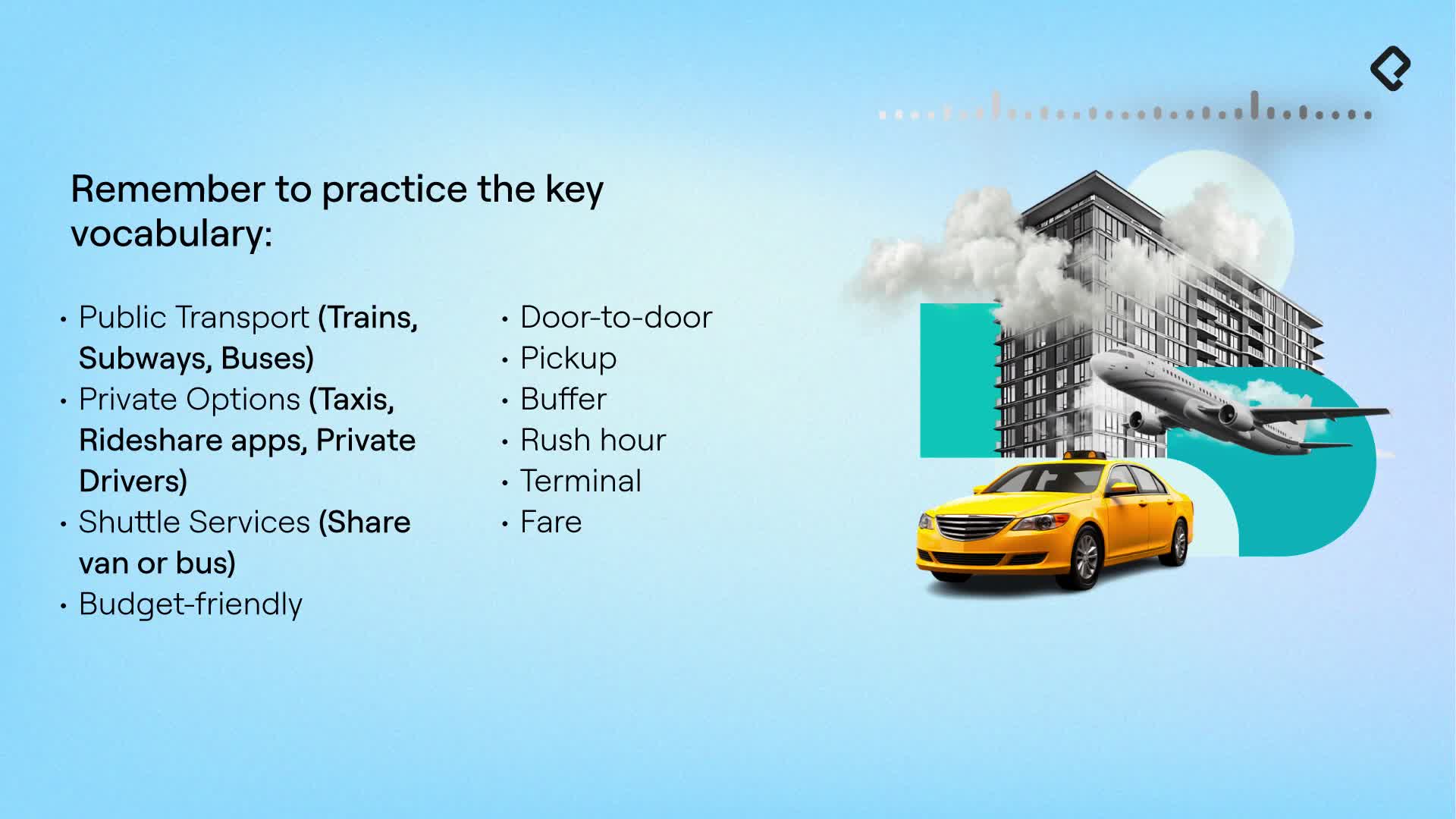
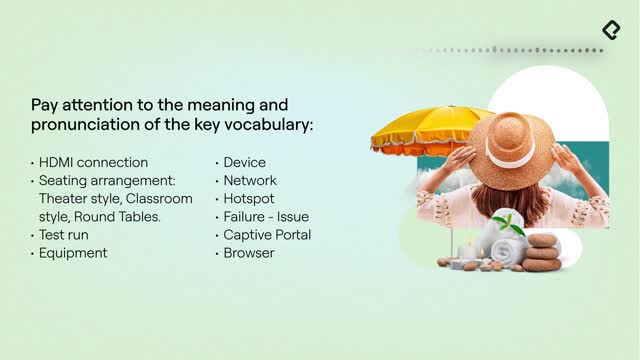
- Terminal: the main airport building where flights depart.
- Pickup point: the exact spot where the vehicle will collect the guest.
- Fare: the cost of the trip.
- To book: to arrange the service in advance.
- Door-to-door service: pickup at the hotel and direct drop-off at the airport.
- Fixed rate: a set price that does not change.
Example you can use: “You can find a taxi stand outside terminal 2. The estimated fare is $40, or we can book a private driver for a fixed rate.”
How do you give clear directions to the pickup point?
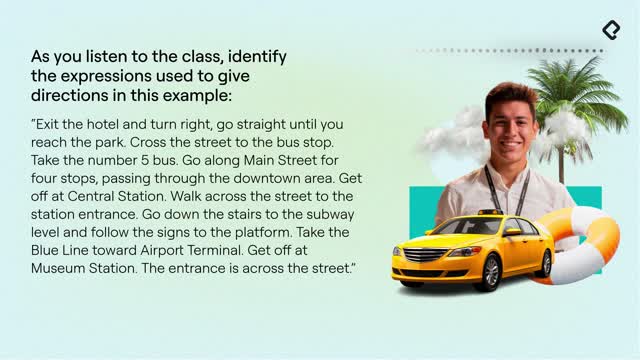
Vague instructions cause anxiety. Replace “The shuttle is outside” with a mental map that includes landmarks, levels, and doors. Follow this structure: specific exit, visual marker, vehicle description.
- Specific exit: “Exit the hotel through the main glass doors.”
- Visual marker: “Turn left and look for the yellow curb marked Hotel Shuttles.”
- Vehicle description: “Our van is white with a blue logo.”
This step-by-step path helps guests find their ride instantly.
Which option fits each guest scenario?
Match the traveler’s context to the best option. Focus on luggage, time sensitivity, comfort, and cost.
- Scenario 1: three heavy suitcases, price not important. Choose a private option. Public transport is too difficult with heavy bags; shuttle may be too slow.
- Scenario 2: solo traveler with a small backpack, near a subway, wants the cheapest way, plenty of time. Choose public transportation. Frequent service and easy with light luggage.
- Scenario 3: family of four, early morning, medium luggage, wants hotel pickup, cheaper than taxi, travel together. Choose a shuttle service. Cost-effective with direct pickup.
- Scenario 4: business traveler, early international flight, tight schedule, one suitcase, wants fastest and most reliable door-to-door service. Choose a private option. Flexible departure times reduce risk of delays when time is critical.
How much time should guests plan for?
Never give only the driving time. Add a buffer for traffic and security. If the drive is 30 minutes, advise planning for 45, especially during rush hour. Better to arrive early for a coffee than risk missing a plane.
Have a question or a real case to evaluate? Share your scenarios and recommended options in the comments, and explain your choice using the vocabulary above.