Boris Turcios
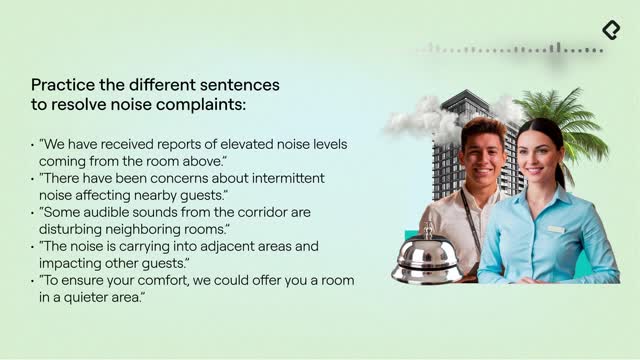
HOTEL NOISE COMPLAINTS – VOCABULARY WITH MEANINGS NOISE TYPES - Constant noise — A continuous sound that doesn’t stop (e.g., hum of AC) - Intermittent noise — Sounds that start and stop (e.g., door slams) - Impact noise — Sudden sounds from physical contact (e.g., footsteps above) - Elevated noise levels — Sounds louder than normal that disturb comfort - Audible sounds — Noises that can be clearly heard from another room - Disturbance — Noise that interrupts sleep, rest, or comfort DIPLOMATIC LANGUAGE - Noise concern — A polite way to reference a noise problem - Non-accusatory language — Words that avoid blaming the guest directly - Passive phrasing — A structure that focuses on the situation, not the person - “We have received reports…” — A neutral statement about the situation - “I am concerned that…” — A personal, non-blame statement - “There have been concerns about…” — A factual way to state a complaint - Cooperative tone — A calm, respectful way to communicate with guests CALM & PROFESSIONAL PHRASES - “I would like to discuss a noise concern…” — A polite start to the conversation - “For everyone’s comfort, perhaps we could…” — A gentle suggestion - “I wonder if you might be more comfortable…” — A soft invitation to change - “The volume might be disturbing other guests…” — A neutral explanation - “We have received reports of elevated noise…” — A formal, objective report PRACTICAL SOLUTIONS - Room move — Changing the guest to a quieter room - Quiet side of the building — A location with less noise - Alternative room — Another room offered instead of the current one - Follow-up check — Calling after the fix to ensure the noise problem is resolved - Peace and quiet confirmation — Asking if the noise has stopped - Guest comfort — The goal of any practical solution COMMUNICATION SKILLS - Clarify situation — Making sure you understand the noise details - Stay objective — Focus on facts, not emotions - Avoid blame — Do not accuse guests of being loud - Emphasize comfort — Highlight guest rest and comfort as priority - Verify outcome — Confirm that the solution worked