Resolving Complaints Diplomatically
Clase 16 de 21 • Audiocurso de Inglés para Turismo y Hotelería
Contenido del curso




Module 2: Front Desk and Check-In Operations
Module 3: Guest Services and Amenities
Module 4: Restaurant and Dining Service



Module 5: Tourist Information and Concierge

Module 6: Handling Complaints and Issues

Module 7: Events and Special Requests




Resumen
Sleep is the core promise of any hotel. When noise breaks that promise, the guest experience suffers. Here you’ll learn how to resolve a hotel noise complaint with confidence: use precise vocabulary, apply diplomatic language, and offer a practical solution like a room move—then follow up to confirm peace and quiet.
Why does noise management protect the guest experience?
Effective resolution starts with clarity. Specific vocabulary helps identify the source and communicate clearly to maintenance or management. General labels like “noisy” are vague; precise terms speed up solutions and keep interactions professional.
What specific vocabulary defines the noise types?
- Constant noise: a continuous sound, like the hum of an AC or traffic outside.
- Intermittent noise: sounds that stop and start, such as door slamming or an occasional dog bark.
- Impact noise: sudden sounds caused by physical contact, like footsteps from above or furniture being moved.
How do elevated noise and disturbance affect guests?
- Elevated noise levels: sounds louder than normal that may disturb nearby people.
- Audible sounds: noises clearly heard from another room or area.
- Disturbance: noise that interrupts rest, sleep, or comfort.
- Use effect-focused phrasing to stay objective: “We have received reports of intermittent impact noise from the adjacent room that it’s disturbing your neighbor.”
How do you address a noise complaint with diplomatic language?
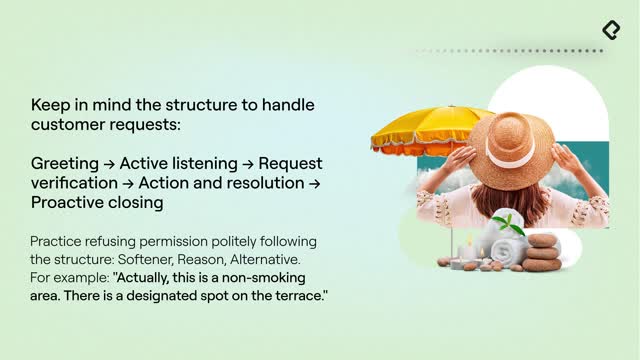
The goal is to stop the disruption without conflict. Non-accusatory language reduces defensiveness and separates the person from the problem. Keep the tone calm and cooperative.
Which phrases reduce defensiveness?
- Avoid blame: not “You are being too loud.”
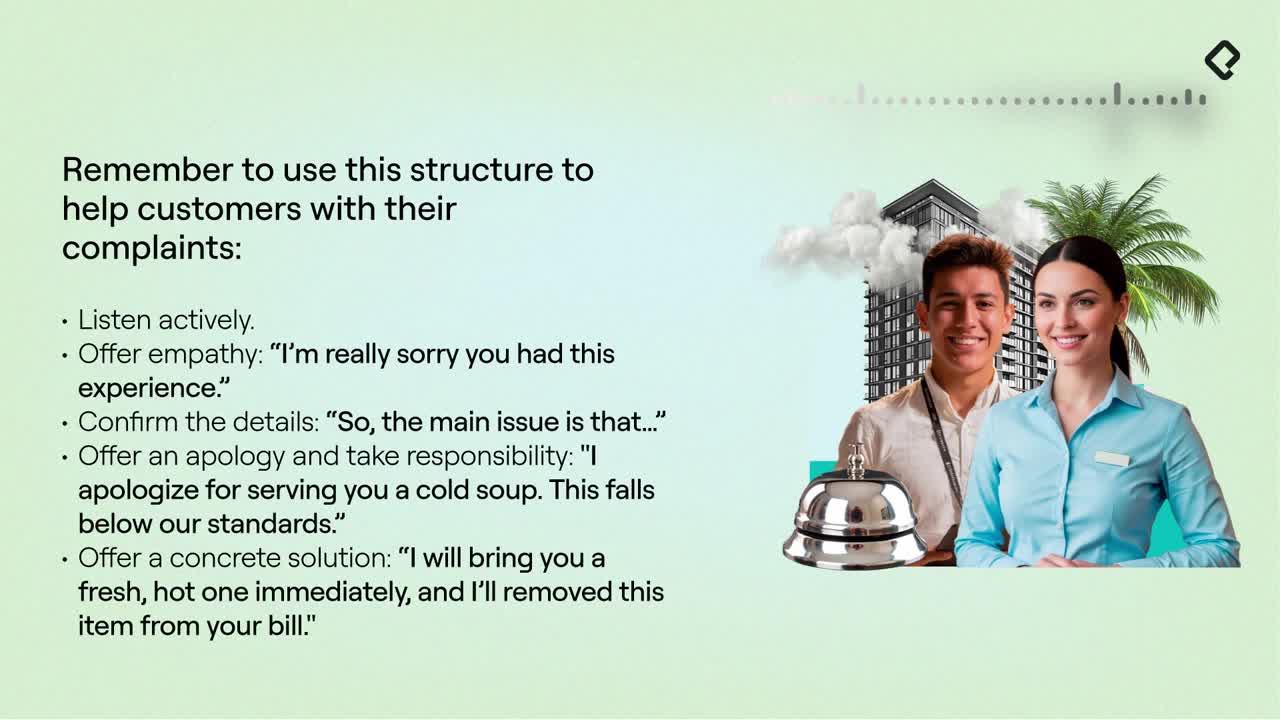
- Use passive or feedback references: “I would like to discuss a noise concern that has been brought to our attention regarding the volume from your room.”
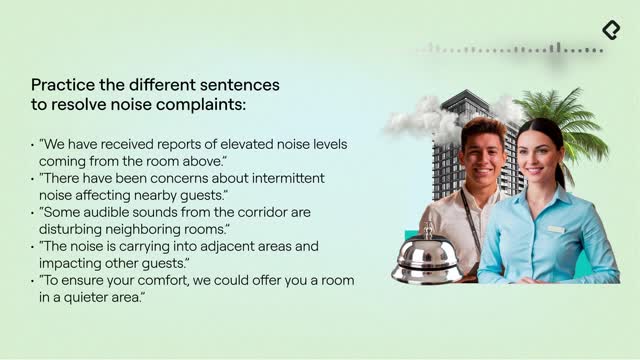
- Sound professional and neutral: “We have received reports of elevated noise levels coming from the room above.”
- Stay factual: “There have been concerns about intermittent noises affecting nearby guests.”
Why use I statements and passive voice?
- They show care, not accusation: “I am concerned that the volume might be disrupting other guests who are trying to sleep.”
- They appeal to cooperation and shared standards.
- They keep the guest relationship respectful and solution-focused.
When is a room move the best practical solution?
If construction, a mechanical failure, or a neighbor won’t quiet down, a room move is often the fastest path to comfort. Offer it with tact so it feels supportive, not punitive.
How do you offer a move without blame?
- Frame it as comfort-oriented: “I wonder if you might be more comfortable in a different space?”
- Emphasize mutual comfort: “For everyone’s comfort, perhaps we could move you to a room on the quiet side of the building?”
- Protect the guest experience: the new room must be equal to or better than the current one. Never downgrade someone already inconvenienced.
What follow-up ensures resolution?
- Don’t stop at the immediate fix; verify the outcome.
- Make a quick call about 20 minutes later: “I just wanted to check if the noise levels have improved and if you’re able to rest now?”
- This small step builds trust and confirms that peace has been restored.
Key ESL vocabulary and examples you can reuse today: - Constant noise, intermittent noise, impact noise, elevated noise levels, audible sounds, disturbance. - Diplomatic phrases: “I would like to discuss a noise concern…”, “We have received reports…”, “I am concerned that…”, “Perhaps we could move you…”.
Have you experienced noise issues in a hotel or cafe? How did staff handle it, and what could have been better? Share your story and reflection in the comments.