Professional Greetings That Build Guest Trust
Clase 1 de 21 • Audiocurso de Inglés para Turismo y Hotelería
Contenido del curso

Module 2: Front Desk and Check-In Operations
Module 3: Guest Services and Amenities
Module 4: Restaurant and Dining Service
Module 5: Tourist Information and Concierge
Module 6: Handling Complaints and Issues
Module 7: Events and Special Requests

Resumen
Hospitality is about shaping a memorable guest experience—every word, choice, and action counts. The first 10 seconds set the tone, and the language you use turns a service moment into trust. Here you’ll find clear formulas for a professional greeting, precise guidance, vivid menu descriptions, and trust-building apologies—designed to help you sound confident from check-in to “Safe travels.”
Why do first impressions set the guest experience?
A great start is more than courtesy—it’s strategy. The first 10 seconds define the game, just like a foundation supports a building. A professional greeting moves you from transaction to connection and establishes accountability.
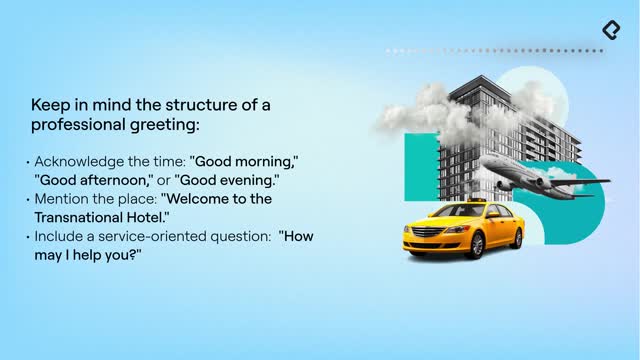
- Use a simple formula. Acknowledge the time. Confirm the location. Offer specific help. State your name.
- Example: “Good morning! Welcome to the Transnational Hotel. My name is Alex. How may I assist you?”
- Purpose: build trust early, reduce anxiety, and guide the experience from the first moment.
What greeting vocabulary builds connection?
- “First impression.” Sets the tone for everything that follows.
- “Professional greeting.” A strategic opening, not just “Hello.”
- “Acknowledge the time.” “Good morning!”
- “Confirm the location.” “Welcome to the Transnational Hotel.”
- “Assist.” “How may I assist you?”
- “Accountability.” Stating your name signals ownership.
How do you guide with precision across the guest journey?
Your role shifts from greeter to guide. Vagueness is the enemy; it creates anxiety. Precision builds trust—especially in directions and explanations.
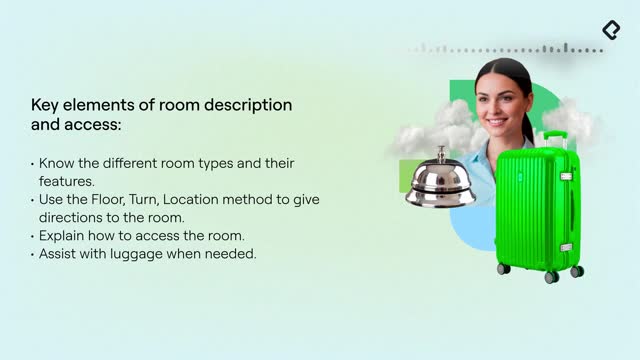
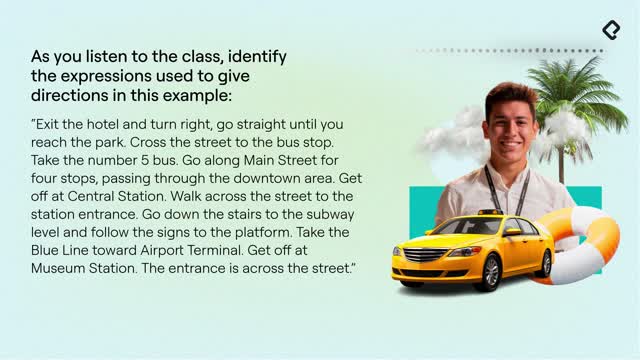
- Directions: use the floor–turn–location structure. Avoid pointing.
- Menus: translate a list into an experience. Describe texture, taste, and method.
- You are the translator of their experience: help them feel certain about each step.
Which words make descriptions vivid?
- “Texture.” “Is the salmon flaky?”
- “Taste.” “Is it smoky?” “Is the pasta creamy and comforting?”
- “Method.” How a dish is prepared shapes the experience.
- “Translate.” Turn ingredients into sensory language the guest can imagine.
How do you resolve complaints with trust-building language?
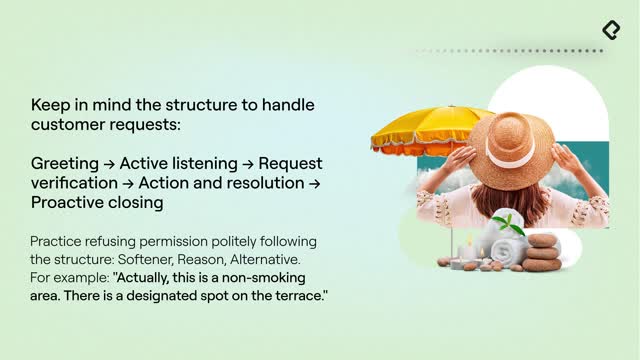
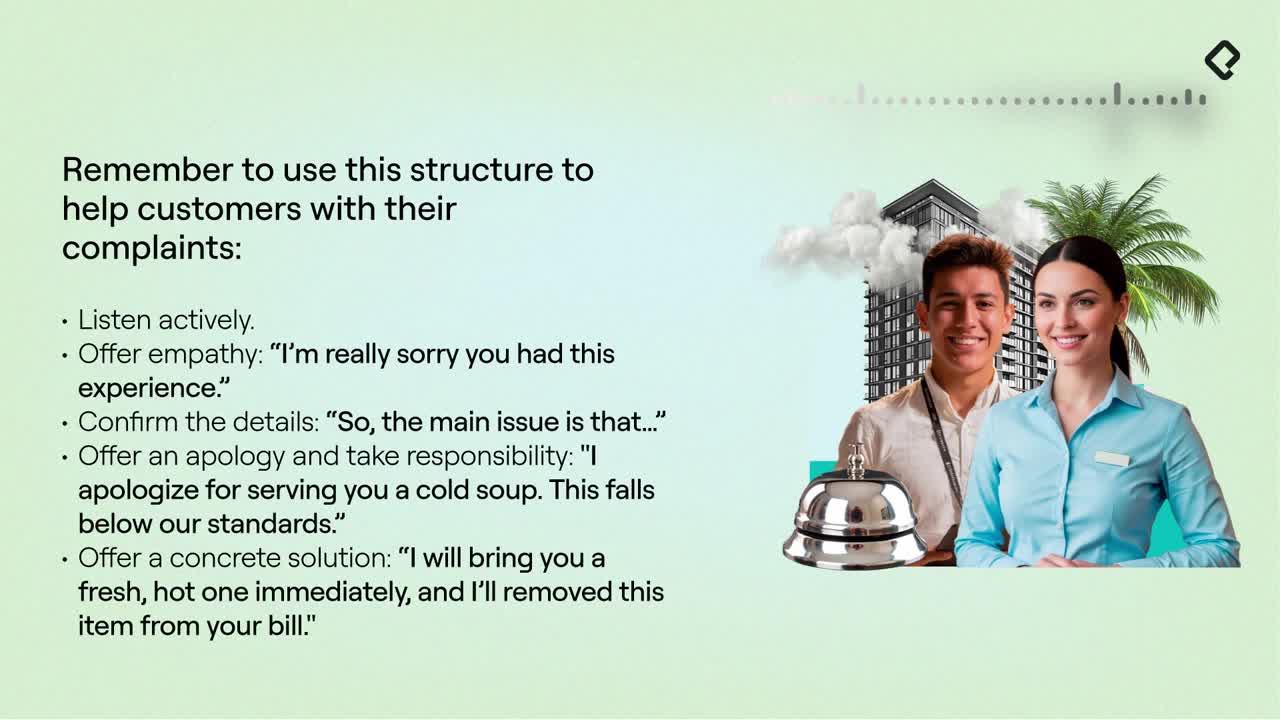
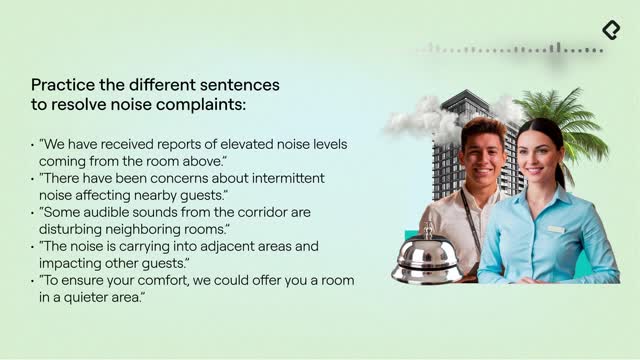
The real test comes when things go wrong: cold soup, noise, or a billing error. Your strongest tool is active listening. Do not interrupt. Let them finish. When you apologize, avoid excuses; take ownership and act.
- Apology formula: acknowledgment, responsibility, immediate action.
- Example: “We failed to pick you up at 6:00 AM and we take full responsibility. I will fix this immediately.”
- Shift from confrontation to collaboration. Don’t say, “You’re wrong.” Say, “Let’s review these charges together.”
- Every word is a tool—from the “May I?” at check-in to the “Safe travels” at departure.
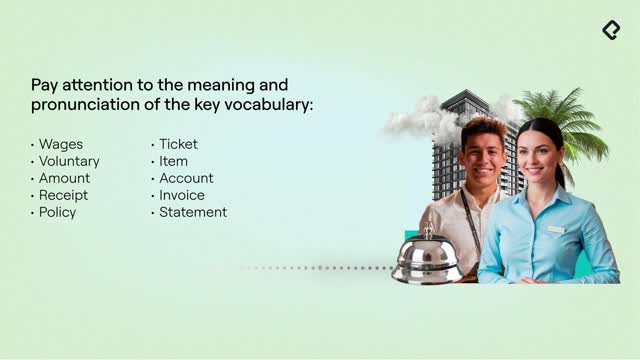
- To get the most value, focus on the vocabulary and expressions that achieve each goal; the skills apply across hotels, restaurants, tours, and transportation.
What apology and collaboration phrases should you use?
- “Active listening.” Let the guest finish before offering solutions.
- “Acknowledgment.” Name the issue clearly.
- “Responsibility.” “We take full responsibility.”
- “Immediate action.” “I will fix this immediately.”
- “Collaboration.” “Let’s review these charges together.”
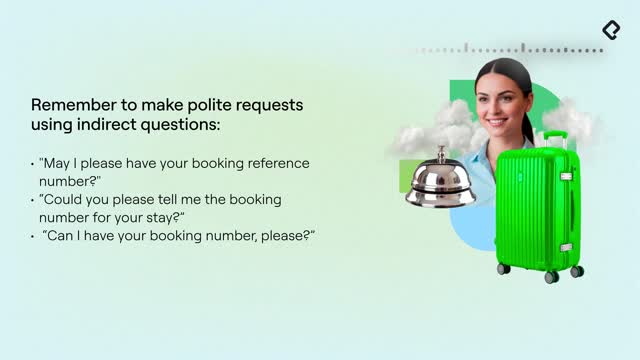
- Confidence markers: “May I…?” and “Safe travels.”
What phrases help you turn tension into trust? Share your best lines and where you use them—check-in, restaurant, tours, or transportation.