Managing Restaurant Reservation
Clase 10 de 21 • Audiocurso de Inglés para Turismo y Hotelería
Contenido del curso

Module 2: Front Desk and Check-In Operations
Module 3: Guest Services and Amenities
Module 4: Restaurant and Dining Service
Module 5: Tourist Information and Concierge
Module 6: Handling Complaints and Issues
Module 7: Events and Special Requests

Resumen
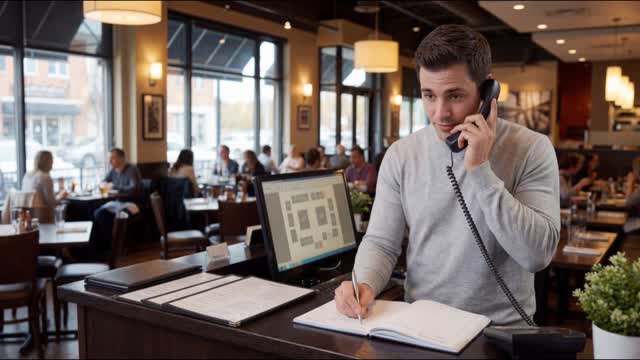
Precision drives great service: a reservation log is like a flight plan—one wrong coordinate and the operation can fail. Learn how to guide every call with confidence, capture the core four details, explore seating and special requirements, and close with a friction-free confirmation.
Why do the core four lead every reservation?
Getting the essentials first prevents mistakes and sets the tone. The core four are: name, date, time, and party size. If one is missing, the booking is incomplete.
Start by controlling the conversation with clear, structured questions instead of waiting for random details. Use direct, polite prompts to keep order and accuracy.
- Name first: "May I have the name for the reservation?" "Under what name should I make the reservation?" "Can I get the name for the reservation, please?".
- Date and time next: "What date and time would you like?" "When would you like the reservation?".
- Party size last: "How many people will be in your party?" "How many people is the reservation for?".
In this context, party means the total number dining together, including the caller. Be precise: if someone says "a few friends," ask, "Would that be three or four people?". Accuracy here dictates table allocation and avoids last-minute scrambling.
What phrases keep control and clarity?
Use calm, solution-focused language. When a time is fully booked, offer alternatives immediately: "I apologize, but we are fully booked at 7:00 PM. However, I do have availability at 6:30 PM or 8:30 PM. Would either work for you?".
How do you move from logistics to hospitality?
Once the logistics are set, shift to needs and preferences. A reservation is not just a slot; it’s an experience. Ask proactively and give guests a sense of control.
- Seating preferences: "Would you prefer a quiet corner or a table near the window?" "Do you have a preference for indoor or outdoor seating?".
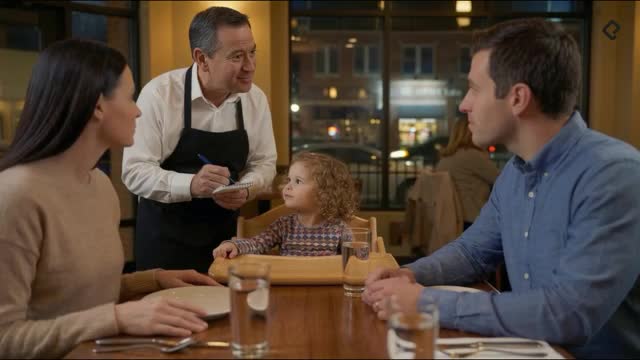
- Special requirements: "Does anyone in your party have any food allergies or dietary restrictions?" "Will you need a high chair or a space for a wheelchair?".
- Special occasion: "Are you celebrating a special occasion with us?". This helps the team prepare standard gestures or decorations.
Which seating terms should you use precisely?
Use clear, consistent vocabulary to set expectations about location and comfort.
- Table: standard seating, flexible for many group sizes.
- Booth: fixed, cushioned seat, more privacy and comfort.
- Corner: away from busy walkways, quieter experience.
- Window seat: view to the outside.
- Indoor: inside the restaurant. Outdoor: open-air areas like a terrace or patio.
- Bar seating: stools at the bar, ideal for drinks or quick meals.
- High-top table: taller table with high chairs, common in casual or social areas.
For special requirements, confirm details that affect access and space:
- High chair: for babies or very small children.
- Booster seat: raises a child to reach the table comfortably.
- Wheelchair access: accessible table, easy entry, correct height.
- Stroller-friendly seating: extra room or ground-floor seating to avoid stairs.
- Wide aisle: enough space between tables to move safely.
- Step-free access: no steps or level changes.
How do you handle no-availability and confirm details?
When you can’t meet a request, use the sandwich method of refusal: apology, explanation, and alternative. This keeps the door open and shows you are trying to accommodate.
- Example 1: "I apologize, but all our window tables are booked at that time. However, we have a lovely table in our garden section, or I could seat you at the window at 8:30 PM. Would either of those work for you?".
- Example 2: "I apologize, but we do not have a table large enough for 10 at 8:00 PM. However, I can accommodate your group at either 6:00 PM or 9:00 PM. Which would you prefer?".
Then, always repeat and verify before ending the call—your safety net.
- Confirmation script: "Let me confirm your details. I have a table for the Johnson party of four on Friday, June 15th at 7:00 PM. We have noted the nut allergy and your request for a high chair. Is that correct?".
- If needed, confirm spelling with the phonetic alphabet style: "That is Johnson. J-O-H-N-S-O-N.".
This structured approach scales to any booking scenario—hotel rooms, events, transportation, or special services—by adapting the vocabulary while keeping the question order the same.
Have a question or a tricky scenario you want to practice? Share it below and we’ll refine the script together.