Matrices are not just static containers of numbers. They are dynamic operators that move vectors across space, changing their direction, magnitude, or orientation. Understanding linear transformations is the key to unlocking computer graphics, machine learning, and the next topics in linear algebra.
What is a linear transformation and why does it matter?
A linear transformation is a function that takes an input vector and moves it to a new location, producing an output vector. But not every movement qualifies. To be linear, the transformation must satisfy two strict conditions that preserve the structure of space.
- Parallel lines stay parallel and evenly spaced after the transformation. The grid can stretch or rotate, but it never curves or bunches up.
- The origin stays fixed. In a 2D plane, the point (0,0) always maps to (0,0).
What makes a transformation linear? Two rules: parallel lines remain parallel and evenly spaced, and the origin doesn't move. If both hold, you have a linear transformation.
How do matrices represent transformations visually?
Think of a matrix as a recipe for moving the standard basis vectors î and ĵ. Wherever those two land after the transformation, the columns of the matrix tell you their new coordinates. Three classic examples make this concrete.
- The matrix
[[2,0],[0,2]] scales space, doubling its size. The yellow vector and the basis vectors stretch outward proportionally.
- The matrix
[[0,-1],[1,0]] rotates space 90 degrees counterclockwise. Every vector pivots to the left around the origin.
- The matrix
[[1,1],[0,1]] shears space to the right. The vector î stays put while ĵ slides one unit to the right, tilting the whole grid.
In each case, the columns of the matrix are exactly where î and ĵ end up. That is the magic: if you know where the basis vectors go, you know where every vector goes.
How do you apply a matrix to a vector?
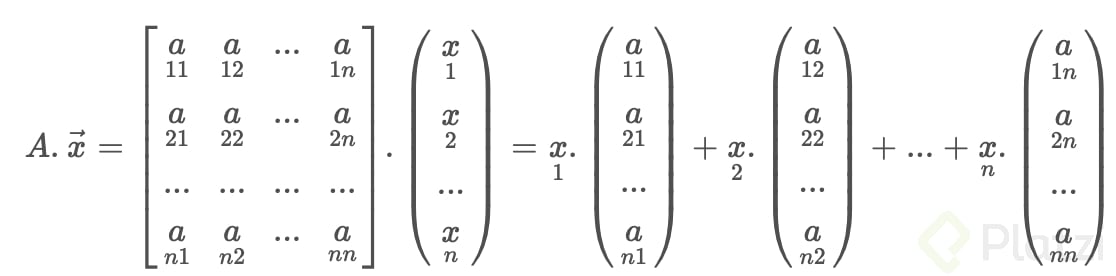
The operation that performs a linear transformation on a vector is called the matrix-vector product, written as AX or A·X, where A is a matrix and X is a vector. There are two ways to compute it, and both lead to the same result.
How to compute the matrix-vector product step by step
Let's take the shear matrix A = [[1,1],[0,1]] and the vector X = [2,1]. Treat the matrix as a stack of row vectors and apply the dot product to each row.
- First row
[1,1] dotted with [2,1]: (1·2) + (1·1) = 3.
- Second row
[0,1] dotted with [2,1]: (0·2) + (1·1) = 1.
- The resulting vector is
[3,1].
When you visualize it, the yellow vector that started at (2,1) lands at (3,1) after the shear, and ĵ moves to match the second column of A. That alignment is not a coincidence. It's the whole point.
Why a vector is a linear combination of basis vectors
There's a more elegant way to see the same calculation. Any vector X is a linear combination of î and ĵ. So [2,1] equals 2î + 1ĵ. When you apply A to X, you can distribute:
- A·X = A·(2î + 1ĵ) = 2·(Aî) + 1·(Aĵ).
- Aî is the first column of A, which is
[1,0].
- Aĵ is the second column of A, which is
[1,1].
- So A·X = 2·
[1,0] + 1·[1,1] = [2,0] + [1,1] = [3,1].
Same answer, deeper intuition. This view reminds you that a matrix is just a record of where the basis vectors land, and every other vector follows along.
What does a matrix actually do to a vector? It moves the vector to a new position by sending the basis vectors î and ĵ to the locations stored in its columns. Everything else scales accordingly.
Where are linear transformations used in real life?
Beyond the theory, linear transformations power computer graphics. Every time you watch a character jump, rotate, or move in a video game, the engine is applying a sequence of transformation matrices, rotations, translations, and scalings, to the vectors that define the character's position in 3D space.
That same machinery shows up in machine learning, robotics, image processing, and any field where data lives in vector spaces. Understanding what a matrix does geometrically is the foundation for everything that comes next.
Practice exercise to lock in the concept
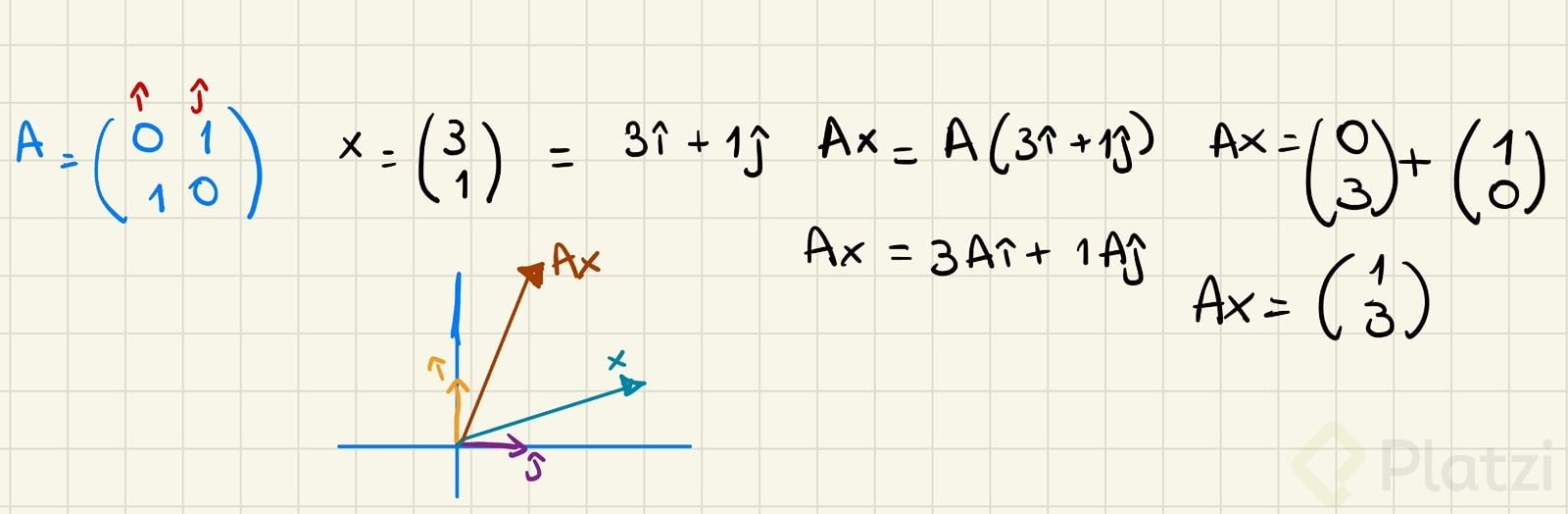
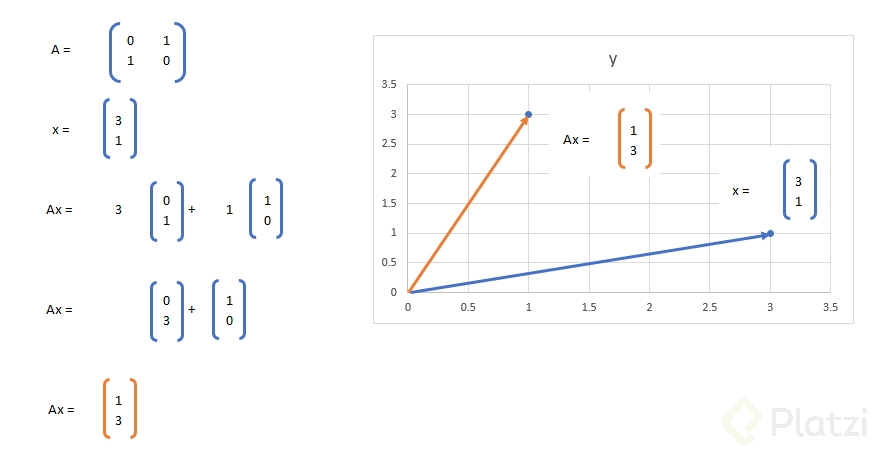
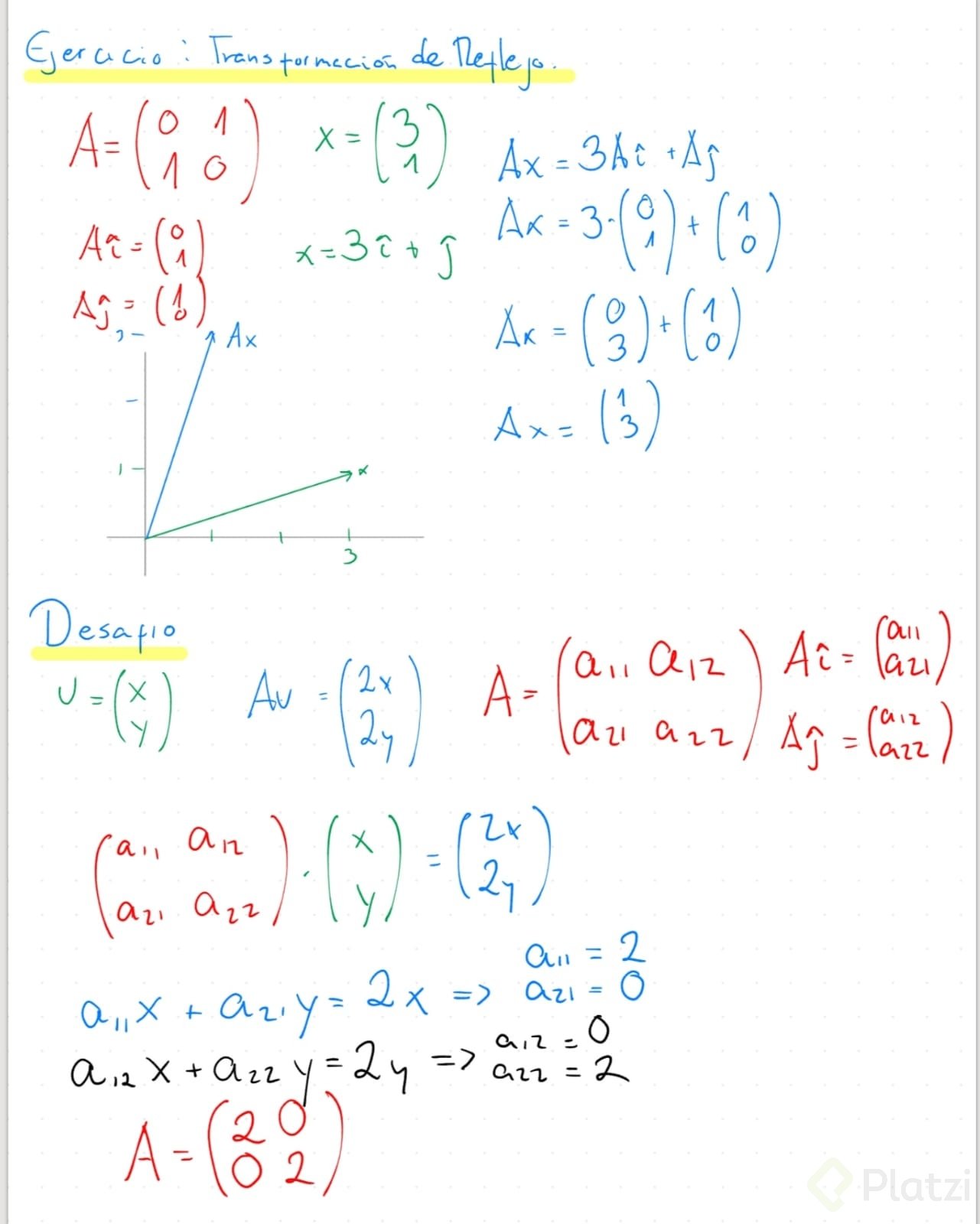
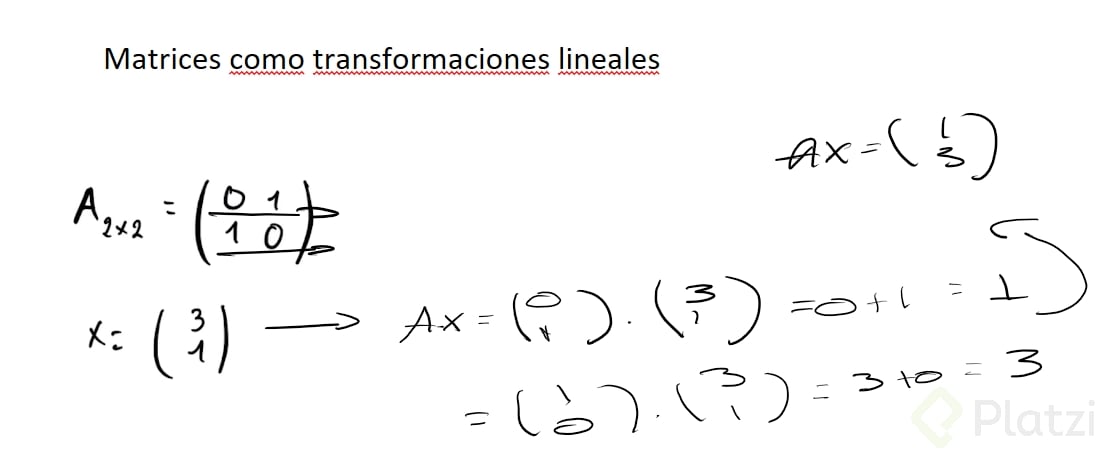
Build the matrix A with dimensions 2x2 and values [[0,1],[1,0]], and the vector X = [3,1]. Apply the transformation, sketch the original and transformed vectors, and share your drawing in the comments.
- Notice which axis the basis vectors swap to.
- Compare the original position of X with its new location.
- Ask yourself: what kind of geometric movement is this matrix performing?
If this concept still feels slippery, replay the class as many times as you need. The intuition behind matrices as transformations is the bridge to determinants, eigenvectors, and the deeper structure of linear algebra waiting in the next lessons.