Linear algebra is not just about describing vectors, it is about manipulating them. How do you combine movements, reverse a direction, or change the size of a vector? You will master the three core vector operations: addition, subtraction, and scalar multiplication, with algebraic steps and geometric intuition you can picture on a plane.
How do you add two vectors component by component?
Vector addition lets you combine two or more vectors into a single resultant vector. The golden rule: both vectors must have the same number of components, and you add each component with the one in the same position.
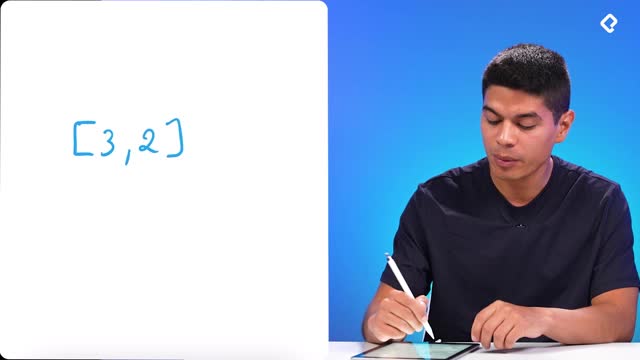
Take U = [2,1] and V = [1,3]. To compute U + V, you add component by component: [2+1, 1+3] = [3,4]. That is your resultant vector.
What does vector addition mean geometrically? It is like following two movement instructions in a row. You walk along U, then from that endpoint you walk along V. The sum is the diagonal arrow from the origin to your final destination, forming the diagonal of a parallelogram.
What properties does vector addition follow?
Three properties define how addition behaves with vectors:
- Commutative: U + V = V + U. Order does not matter.
- Associative: (U + V) + W = U + (V + W). You can regroup freely.
- Neutral element: U + 0 = U. Adding the zero vector changes nothing.
This operation is the backbone of combining magnitudes with direction. In physics, adding two force vectors gives you the resultant force on an object. In navigation, adding displacement vectors like 10 km north and 5 km east returns the direct route from start to finish.
How do you subtract vectors and why does order matter?
Vector subtraction finds the difference between two movements or positions. It works just like addition: same number of components, subtracting each one in place.
With U = [2,1] and V = [1,3], the operation U - V gives [2-1, 1-3] = [1, -2]. Geometrically, subtracting is the same as adding the negative of the second vector, so U - V = U + (-V).
When you graph -V = [-1,-3], its direction flips completely compared to V. Apply the parallelogram rule between U and -V, and the diagonal from the origin lands exactly at [1, -2], matching the algebra.
Is vector subtraction commutative? No. U - V is not equal to V - U. Just like with regular numbers, the order of subtraction changes the result.
This operation is essential to find the path between two points in space. If vector A is your starting point and B is your destination, then B - A is the arrow that tells you the exact direction and distance to get there.
What happens when you multiply a vector by a scalar?
Scalar multiplication changes a vector's magnitude and, sometimes, its direction. The rule is simple: multiply every component of the vector by the scalar number.
Take U = [2,1] and the scalar α = 3. Then α · U = [3·2, 3·1] = [6, 3]. The new vector points in the same direction as U, but it is three times longer.
How does the scalar's value change the vector?
The size and sign of the scalar determine what happens to the original vector:
- Scalar greater than 1: the vector stretches. With α = 3, the vector triples in length.
- Scalar between 0 and 1: the vector shrinks. With α = 0.5, it becomes half its original size.
- Negative scalar: the direction flips. With α = -3, the vector triples and points the opposite way.
Which properties govern scalar multiplication?
Three properties keep this operation predictable:
- Commutative: α · U = U · α.
- Associative: α · (β · U) = (α · β) · U.
- Distributive over addition: α · (U + V) = α · U + α · V.
In graphic design or video games, if you want an object twice as big, you multiply every position vector by 2. If a car needs to accelerate three times faster, you multiply its velocity vector by 3. A scalar of -1 is the cleanest way to invert any movement or force.
Cómo practicar con un reto de operaciones combinadas
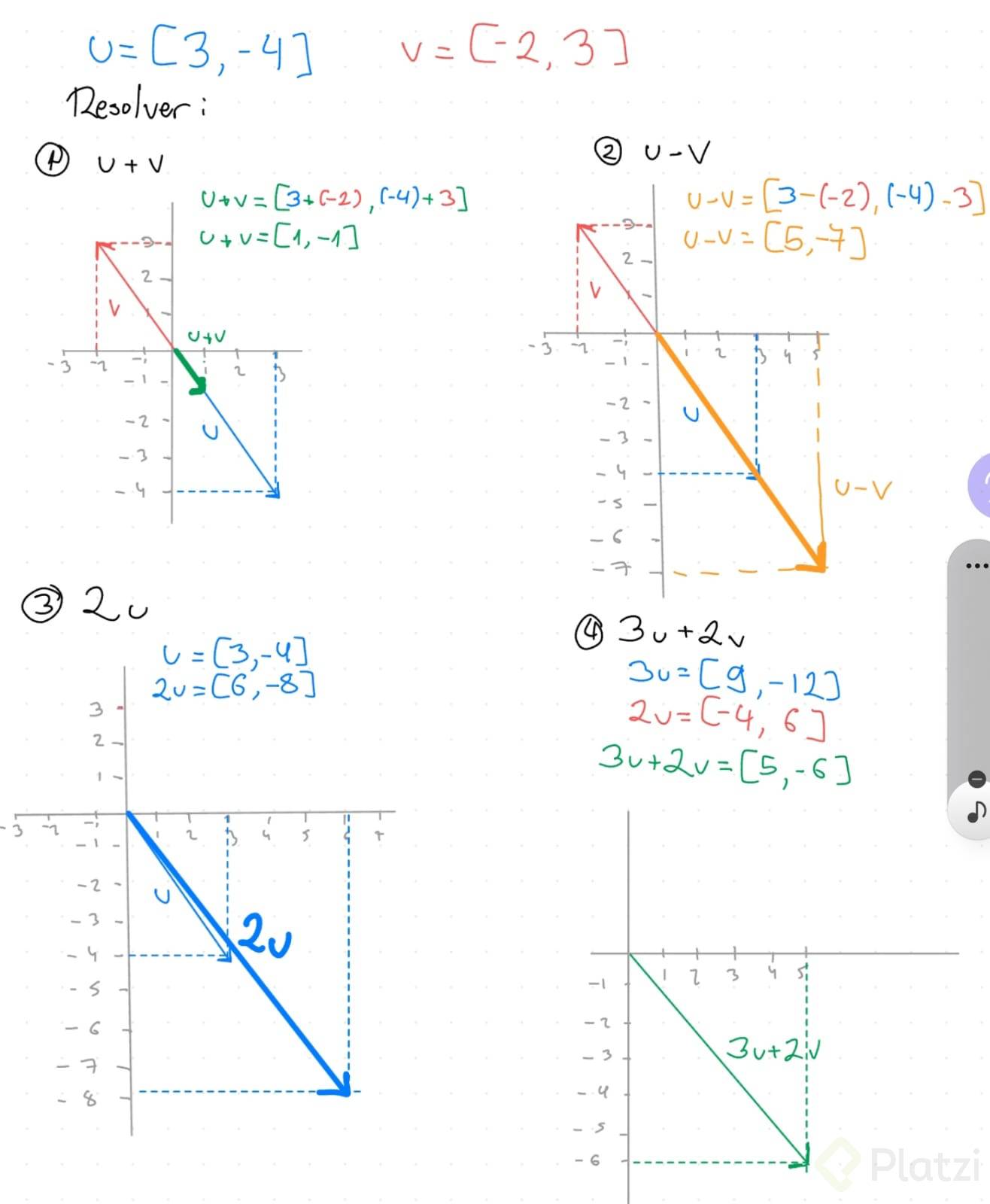
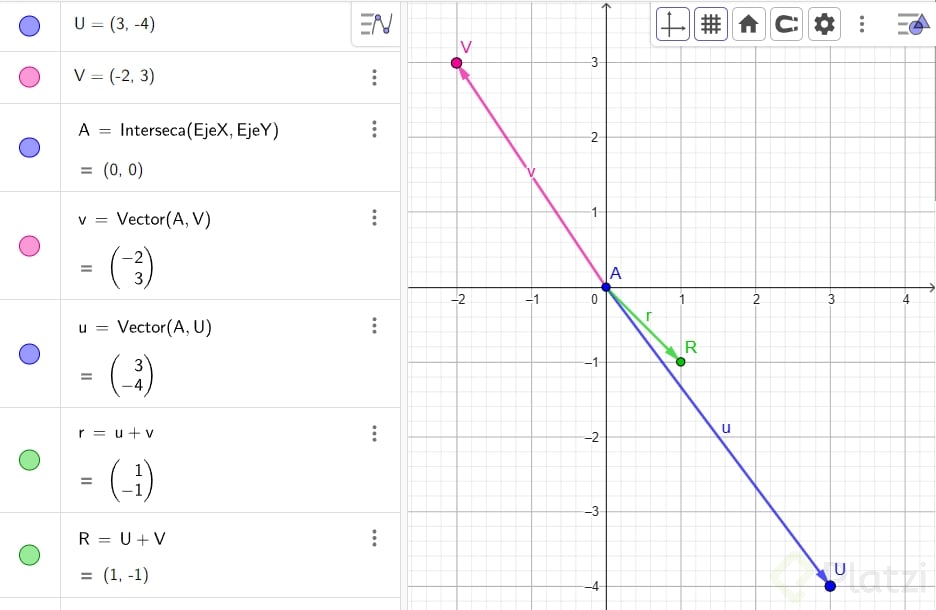
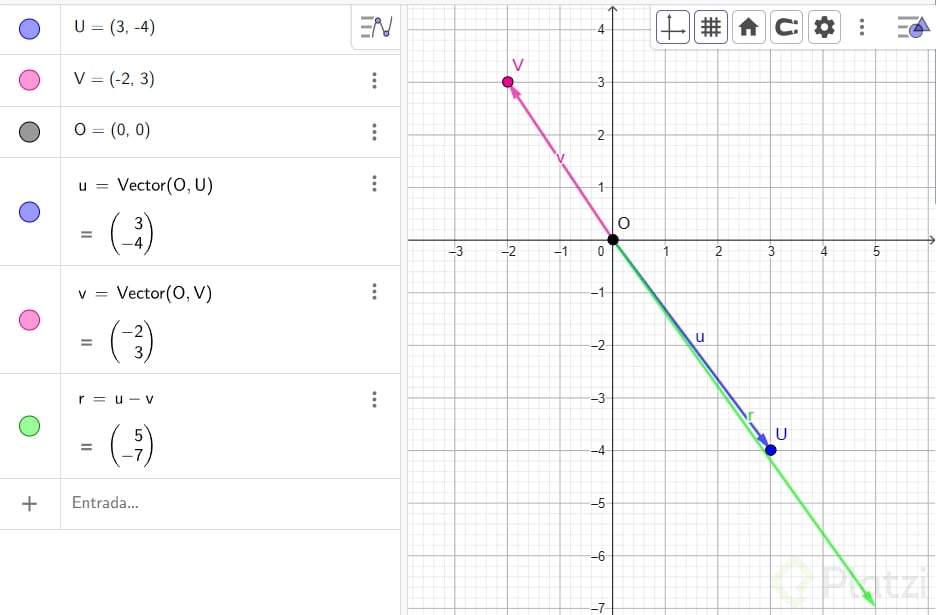
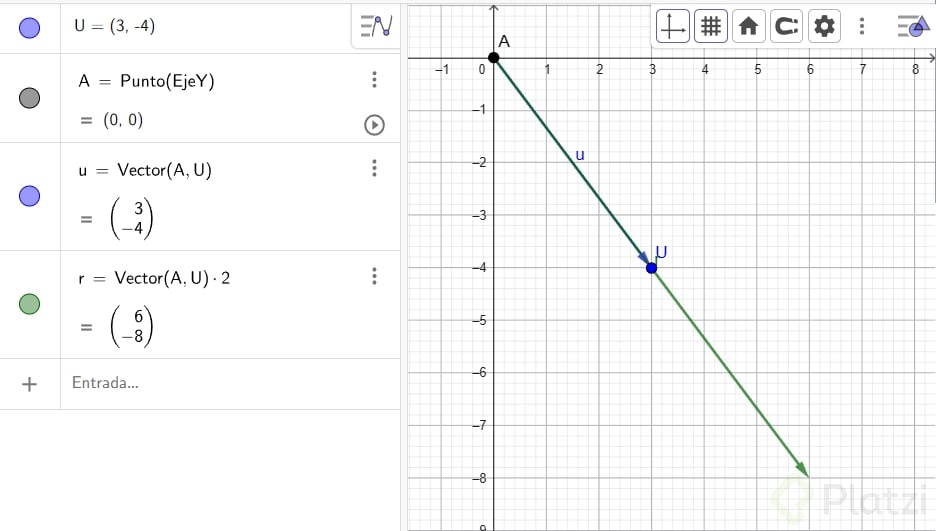
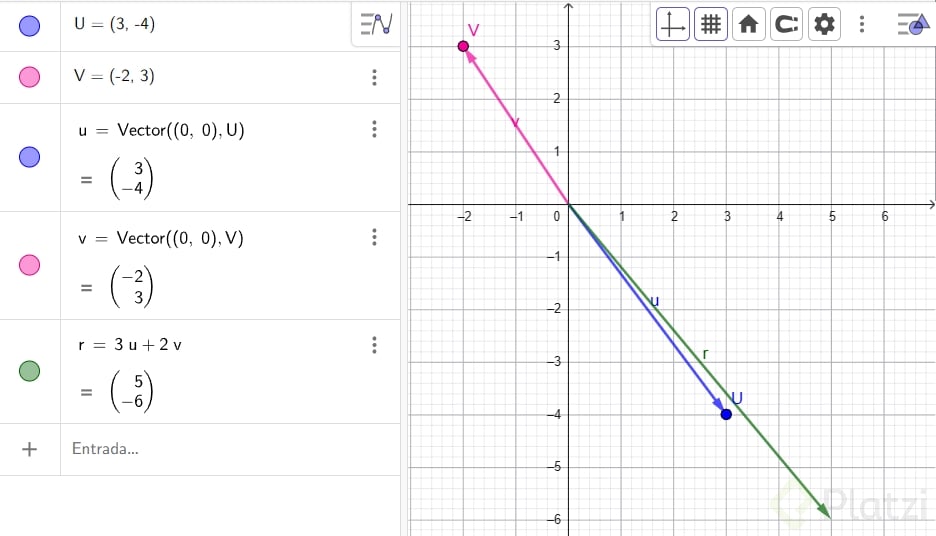
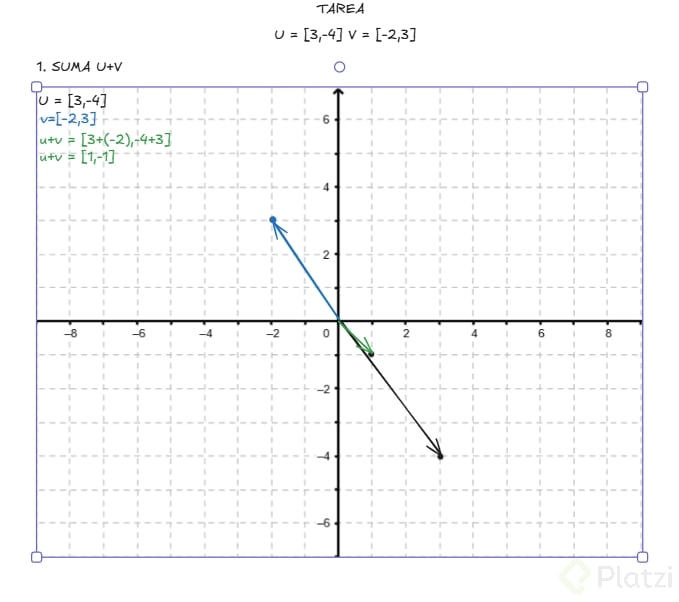
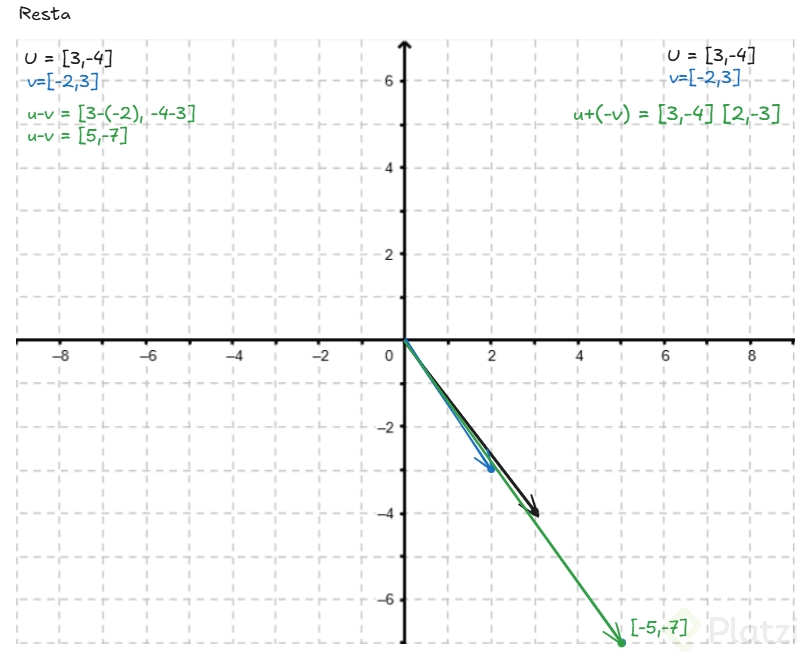
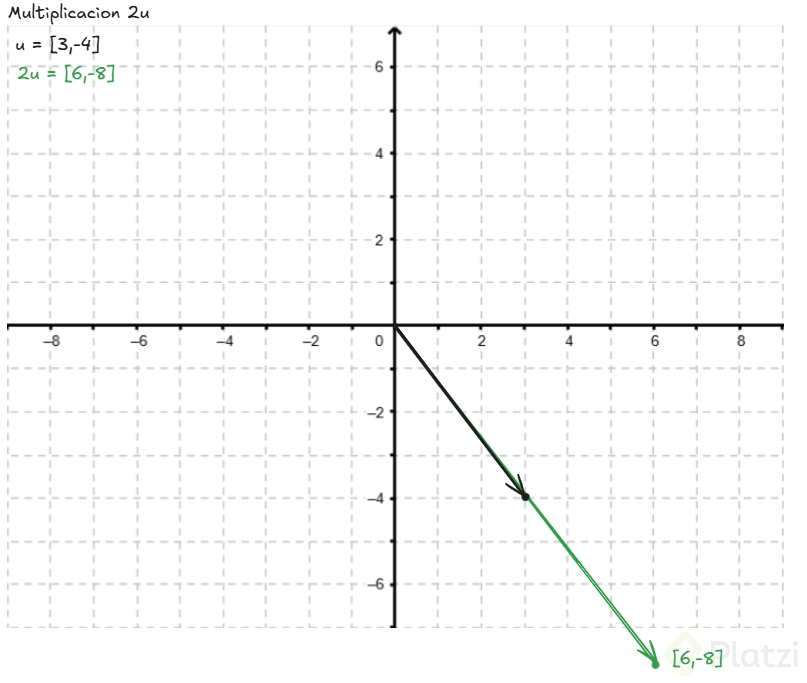
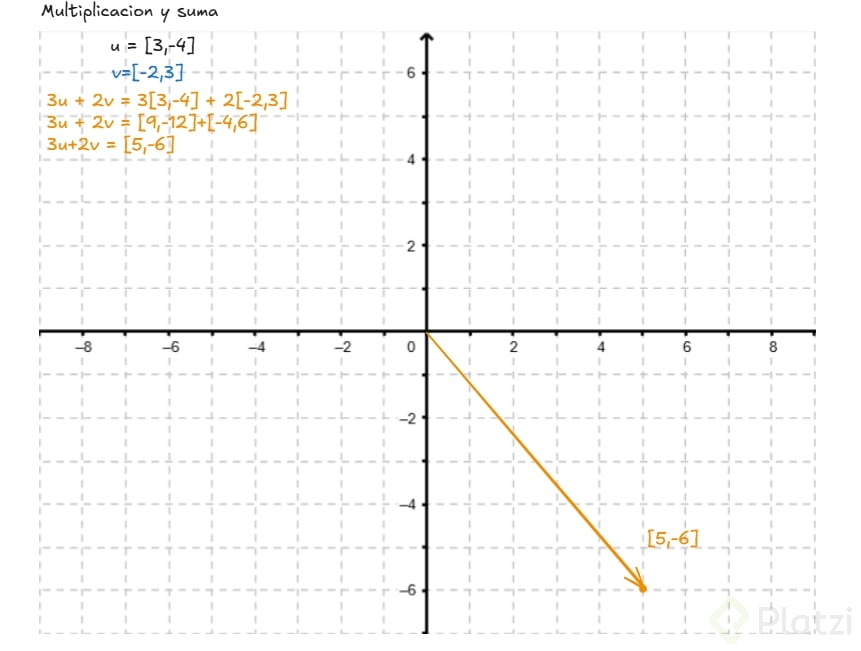
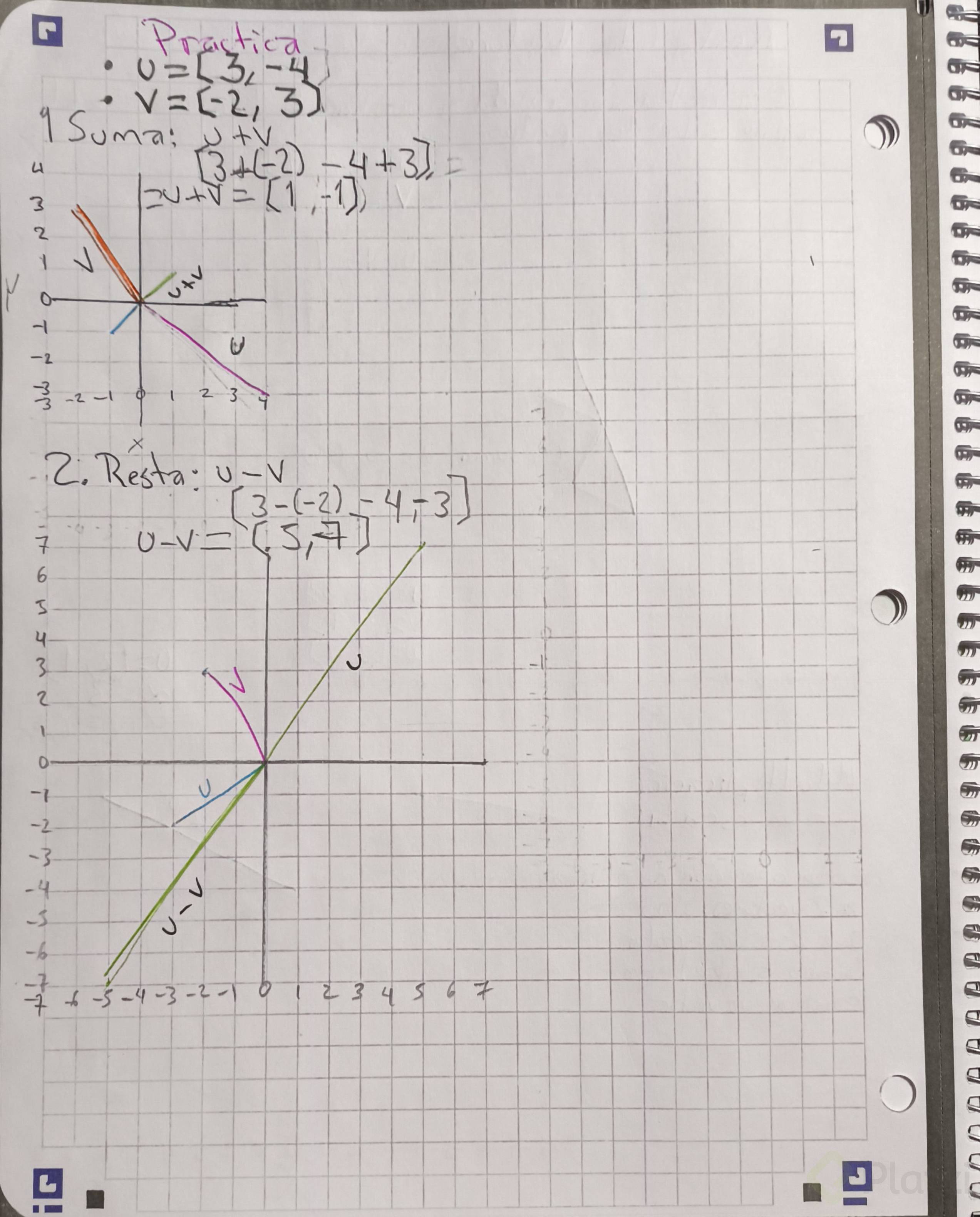
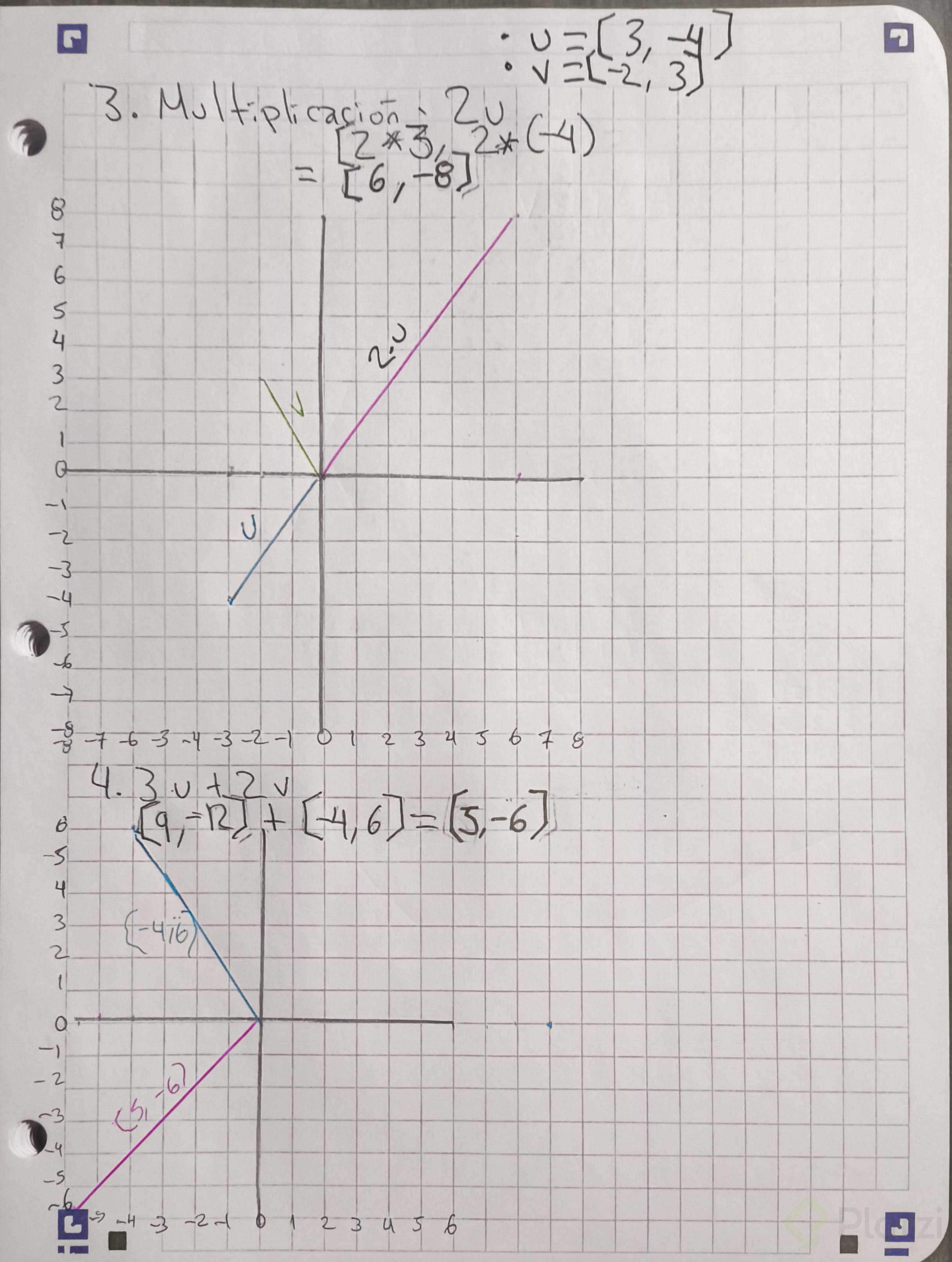
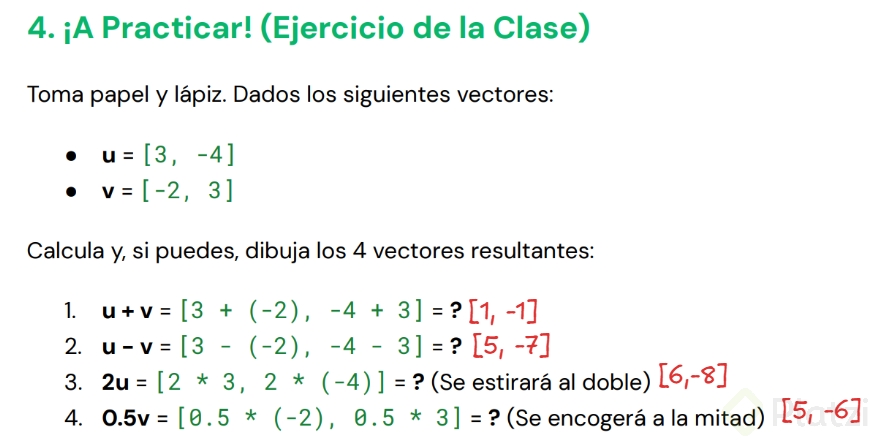
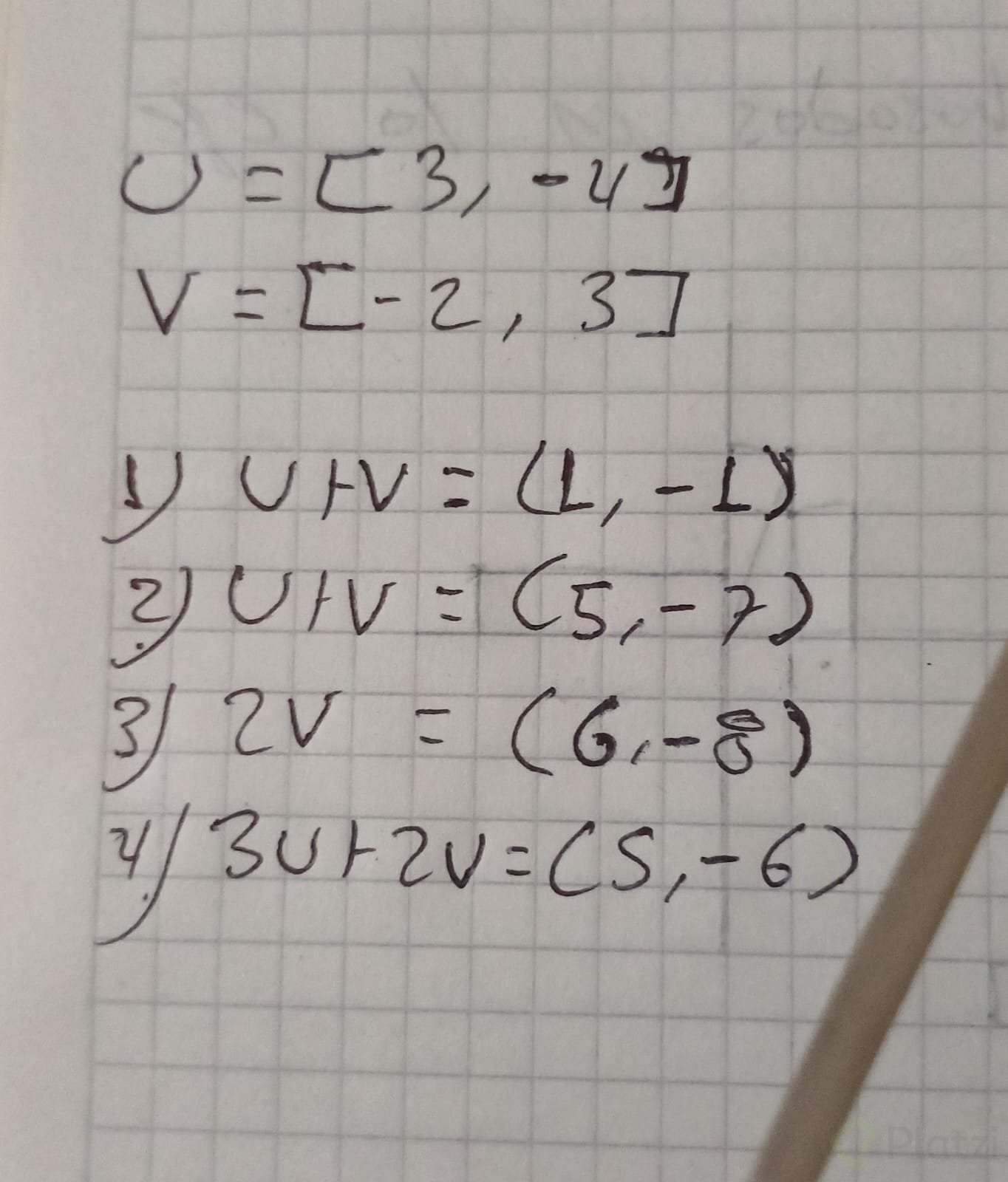
Grab paper and pencil and declare these two vectors: U = [3, -4] and V = [-2, 3]. Then solve the following operations, either algebraically or geometrically:
- Compute U + V.
- Compute U - V.
- Multiply U by the scalar 2.
- Compute 3·U + 2·V.
Share your results in the comments and compare your reasoning with other learners.