Present Simple vs Continuous Explained
Contenido del curso

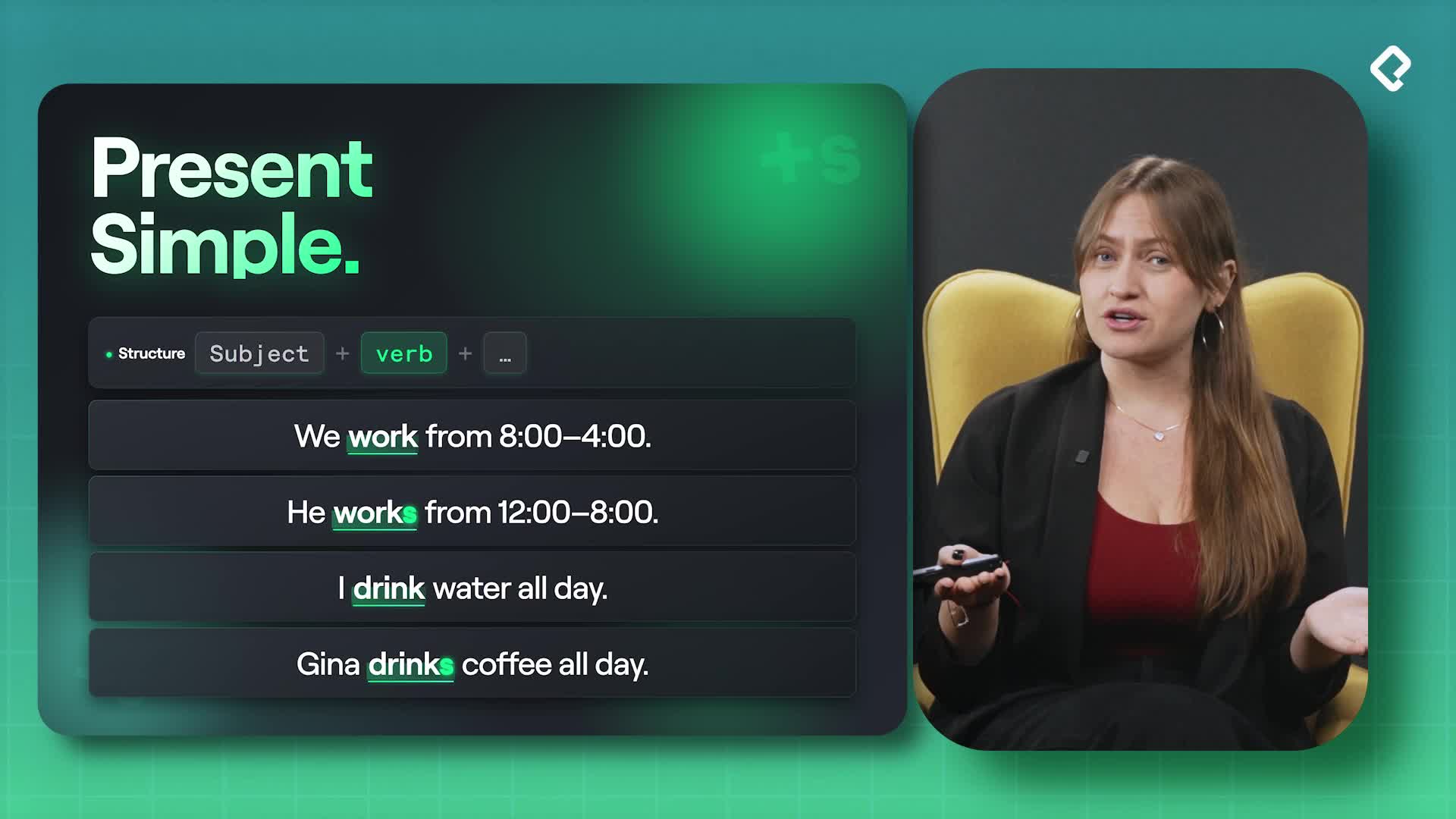


Talk About You and Others





Talk About Now

Recursos
Resumen
Understanding the difference between present simple and present continuous is one of the most important steps in mastering English grammar. These two tenses may look similar on the surface, but they carry very different meanings depending on the context.
What is the difference between present simple and present continuous?
The core distinction is straightforward. Present simple describes routines, habits, and things that happen regularly. Present continuous describes actions that are happening right now, at this very moment [0:24].
Consider these two sentences:
- I work from home. — This means it is your routine; you regularly work from home.
- I'm working from home. — This means you are doing it right now, at this specific moment.
Both sentences use similar words, but the tense completely changes the meaning [0:50].
How do you know when to use present simple?
Present simple is the go-to tense for describing things that happen every day, always, usually, or sometimes [0:30]. To identify when this tense is appropriate, look for signal words, which are also known as frequency adverbs [1:05]:
- Always.
- Usually.
- Sometimes.
- Rarely.
- Never.
For example: I never work on Sunday [1:15].
You can also use on + day of the week to indicate regular actions. We don't work on weekends [1:22]. Another common pattern is using every followed by a time period — every day, every week, every month, every year. I have meetings every day [1:30].
What are the signal words for present continuous?
Present continuous has its own set of signal words that tell you an action is happening at this moment [1:38]:
- Right now. She is talking to me right now.
- Now. We are watching it now.
- At the moment. You are studying English at the moment.
- Look or listen. Listen, they're calling you [1:58].
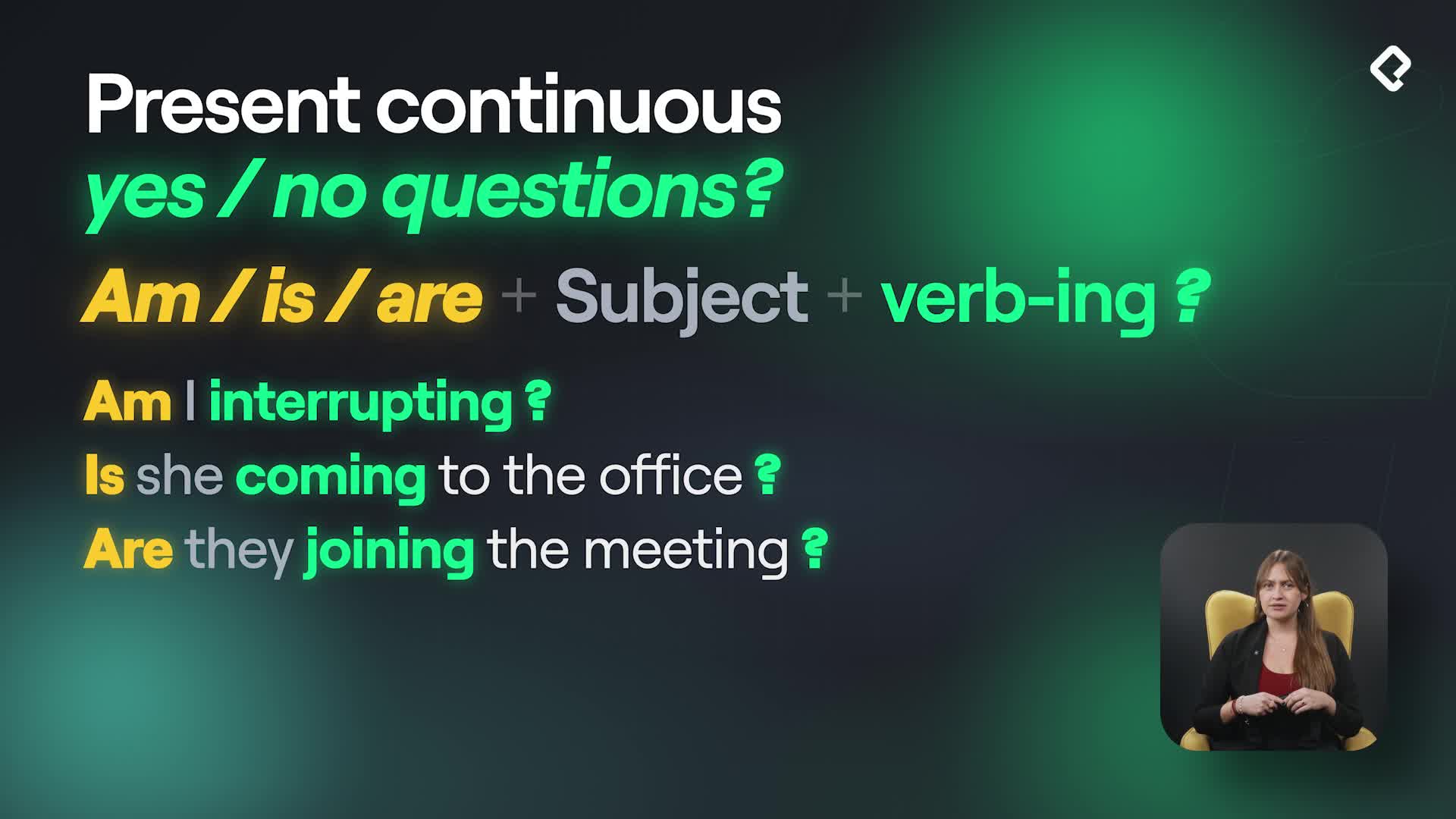
These words act as clear indicators that you should use the -ing form of the verb together with the appropriate form of to be (am, is, are).
How can you practice these tenses effectively?
The best way to internalize these patterns is through repetition and real examples. Pay attention to the signal words in every sentence you read or hear. When you spot always, usually, every day, think present simple. When you notice right now, at the moment, look, listen, switch to present continuous.
Try creating your own sentences using each set of signal words and share your results in the comment section to get feedback from the community.