Yes/No and WH Questions in Present Continuous
Contenido del curso

Talk About You and Others


Talk About Now

Recursos
Resumen
Asking questions in present continuous is an essential skill for everyday conversations, especially in professional settings. Whether you need to check what a colleague is doing right now or gather more details about an ongoing task, mastering this structure will help you communicate with clarity and confidence.
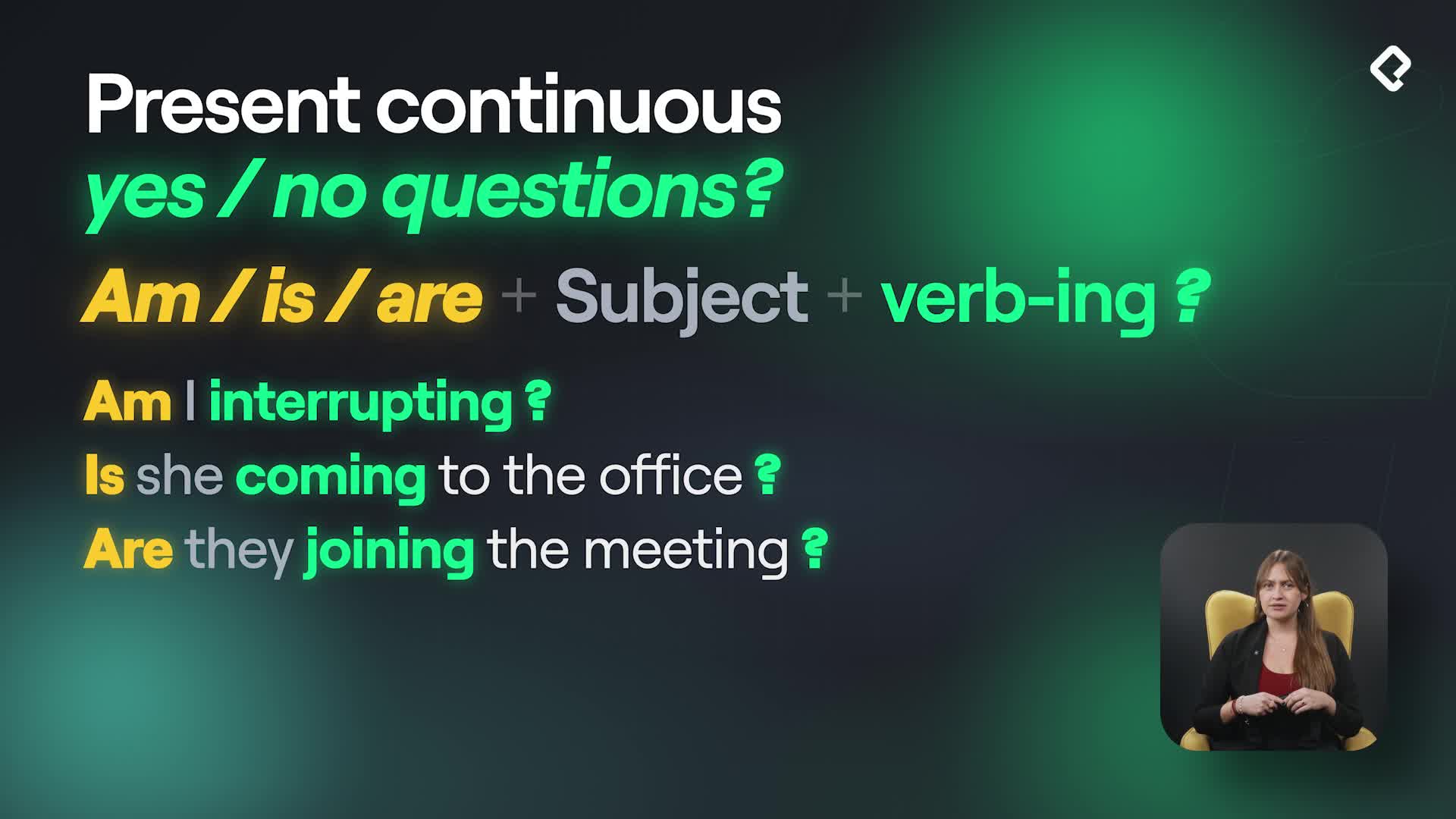
How do you form yes or no questions in present continuous?
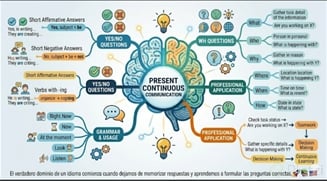
The structure is straightforward: verb to be (am/is/are) + subject + verb with -ing + question mark [0:09]. Here are some examples:
- Am I interrupting?
- Is she coming to the office?
- Are they joining the meeting?
To answer these questions, you follow a simple pattern. For affirmative answers, use yes + subject + verb to be. For negative answers, use no + subject + verb to be + not [0:33].
Practice with these real-world examples:
- Are you coming to work? No, I'm not. I'm waiting for the bus.
- Is he checking the code? Yes, he is.
- Is she having lunch? No, she isn't.
- Is it updating? Yes, it is.
Notice how the short answers keep the response natural and concise. You don't need to repeat the full sentence — just the subject and the verb to be.
When should you use WH questions in present continuous?
When you need more specific information beyond a simple yes or no, you use WH questions [1:16]. The structure adds one element at the beginning: WH word + verb to be + subject + verb with -ing + question mark.
- What are you doing right now?
- Who is leading the client call at the moment?
- Why is she sending so many emails right now?
These questions are extremely useful in workplace situations where you need to understand what is happening at that precise moment.
How does this look in a real conversation?
Consider this dialogue between Robert and Louisa [1:38]:
- Robert: Are you working on the client proposal?
- Louisa: Yes, I am. I'm writing it right now.
- Robert: And is Miguel helping you?
- Louisa: No, he isn't. He's meeting with the new clients at the moment.
- Robert: Are they working on the presentation?
- Louisa: Yes, they are. They're currently designing the slides.
- Robert: How is the presentation going?
- Louisa: It's going really well. Why are you asking? Are you joining the meeting?
- Robert: Yes, I am. I'm coming right now.
This conversation naturally mixes yes/no questions and WH questions in present continuous. Pay attention to how each answer provides context about actions happening right now.
Can you answer these practice questions?
Based on the conversation above, try answering these on your own [2:27]:
- Is Louisa writing the client proposal?
- Is Miguel helping Louisa?
- What are Anna and Carlos doing?
- How is the presentation going?
- Why is Robert asking about the meeting?
The key takeaway is that present continuous questions always require the verb to be before the subject, and the main verb always carries the -ing ending. Whether you are asking a yes/no question or a WH question, this structure remains consistent.
Share your answers in the comment section and check your responses in the resource section.