
Adjetivos para Describir Personas y Cosas
Contenido del curso

Describing What Is in Your Office

Talking About Things and People at Work
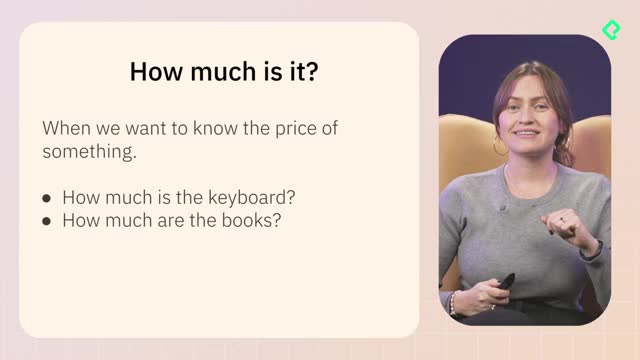


Talking about what you have
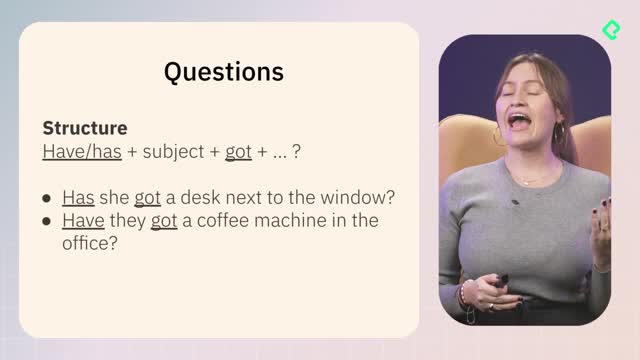
Adjetivos para Describir Personas y Cosas
Resumen
Understanding how to use adjectives is one of the first steps toward building clear, natural sentences in English. Whether you want to talk about the size of your office, the color of your pen, or the personality of a friend, adjectives give you the power to add detail and meaning to everything you say.
What are adjectives and what do they describe?
Adjectives are words that describe nouns — people, places, or things. They can tell us about four main qualities [1:08]:
- Size: big, small, tall, short — "I work in a big office."
- Color: blue, black — "I have a blue pen."
- Age: old, new, young — "She sells old phones."
- Personality: kind, mean, friendly — "She is a kind person."
Notice how each adjective adds a specific layer of information. Without them, sentences feel incomplete and vague.
Which adjectives describe people?
When talking about people, you can use adjectives that refer to physical appearance or personality [1:48]:
- Tall and short describe height.
- Young and old describe age.
- Beautiful and handsome describe appearance.
- Happy and sad describe emotions.
- Kind and mean describe character.
- Friendly, funny, and serious describe how someone interacts with others.
Think about yourself for a moment: are you tall or short? Are you funny or serious? Choosing the right adjective helps others picture exactly who you are.
Which adjectives describe objects?
Objects have their own set of common adjectives [2:48]:
- Big / small — size.
- Long / short — length.
- Good / bad — quality.
- New / old — age.
- Easy / hard — difficulty.
- Fast / slow — speed.
- Clean / dirty — condition.
A quick exercise: look at your desk right now. Is it clean or dirty? Is it big or small? Practicing with real objects around you makes these words stick.
How do you use adjectives in a sentence?
There are two basic sentence patterns with adjectives [3:12]:
- Noun + is/are + adjective: "They are friendly."
- Noun + is/are + not + adjective: "The computer isn't new."
Adjectives can also go before the noun they describe. For example, "The new recruiter is young" — here new comes right before recruiter to give extra detail.
When do you use "a" versus "an" before an adjective?
This is a common point of confusion. The rule depends on the sound that follows, not the letter [3:40]:
- Use "an" when the next word starts with a vowel sound: "She is an astronaut."
- Use "a" when the next word starts with a consonant sound: "She is a famous astronaut."
Notice that when the adjective famous is placed before astronaut, the article changes from an to a because now the first sound you hear is the consonant /f/.
How can you practice adjectives right now?
A great way to build confidence is to describe what you see around you. Pick any object or picture and try two things:
- Say what it is using adjectives: "It is small and old."
- Say what it isn't using negative sentences: "It isn't new. It isn't big."
This simple exercise trains you to recall adjectives quickly and use them in both affirmative and negative forms. Try describing your phone, your bag, or even your charger — just like the conversation at the beginning, where one person described a charger as black, small, and new with a long cable [0:06].
Share your descriptions and compare them with others — you might find new adjectives to add to your vocabulary.