Preguntas y Respuestas cortas con "Have got"
Contenido del curso

Describing What Is in Your Office


Talking About Things and People at Work


Talking about what you have

Preguntas y Respuestas cortas con "Have got"
Resumen
Forming questions in English becomes much simpler once you understand the structure of have got. This grammar point is essential for everyday conversations, especially when asking about possessions, descriptions, or things people currently hold. Mastering both the question form and the short answers will make your spoken English sound more natural and confident.
How do you form questions with have got?
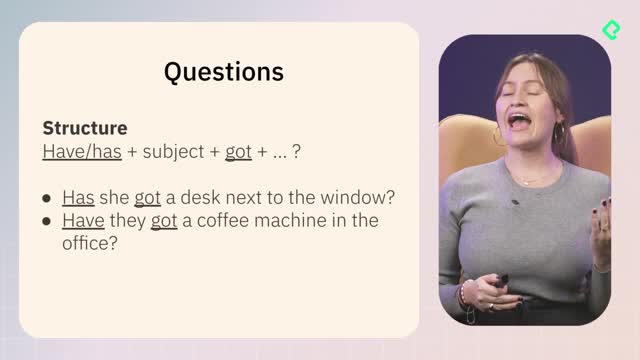
The key to asking questions with have got is word order. You move have or has to the beginning of the sentence, followed by the subject, then got, and finally the complement [0:08]. Compare these two forms:
- Statement: You have got a report.
- Question: Have you got a report?
The pattern looks like this:
- Have/Has + subject + got + complement?
Here are two clear examples from practice [0:22]:
- Has she got a desk next to the window?
- Have they got a coffee machine in the office?
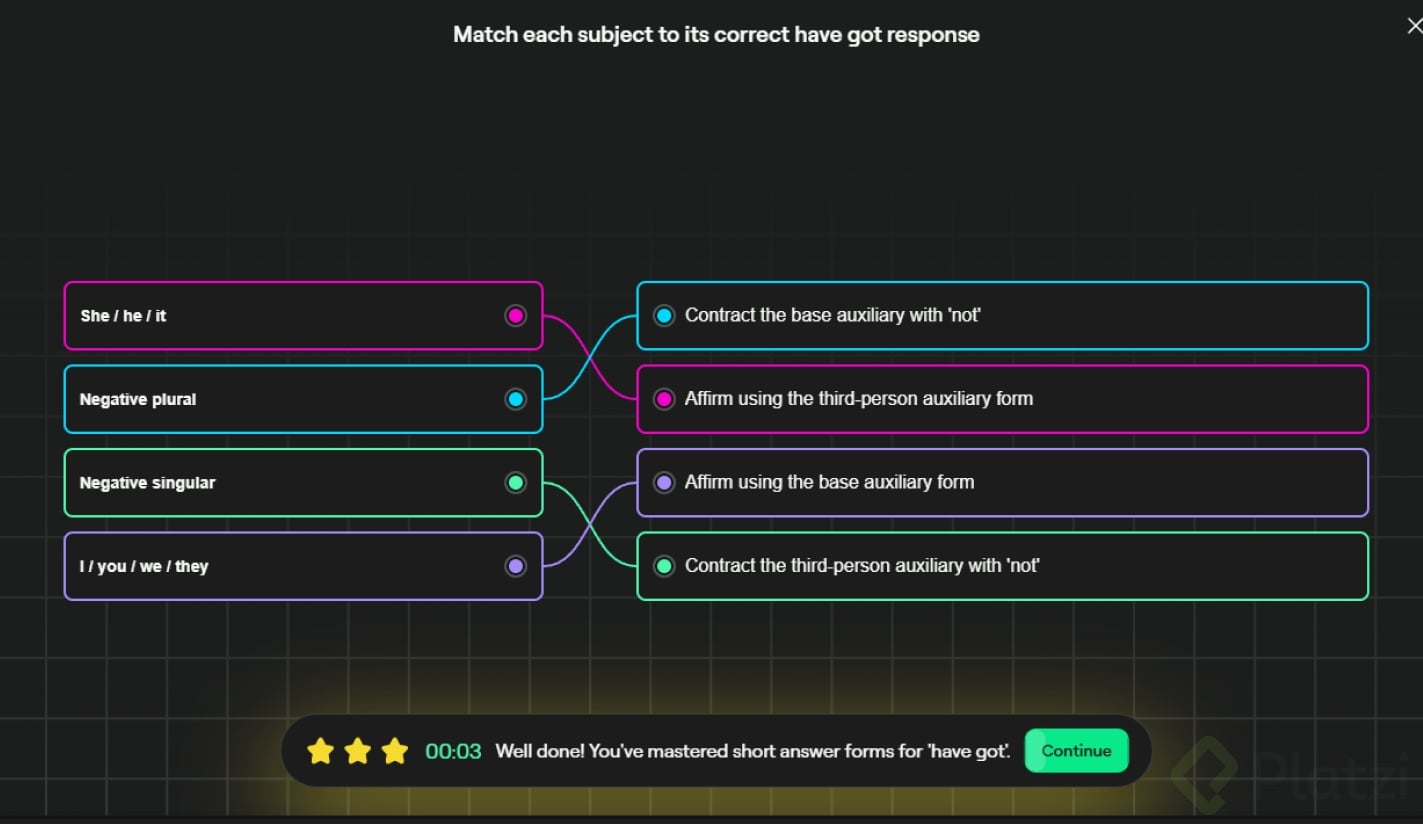
Notice that has pairs with third-person singular subjects like she, he, or it, while have pairs with I, you, we, or they.
How do you answer have got questions?
Short answers follow a simple rule. You match the auxiliary verb used in the question [0:35].
For questions with have:
- Yes, I/you/we/they have.
- No, I/you/we/they haven't.
For questions with has:
- Yes, she/he/it has.
- No, she/he/it hasn't.
The word haven't is the contraction of have not, and hasn't is the contraction of has not. Using these contractions makes your responses sound more natural in spoken English.
What do short answers look like in practice?
Let's look at three practical examples [0:55]:
- Has he got a phone on the table? — No, he hasn't.
- Has she got the report? — Yes, she has.
- Have you got an email? — Yes, you have.
Pay close attention to the subject in each question. It determines whether you use have or has in your answer. A common mistake is mixing them up, so always check the subject first.
If you still have doubts about how have got works in questions and answers, share them in the comment section below!