Inglés en el trabajo: Fechas, Horas y Descripciones
Contenido del curso

Describing What Is in Your Office

Talking About Things and People at Work

Talking about what you have

Inglés en el trabajo: Fechas, Horas y Descripciones
Inglés en el trabajo: Fechas, Horas y Descripciones
Contenido del curso

Mateo Tj

Adriana Victoria Peña
Profesor
Eric Alejandro Alba

Charles Castillo Rosas

María del Consuelo Irastorza Vázquez

José Luis Mendez Marcano

Gerardo Daniel Ordoñez Méndez

Salomón Perdomo Lasprilla

DANIEL ADRIAN SANCHEZ ARTEAGA

Jacqueline Guadalupe López de Pleitez
Dinora Abigail Pérez Rivas

Odaliz Alexandra Mejia Gamarra

Donovan Lenoar Palacios Camarillo

Alfonso Galeano Conde

Jonathan Linares
Jonathan Linares
Jonathan Linares

Edgar Ramirez

MARIANELA NICOLE CRUZ GARCÍA

Fabricio Insfran

Diana Gabriela Reyes García

Rocío Mariela Ordoñez Méndez
ningún vídeo se reproduce en la app ¿con quién puedo ver el tema para solucionarlo?
Hola Mateo, Esperamos que ya hayas podido ver los video. Tu caso fue esclado.
Estoy dispuesto a aprender en este curso
Mis apuntes 🌱
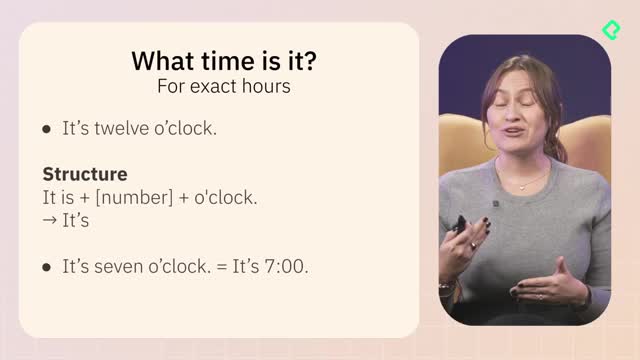
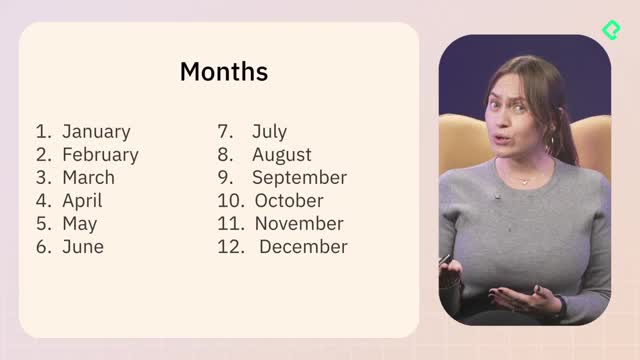
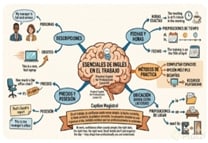
At work, time and small details make a big difference. When you say “The meeting is at 9 o’clock in the morning” or “The training is on the 15th of April,” you are not only mentioning a time or a date; you are organizing actions, avoiding confusion, and showing confidence. The same happens with place and descriptions. Expressions like “The documents are in the folder” or “The coffee machine is next to the office” help you locate objects clearly, while simple adjectives turn basic sentences into useful communication: “My manager is tall and serious” or “This is a new, fast laptop.” In a professional environment, mastering these basic structures—dates, time, location, prices, and possession—is not isolated grammar; it is the practical foundation for joining meetings, understanding instructions, and responding with confidence from the first day.
Caption magistral:
At work, confidence often sounds simple: the right date, the right time, the right word. Small details don’t just organize the day — they shape how professionally you are understood.
Aqui vamos! Nuevo curso, nueva profe. Seguimos avanzando!!
Can I use this for remote work?
Absolutely! The vocabulary and structures covered here are just as vital for remote environments as they are for physical offices. Whether you are describing an issue with your home office equipment over a video call, scheduling a virtual meeting across different time zones, or confirming project dates via email, these foundational skills apply perfectly. Remote work actually requires clearer communication, making these concepts essential for your digital workspace.
Everything is ready for this class. I am very excited, Ms. Vicky Peña.
Let's do it!
I am ready to learn everything related to date, time, and basic descriptions from you, Vicky Peña.
Let´s do it!
I'm ready to start!
The correct is "I´m ready to start" or "I´m ready to begin".
Thank you Miss Vicky, I'm here and ready to learn!!!
When should I use formal office vocabulary?
You should lean towards formal vocabulary when speaking with clients, upper management, or during official presentations. However, everyday office interactions with close colleagues often require a more relaxed, conversational tone. As you learn to describe objects and ask questions, you will notice the subtle differences between casually asking a coworker "Have you got a pen?" versus formally requesting supplies. Context is everything, and matching your tone to your audience is a crucial professional skill.
Can I use this for remote work?
Absolutely! The vocabulary and structures covered here are just as vital for remote environments as they are for physical offices. Whether you are describing an issue with your home office equipment over a video call, scheduling a virtual meeting across different time zones, or confirming project dates via email, these foundational skills apply perfectly. Remote work actually requires clearer communication, making these concepts essential for your digital workspace.
How do I prepare for this course?
To get the most out of this workplace English course, start by observing your daily environment. Take note of the objects on your desk, the times you start and finish tasks, and the dates of your meetings. By actively connecting your real-world routine to the vocabulary we will cover—like office supplies and schedules—you will build a strong foundation. Keep a notebook handy to jot down new words as you progress through the upcoming lessons.
How do I prepare for this course?
To get the most out of this workplace English course, start by observing your daily environment. Take note of the objects on your desk, the times you start and finish tasks, and the dates of your meetings. By actively connecting your real-world routine to the vocabulary we will cover—like office supplies and schedules—you will build a strong foundation. Keep a notebook handy to jot down new words as you progress through the upcoming lessons.
Each class pairs grammar explanations with real work examples [1:39], so nothing feels abstract. You then reinforce what you learn through exercises:
Why is workplace English so important?
Mastering workplace English opens doors to better communication with international teams and clients. It goes beyond basic grammar; it is about knowing how to professionally ask for the time, describe where important documents are, or confirm meeting dates. When you can confidently articulate what you have and what you need in an office setting, you instantly become a more effective and reliable professional in any global environment.
Can I use this for remote work?
Absolutely! The vocabulary and structures covered here are just as vital for remote environments as they are for physical offices. Whether you are describing an issue with your home office equipment over a video call, scheduling a virtual meeting across different time zones, or confirming project dates via email, these foundational skills apply perfectly. Remote work actually requires clearer communication, making these concepts essential for your digital workspace.
Why is workplace English so important?
Mastering workplace English opens doors to better communication with international teams and clients. It goes beyond basic grammar; it is about knowing how to professionally ask for the time, describe where important documents are, or confirm meeting dates. When you can confidently articulate what you have and what you need in an office setting, you instantly become a more effective and reliable professional in any global environment.