Preposiciones de Lugar para Describir Espacios
Contenido del curso

Describing What Is in Your Office

Talking About Things and People at Work


Talking about what you have
Preposiciones de Lugar para Describir Espacios
Resumen
Understanding how to describe the location of objects and people is one of the most practical skills in everyday English. Prepositions of place such as in, on, under, in front of, behind, next to, and between allow you to communicate clearly about your surroundings, whether you are describing your office, your living room, or any space around you.
How do prepositions of place work?
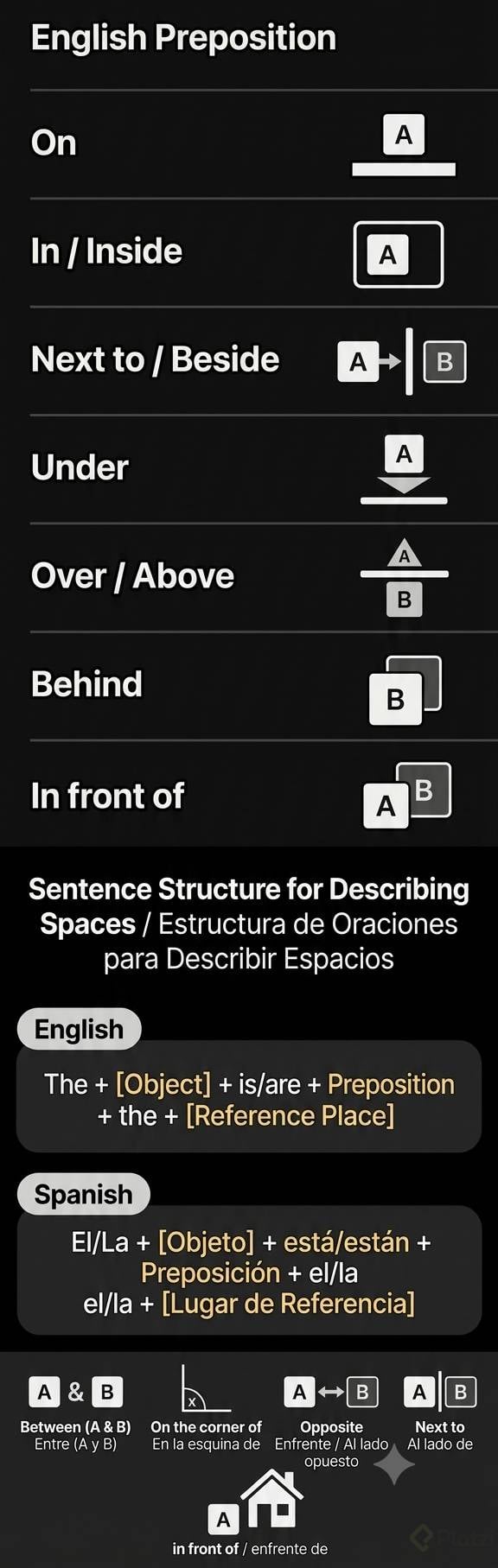
Prepositions of place help you locate where an object or a person is [0:02]. Each preposition paints a different spatial picture:
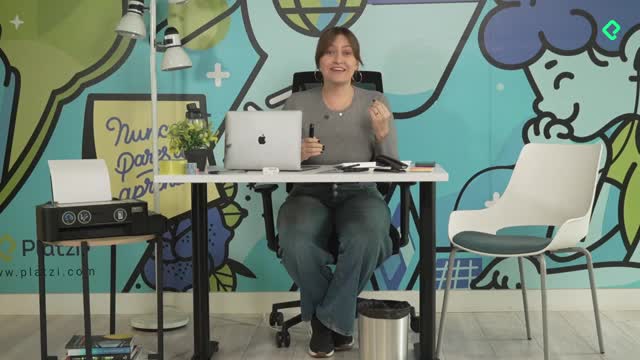
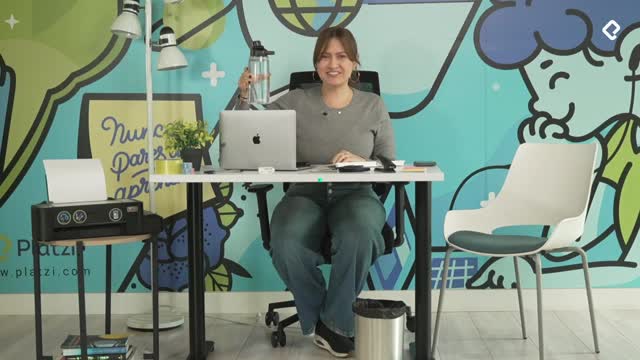
- Under: the trash is under the table.
- In: I am in the office; there is water in the bottle.
- On: I am on the chair; the printer is on the table.
- In front of: the tapes are in front of the plant; the camera is in front of the workstation.
- Behind: the lamp is behind the printer; the wall is behind the chair.
- Next to: the chair is next to the table; the pens are next to the tapes.
- Between: the laptop is between the keyboard and the plant; I'm between the window and the door.
Notice how each preposition gives a precise relationship between two things. Mastering these words means you can describe any room with confidence.
What is the correct sentence structure?
When you want to state where something is, follow this pattern [1:24]:
Object + is/are + preposition + the + place.
- The chair is next to the table.
- The tapes are on the table.
Use is for singular objects and are for plural objects. This simple formula works every time you need to describe a location.
How do you ask about location?
To ask where something is, use where is or where are [1:39]:
Where is/are + the + object?
- Where is the plant?
- Where are the books?
The choice between is and are depends on whether the object is singular or plural.
How do there is and there are fit in?
When you want to say that something exists in a room, you combine there is (singular) and there are (plural) with prepositions of place [1:55]. For example:
- There are papers on the desk.
- There is a lamp behind the printer.
This structure is essential for describing rooms because it lets you introduce objects and immediately tell the listener where they are located.
How can you practice describing rooms?
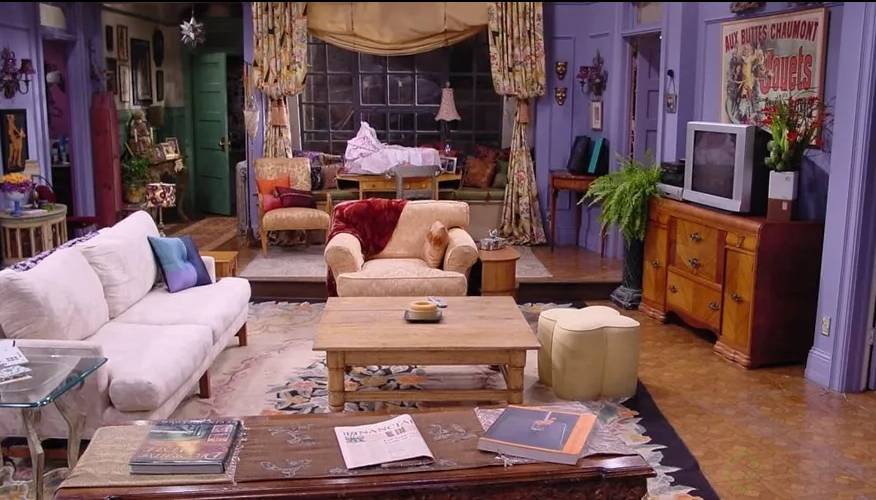
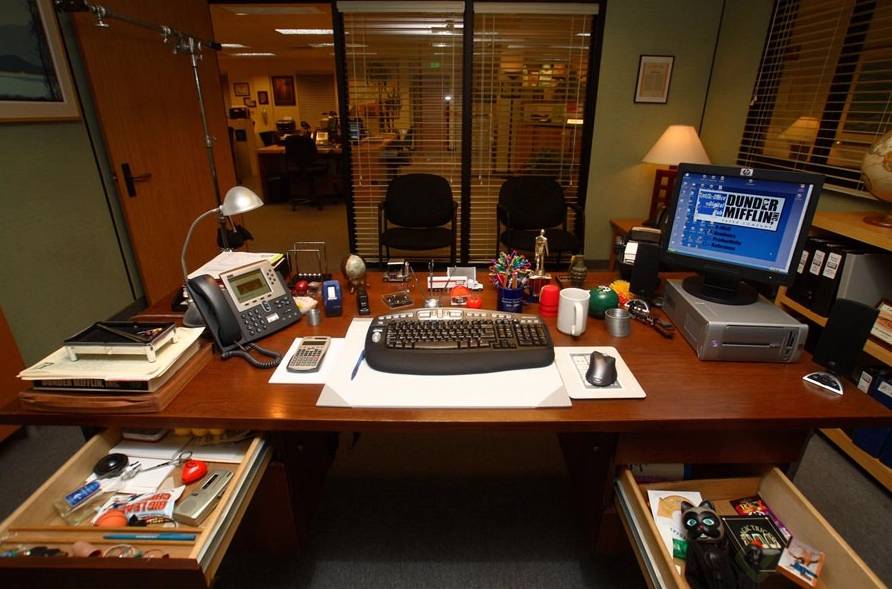
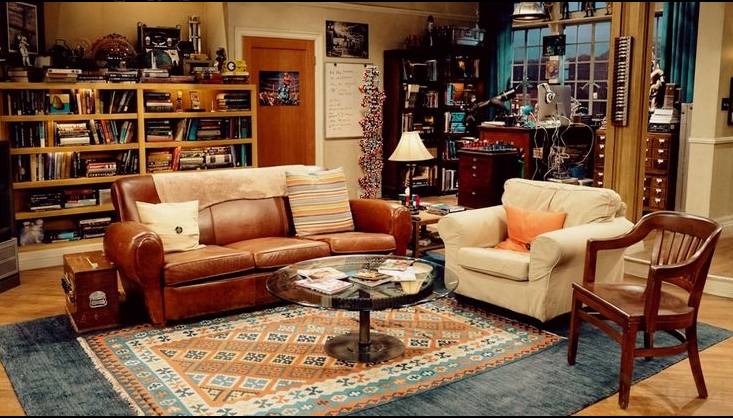
A great exercise is to look at any room—real or from a TV show—and describe everything you see [1:55]. Try answering two questions for each object:
- What exists? Use there is or there are.
- Where is it? Add a preposition of place.
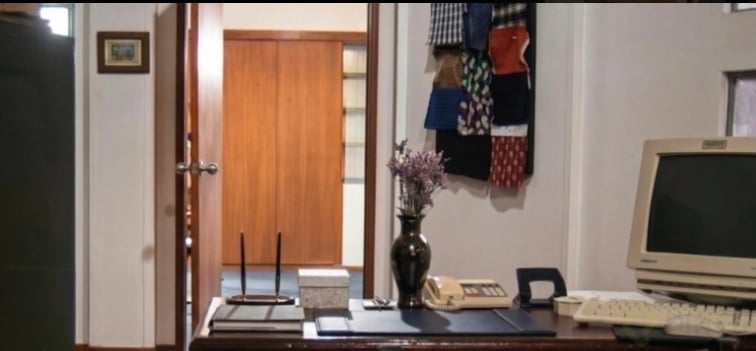
For instance, think about a famous office like Michael's office: "There are papers. Where are they? They are on the desk." Or consider Sheldon's and Leonard's living room: "There are books. Where are they? They are on the shelf" [2:07].
Pick any room around you right now and try describing at least five objects with their locations. The more you practice, the more natural these structures become. What room would you like to describe? Share your sentences and keep building your vocabulary!