
How Much Is It? Preguntando Precios en Inglés
Contenido del curso

Describing What Is in Your Office

Talking About Things and People at Work

Talking about what you have
How Much Is It? Preguntando Precios en Inglés
Resumen
Knowing how to ask about prices is one of the most practical skills you can develop when learning English. Whether you are shopping for office supplies or comparing products, the structure is simple and repeatable once you understand the pattern.
How do you ask the price of one item?
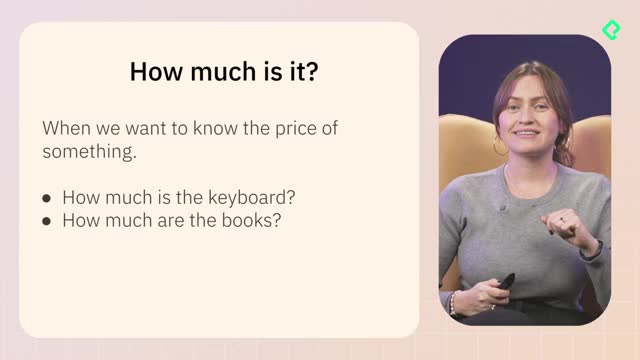
When you want to know the price of a single object, the structure is straightforward: How much is the + object? [0:12]. For example:
- How much is the keyboard?
- How much is the printer?
To answer, you use it's + number + dollars, or simply it's + price. A clear example from the lesson: How much is the printer? It's $250 [0:30].
There is an important writing rule here. You can write the price entirely in letters — it's two hundred and fifty dollars — or entirely in numbers — it's $250. What you cannot do is combine the dollar sign with the word dollars. Writing it's $250 dollars is incorrect [0:45].
How do you express prices with cents?
When the price includes cents, the pattern is it's + number + dollars and number + cents [0:55]. For instance:
- It's $10.25.
- It's 50 cents.
This small detail makes your answers sound natural and precise.
How do you ask about the price of multiple items?
If you need the price of two or more objects, switch to the plural form: How much are the + objects? [1:05]. The answer changes accordingly to they're + number + dollars.
- How much are the erasers? They're $2.50 each.
- How much are the notebooks? They're $20.10.
Notice the word each at the end. It tells the listener that the price applies to every single item, not to the group as a whole [1:15].
What does a real shopping conversation look like?
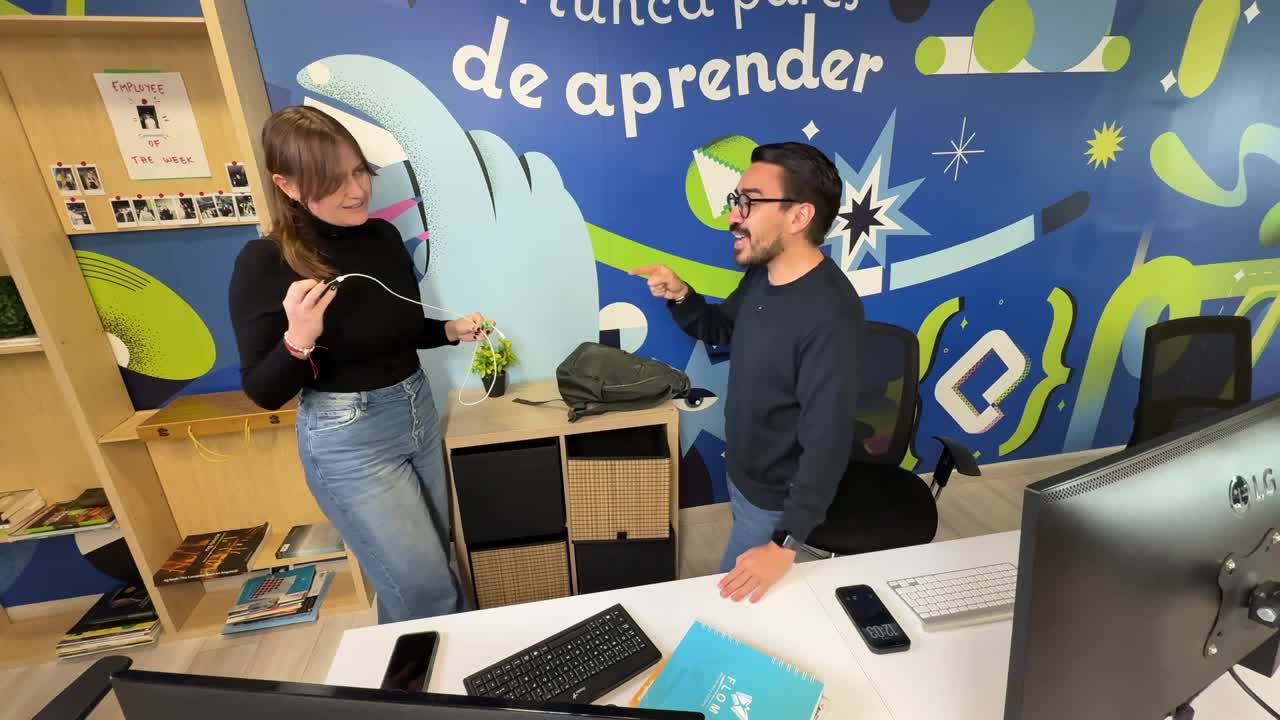
The lesson includes a practical dialogue set in a store [1:30]. Here are the key exchanges:
- Notebook: How much is it? It is only $8.
- Pens: How much are these pens? They are $2 each, or a pack of 10 pens for $8.
- Printer: How much is this printer? This printer is $120.
- Chairs: How much are the chairs? They are $65 each.
What useful phrases appear in the conversation?
Beyond pricing, the dialogue introduces several everyday shopping expressions:
- How can I help you? — a greeting used by store employees.
- Do you have…? — to ask about product availability.
- Anything else? — the seller checks if the customer needs more.
- There aren't any headphones left — a way to say an item is out of stock [2:25].
The word office supplies groups items like notebooks, pens, printers, and chairs that you use at work [2:35].
How can you practice this structure?
The best way to reinforce these patterns is repetition. Try forming your own questions using objects around you:
- How much is the laptop?
- How much are the markers?
Then answer with a realistic price using it's or they're. Pay attention to whether the object is singular or plural — that single detail determines the entire sentence structure.
Share your practice sentences in the comments and compare your answers with other learners.