Contenido del curso
Reading
Listening
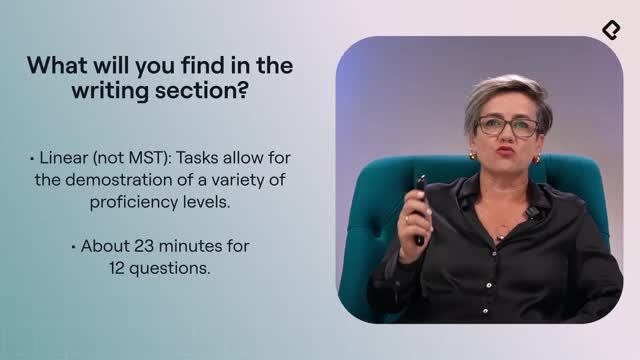
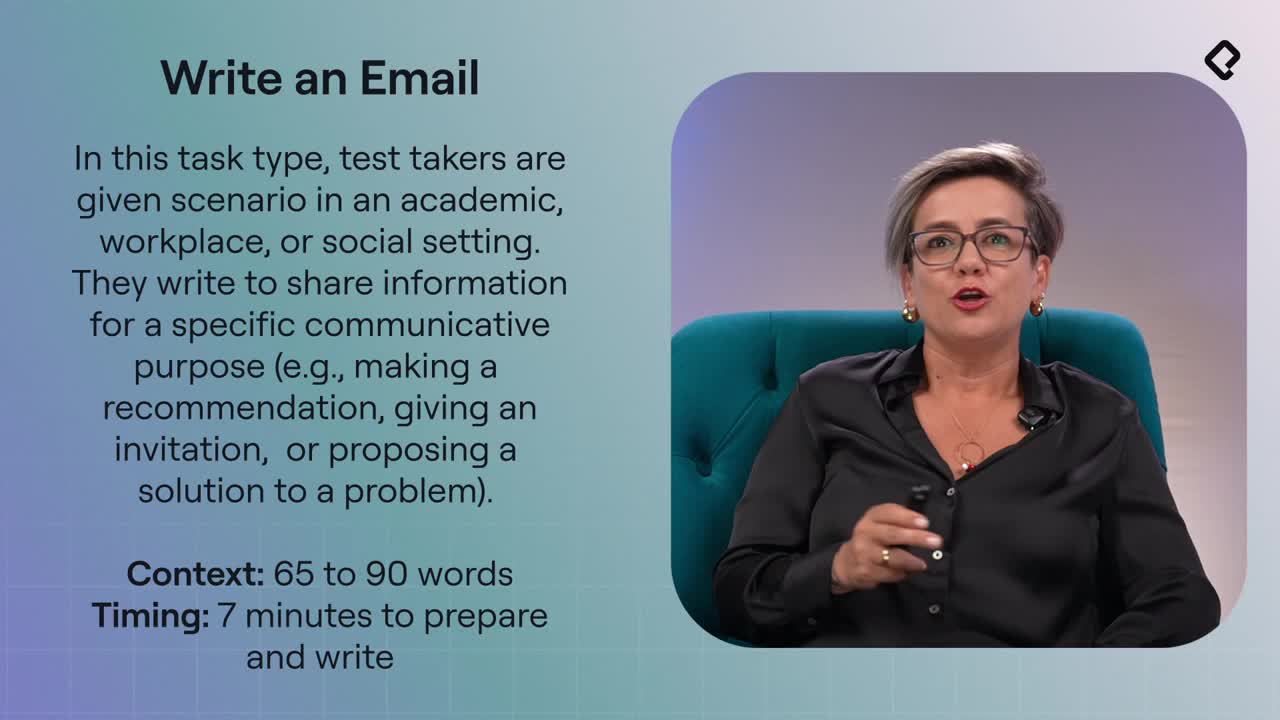
Writing
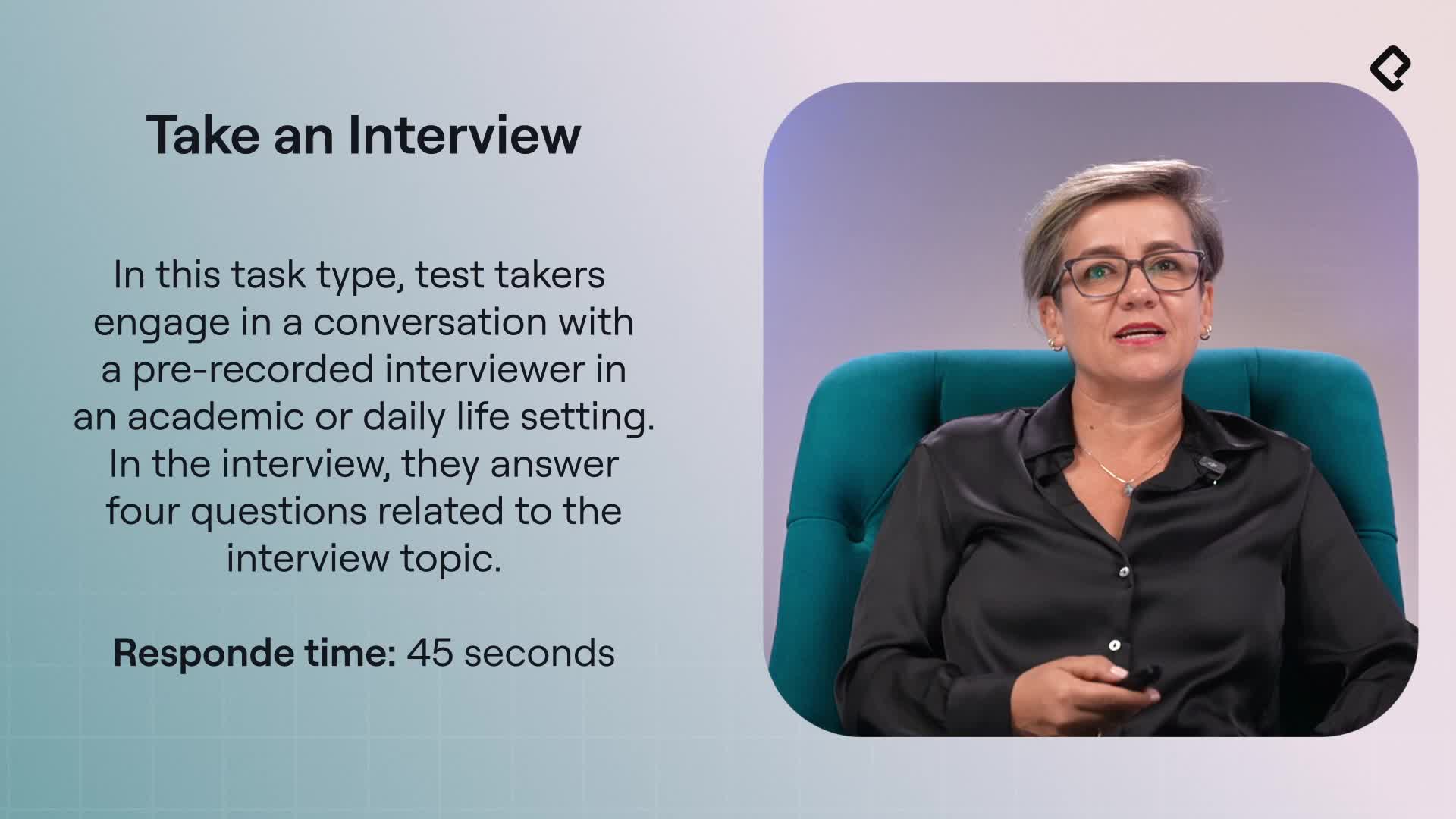
Speaking
How the TOEFL Complete the Words Task Works
Resumen
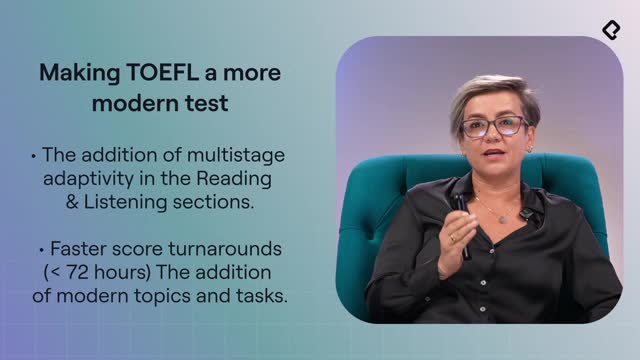
The TOEFL reading section uses a multi-stage adaptive format, which means your performance on the first part decides the difficulty of what comes next. If you are preparing for the exam, understanding how the Complete the Words task works will help you build a stronger foundation and avoid losing easy points.
What does the TOEFL reading section evaluate?
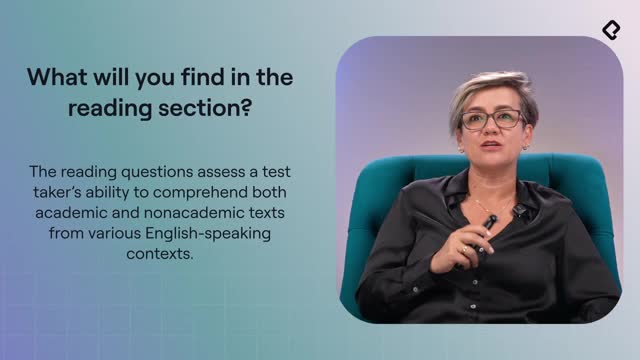
The reading section blends traditional academic passages with texts that resemble newspapers, magazines, and websites. This mix reflects a more holistic approach to academic reading proficiency, so you are tested on both textbook-style language and real-world reading.
The section is organized into three task types, each with its own passage length and question count:
- Complete the Words: passages of 70 to 100 words, with 10 missing words to complete.
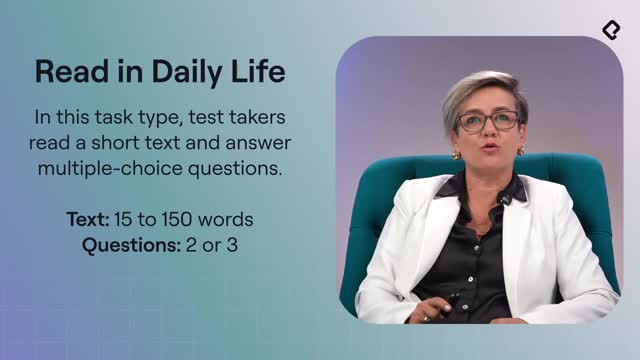
- Reading in Daily Life: passages of 15 to 150 words, with two or three questions depending on length.
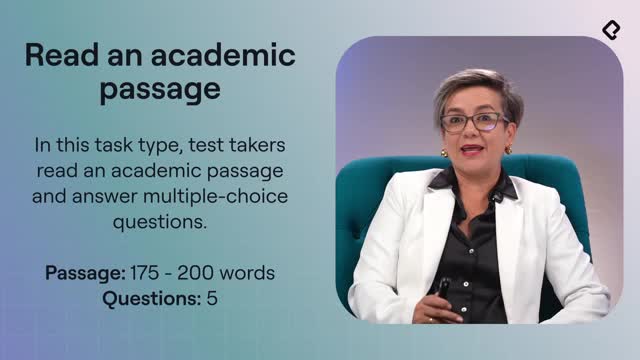
- Read an Academic Passage: passages up to 200 words, with five questions each, similar to the legacy TOEFL iBT format.
What is multi-stage adaptive testing? It is a format where your answers in the first part determine the difficulty of the second part, matching the test to your level.
How does the Complete the Words task work?
This task measures your ability to process written passages for both meaning and form. You see a paragraph that opens with a full first sentence. After that, roughly the second half of every second word is deleted, and you have to type the missing letters.
Each passage contains exactly 10 words with missing letters. To keep it fair for everyone, topics are common and non-specialized, avoiding technical vocabulary, jargon, or too many proper nouns.
Which language skills does this task test?
The task covers a wide range of foundational skills in a single exercise:
- Grammar elements like auxiliary verbs, word formation, and articles.
- Fixed phrases and basic survival expressions used in everyday communication.
- Discourse markers such as however, and independent prepositions like clear from.
- Reading comprehension through references to ideas mentioned earlier in the passage.
For example, if the word dancing appears later in the text, you can recover it because the first sentence already mentioned that early humans performed dances. That backward reference is part of what makes this task so effective.
How can you score higher on Complete the Words?
Three practical strategies make a real difference when you sit down to solve this task.
First, use the complete first sentence to grasp the overall topic. That opening line is your anchor and tells you what the passage is really about.
Second, when filling in the missing letters, consider both meaning and grammar. Look at the surrounding context to decide if the word should be a verb, a noun, or a connector, and whether it needs to agree with a subject or tense.
Third, if you hit a word you do not recognize, do not get stuck. Keep reading to build the big picture of the passage. Often, you will understand the missing word once you return to it with more context.
What should I do if I cannot guess a word in Complete the Words? Skip it, finish reading the passage to understand the general idea, and come back. The full context usually reveals the answer.
How long are the passages in Complete the Words? Each passage is 70 to 100 words long and includes 10 words with missing letters that you need to complete.
If you tried the practice exercise, share your answer in the comments and let me know which words gave you the most trouble.