TOEFL iBT Home Edition Updates Explained
Contenido del curso

Reading
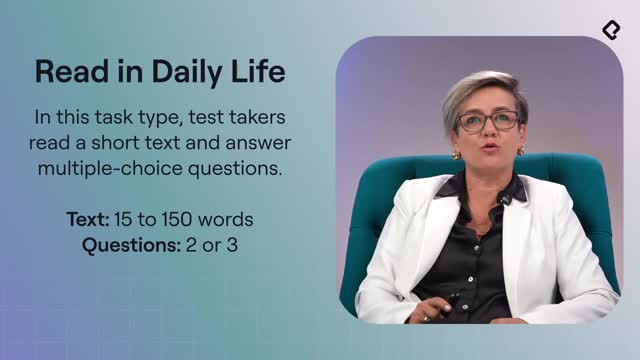
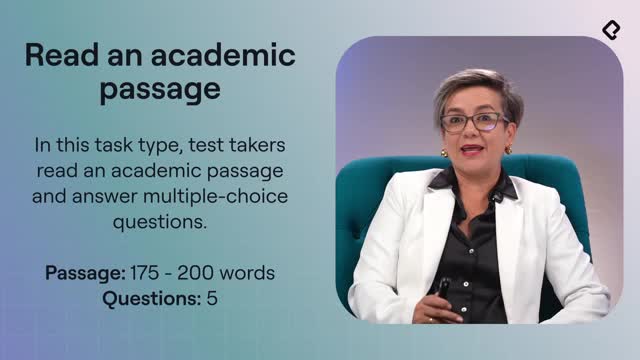
Listening
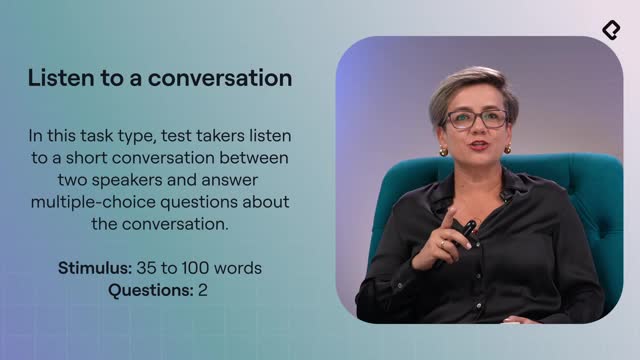


Writing
Speaking
Recursos
Resumen
The TOEFL iBT Home Edition has rolled out major upgrades that change how you take the test, how it's scored, and how fast you get results. If you're preparing for university admissions or an immigration process, knowing these updates will help you study smarter and set realistic targets based on the CEFR scale.
What's new in the TOEFL iBT Home Edition?
The redesigned experience focuses on making the test friendlier, faster, and more secure. ETS streamlined the check in process, consolidated the application, and refreshed the interface so you spend less time fighting the platform and more time showing what you know.
Security also got an upgrade. You now use a second camera during the session, Entrust handles identity verification, and ETS hires its own proctors equipped with AI tools to support you while keeping the test fair.
Three updates stand out for test takers:
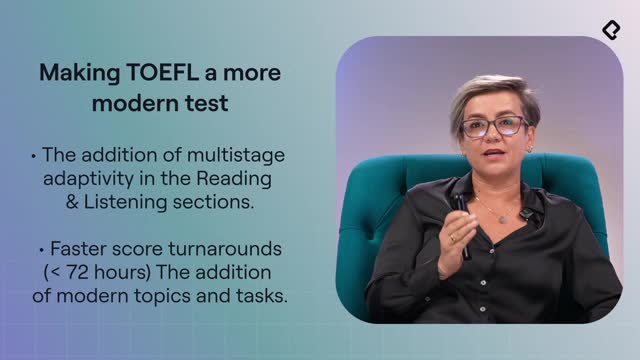
- Personalized testing through multistage adaptivity in Reading and Listening.
- Rapid score delivery in under 72 hours, so universities and immigration offices can act fast.
- Fair and relevant content, with modern topics that don't favor any specific country or background.
What is the TOEFL iBT Home Edition? It's the at home version of the official TOEFL iBT, taken on your own computer with a second camera, Entrust identity verification, and live proctoring powered by AI tools.
How does multistage adaptivity work in Reading and Listening?
The Reading and Listening sections now begin with a routing stage. Based on your performance there, the system sends you to a follow up stage at a higher or lower difficulty level. Even the lower level sections keep a range of difficulty, so you can still demonstrate your highest possible proficiency.
This personalized approach gives a more precise measurement of your English level. Speaking and Writing, on the other hand, stay linear: every test taker gets the same questions in the same order.
How are Speaking and Writing scored?
Both sections use a hybrid scoring model. An AI engine analyzes many features of your response, and expert human raters review the output, especially when the AI's confidence is low. The result is strong agreement between machine and human scoring, which keeps the final evaluation reliable.
What does the new TOEFL iBT structure look like?
If you took the legacy version, you'll notice the order changed: Writing now comes before Speaking. The full test takes less than two hours, including time to adjust your headphones and settle in.
Because Reading and Listening are adaptive, the number of items varies per test taker:
- Reading: about 27 minutes, 35 to 45 questions.
- Listening: about 27 minutes, 35 to 45 questions.
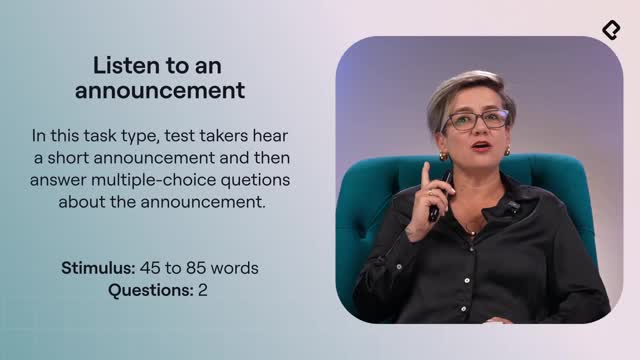
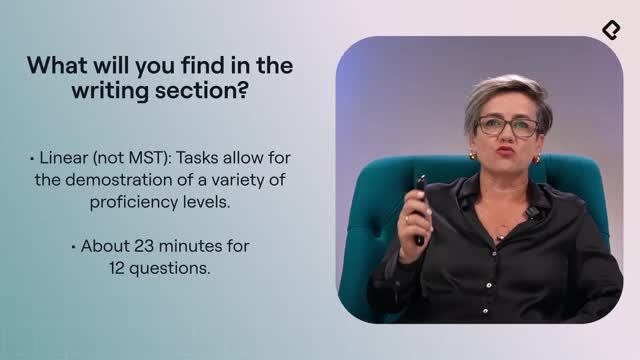
- Writing: about 27 minutes, 12 questions, linear format.
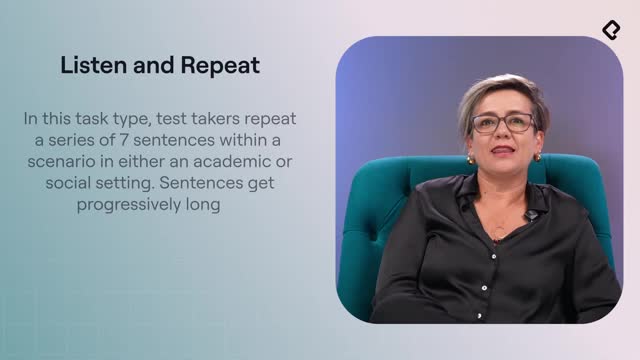
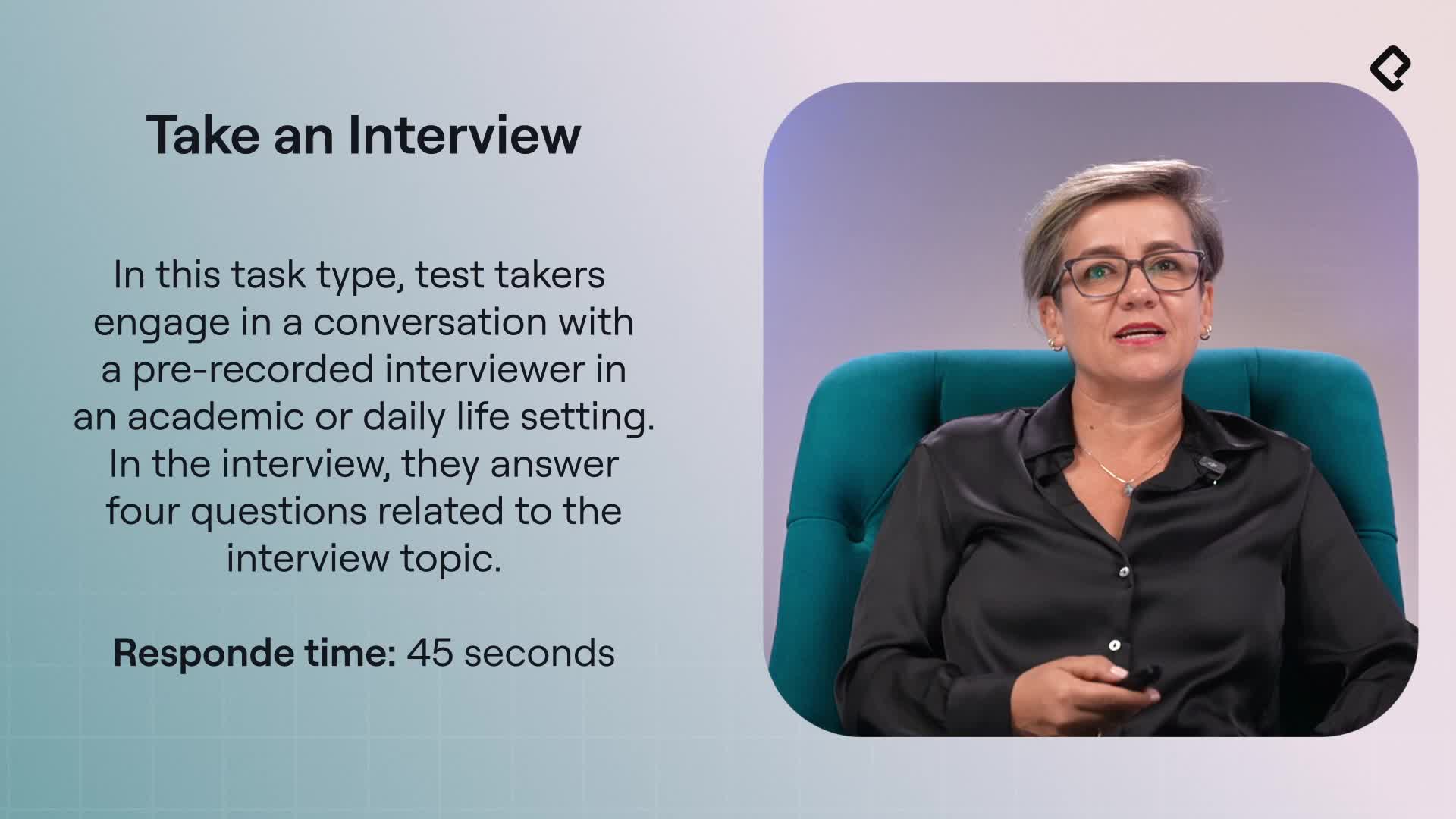
- Speaking: about 8 minutes, 11 questions total, split into 7 Listen and Repeat items and 4 Take an Interview tasks.
How long is the TOEFL iBT Home Edition? Less than two hours total, including setup time. Reading and Listening take around 27 minutes each, Writing 27 minutes, and Speaking only 8 minutes.
How is the TOEFL iBT scored on the new band system?
The test uses a 1 to 6 band scoring system for each of the four sections, reported in half point increments. Your overall score is the average of those four sectional scores, rounded to the nearest half band.
These bands map directly to the CEFR, the Common European Framework of Reference, which is the international standard for describing language ability on a six point scale. The CEFR splits learners into three broad categories, each with two levels:
- Basic user: A1 and A2.
- Independent user: B1 and B2.
- Proficient user: C1 and C2.
The TOEFL covers the entire range from A1 to C2, and the official mapping appears on your score report and the TOEFL website. You can also find the mapping table in the Class Resource section to review it on your own time.
What TOEFL score do I need to pass?
Here's the part most students get wrong: the TOEFL is not a pass or fail test. It's a proficiency assessment. The score you need depends entirely on the institution or organization you're applying to.
For example, scoring in the 4 or 4.5 band places you at the B2 level. A university might ask for B2, while a graduate program or immigration office might require C1 or higher. Your real goal isn't a universal passing score, it's hitting the specific number your target institution demands.
What CEFR level is a 4.5 on TOEFL iBT? A score in the 4 to 4.5 band corresponds to B2, the upper independent user level on the CEFR scale.
Why do these TOEFL iBT updates matter for you?
Faster scoring, adaptive sections, and CEFR alignment mean you get a test that reflects your real proficiency and gives institutions data they can act on quickly. The 72 hour score turnaround alone can change how you plan applications and visa timelines.
In the next session, you'll dive into the first Reading task, Complete the Words. If you have questions about the new structure or the CEFR mapping, drop them in the comments so we can work through them together.
TOEFL iBT Home Edition Updates Explained