
How to Score 5 on TOEFL Email Task
Contenido del curso


Reading
Listening


Writing
Speaking
Recursos
Resumen
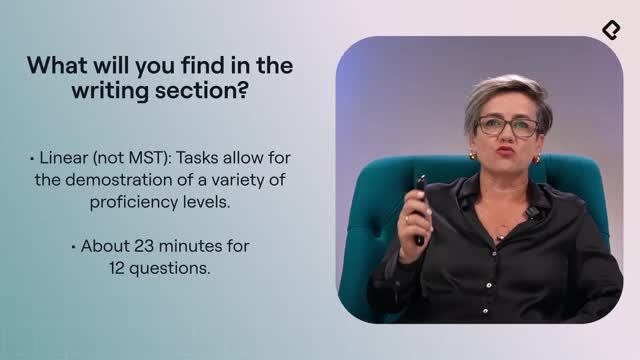
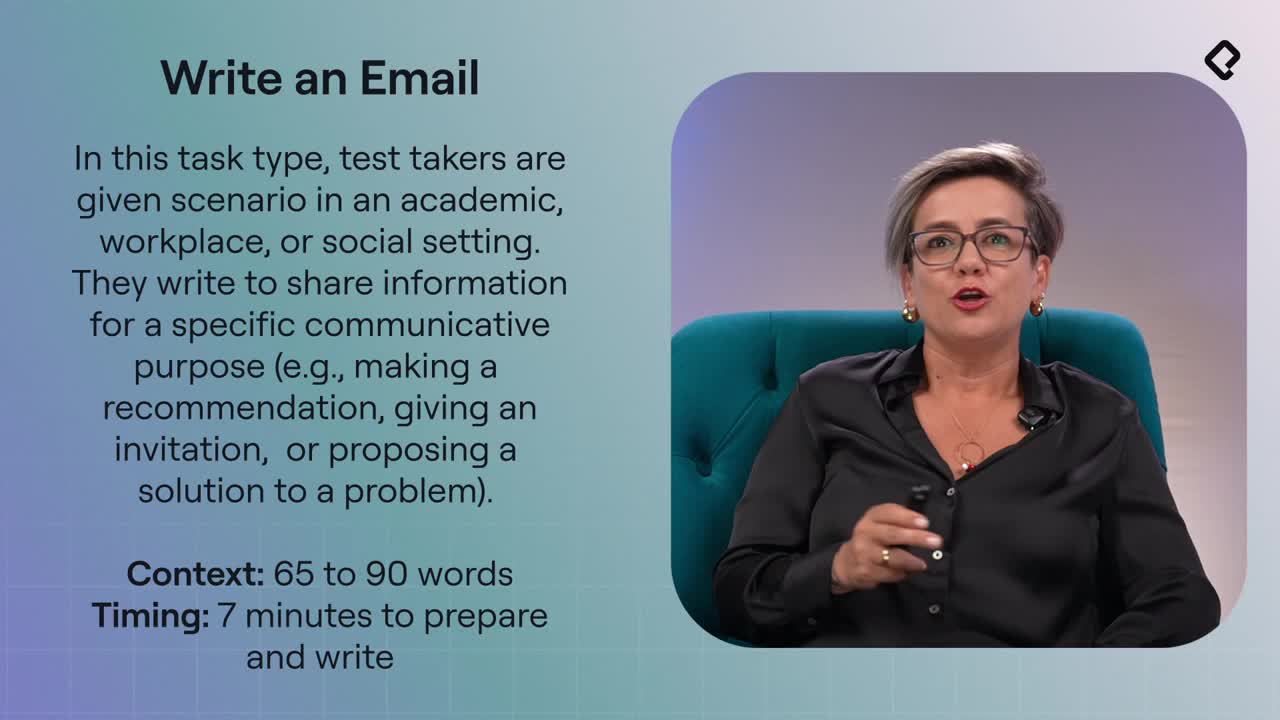
The write an email task in the TOEFL writing section asks you to respond to a short scenario, either academic or social, in 65 to 90 words within 7 minutes. Knowing how the rubric works and what evaluators expect will help you write a focused, well structured reply that scores high without aiming for perfection.
What is the write an email task in TOEFL?
You receive a written scenario that sets the context, followed by clear instructions about the communication goal you need to fulfill. Your job is to read carefully, address every bullet point, and produce a complete email that proves you can handle a wide range of grammar and vocabulary under time pressure.
What is the write an email task? It is a TOEFL writing exercise where you reply to an academic or social scenario in 65 to 90 words, using correct grammar, vocabulary, spelling, punctuation, and capitalization.
The response should follow the mechanical conventions of English, which include spelling, punctuation, and capitalization. Treat it as a real message, not a checklist.
How is the email task scored on the TOEFL rubric?
The rubric primarily evaluates your ability to produce language, focusing on lexical and grammatical accuracy. The maximum score is 5, and the descriptors for that score reward elaboration, syntactic variety, and appropriate social conventions, things like greetings, polite tone, and a proper closing.
Here is the part that surprises most test takers: even at the highest level, responses are not expected to be entirely error free. Acceptable errors are those that do not obscure meaning and are typical of a competent writer working under timed or slightly stressful conditions. In other words, a small slip in a verb tense or a missing comma will not pull you down from a 5 if your message is clear.
Do I need a perfect email to score 5? No. A score of 5 allows minor errors as long as they do not obscure meaning and the response shows elaboration, variety, and proper social conventions.
What does a top scoring sample show?
When you analyze a sample response that earned a 5, you notice three things working together:
- Elaboration: ideas are developed, not just listed.
- Syntactic variety: sentences mix simple, compound, and complex structures.
- Social conventions: greeting, polite tone, and closing match the relationship in the scenario.
And yes, there are still small errors in that sample. That is the point. Scoring is designed to be fair, consistent, and reflective of real world language use, not of a robotic, error free output.
How can you improve your score on the write an email task?
Four habits make the difference between an average reply and a high scoring one. None of them require advanced vocabulary, just discipline and attention to the prompt.
- Read the context and information carefully. Identify who is writing, who receives the email, and the relationship between them.
- Address all the bullet points in the directions. Skipping one is the fastest way to lose points, even if your English is strong.
- Write complete sentences with correct vocabulary and grammar. Avoid fragments and watch subject verb agreement.
- Make your response comprehensive and detailed. Within 65 to 90 words, add a reason, an example, or a specific request instead of vague statements.
A quick way to self check is to read your email out loud before submitting. If it sounds like something you would actually send, you are on the right track.
What comes after the email task?
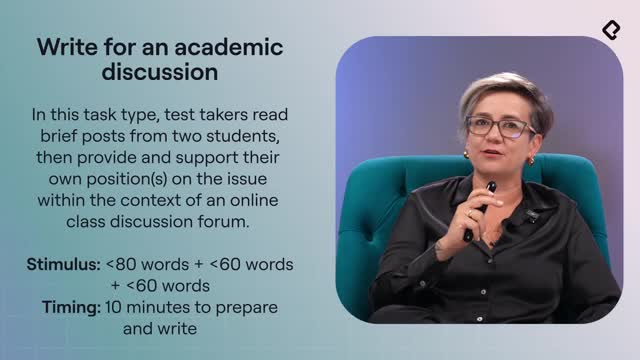
The email is one of two parts of the writing section. The next component is the write for an academic discussion task, which asks for a different register and structure. Mastering the email first gives you a solid base for that more analytical response.
If you want to practice with the official descriptors, visit the class resources section to access the full rubrics and extra materials. Try writing one email today, score it against the rubric, and share your draft in the comments so we can review it together.
How to Score 5 on TOEFL Email Task