Choosing the Right Consumer Research Method
Contenido del curso


Procesos de Pensamiento


Conoce tu consumidor
- 8

Cinco técnicas cualitativas para entender al consumidor
05:31 min - 9

Choosing the Right Consumer Research Method
Viendo ahora - 10

Como criar questionários quantitativos eficazes
06:30 min - 11

Cómo hacer una entrevista en profundidad paso a paso
08:06 min - 12

Cómo grabar y desgrabar una entrevista a profundidad
08:46 min - 13

Cómo organizar un grupo focal paso a paso
04:51 min - 14

Estudio de casos: cómo validar una idea sobre tu consumidor
06:09 min - 15

¿Qué es neuromarketing?
00:01 min - 16

Por que compramos pelo valor simbólico, não pelo produto
10:49 min - 17

Contexto sociocultural: por qué define tu mensaje de venta
02:33 min - 18

NVivo y saturación: así se leen los focus group
05:39 min
Encuentra lo que estás buscando


Conozcamos el consumidor Latinoamericano


Tendencias para el futuro


Mentoría Expert
Recursos
Resumen
Consumer research methods in marketing are how you truly get to know the person buying your product, and choosing the right one decides whether your campaigns hit or miss. This guide breaks down each method, when to use it, and why knowing your consumer sits at the center of everything you do in marketing.
Why does knowing your consumer come first and last in marketing?
Everything starts and ends with the consumer. Your brand creation begins with them, your branding process begins with them, and it closes with them again in the after-sales phase. That is why methodical research is not optional, it is the backbone of any marketing decision you make.
Think of research as bringing back the crystal ball. You start to understand what moves your consumer, what motivates them, and what drives them, so your advertising and incentives can impact those triggers directly.
Why is consumer research important in marketing? Because the consumer is both the beginning and the end of every marketing process. Without research, you are guessing at what motivates purchases instead of understanding it.
What are the main types of marketing research?
You have a wide range of options, and each one earns its place depending on what you need to learn. Let's walk through the three big categories mentioned in the class [00:11].
- Desk research: you look for information that already exists on your topic, your consumers, and your industry, including others who faced a challenge similar to yours [00:29].
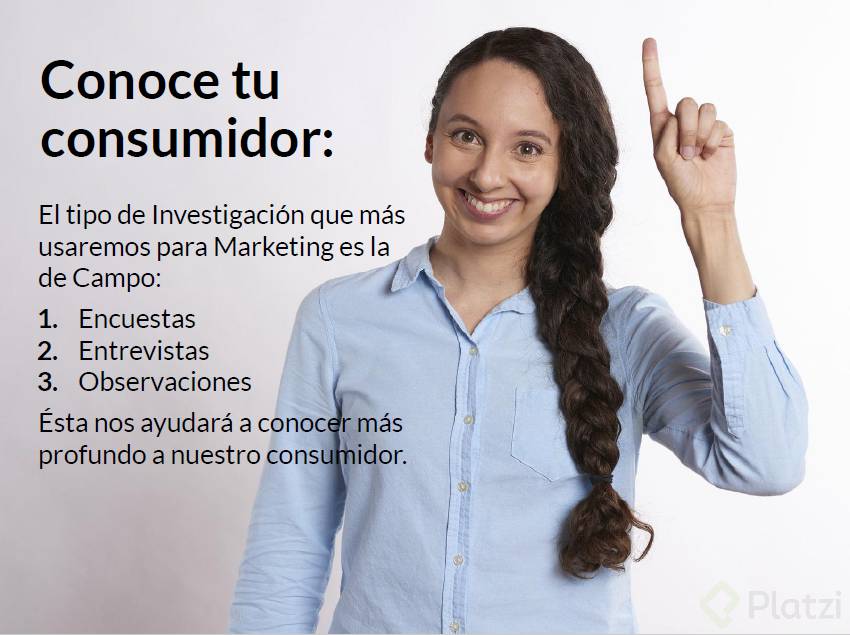
- Field research: you explore and observe on the ground, run surveys, and watch situations, products, and the selection and purchase process to draw conclusions about how the consumer experiences it [00:52].
- Experimental methodology: you run experiments and change one variable in how the consumer interacts with your product, then analyze the effect to see whether their choice depends on that change [01:26].
Each method answers a different question, so the real skill is matching the method to the goal.
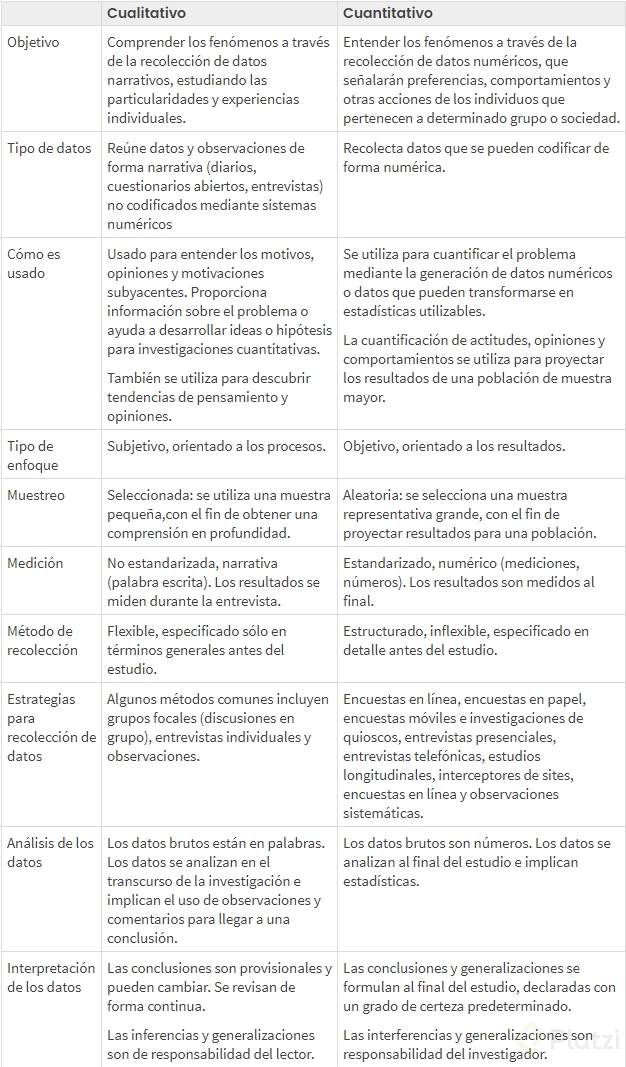
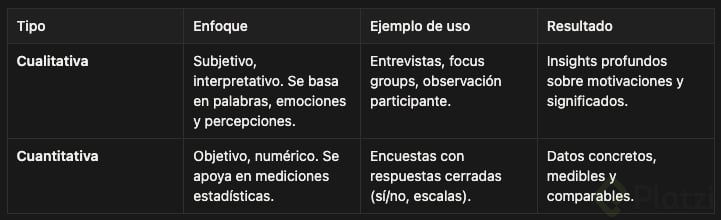
How do qualitative and quantitative research differ?
The class draws a clear line between exploring depth and measuring numbers. When you need rich detail about behavior and motivation, you lean qualitative. When you need concrete, precise answers, you lean quantitative.
What is the difference between qualitative and quantitative research? Quantitative research gives you numbers and yes or no answers when the question is brief and specific. Qualitative research explores attitudes, motivations, and sensitive topics in depth.
Which research technique should you choose?
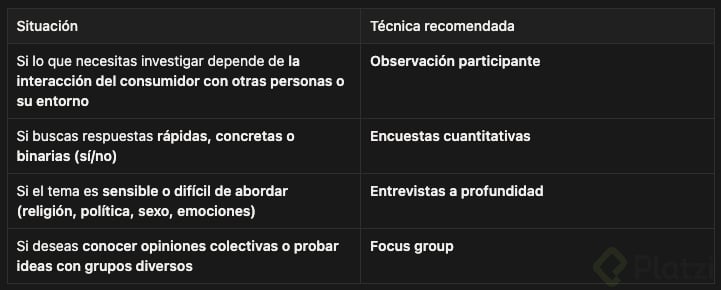
Here is where it gets practical. The class offers a decision framework tied to what you actually want to find out [03:44]. Instead of picking a method at random, you let the nature of your question point you to the right tool.
- Participant observation: when what you want to learn depends heavily on how your consumer interacts with others in public spaces, you observe them in the context where they buy, using a prepared guide [04:12].
- Surveys: when what you need is brief, concise, and precise, you turn to numbers and simple yes or no answers, without needing extra detail [04:52].
- In-depth interviews: when the topic is difficult, sensitive, or biased, like politics, religion, or sex, you build a safe environment and a bond of trust to help the consumer open up [05:16].
- Focus groups: when the topic involves groups or you want to gather a great deal more information, you bring people together to explore it [05:52].
After you weigh these options, the trick is to be honest about your question before you commit to a method.
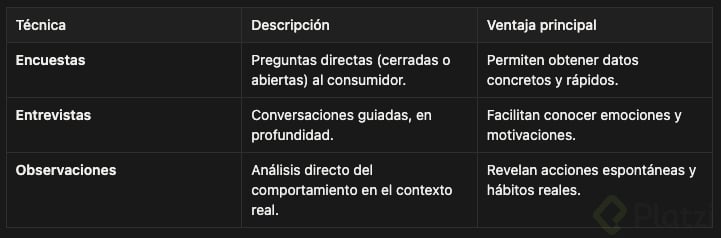
How do surveys, interviews, and observation add depth?
These direct techniques move you past surface demographics. You stop settling for labels like men or women, or stay-at-home moms, and start speaking directly to the consumer about your category, your brand, and the real impact of your product on their life [03:00].
With surveys you speak directly to the customer. With interviews you interact and dig deeper into what they tell you. With observation you immerse yourself in their environment to see the attitudes they adopt toward your product or the category you operate in [02:35].
When should I use in-depth interviews instead of a survey? Use interviews when the topic is sensitive or hard to talk about, so you can build trust and go deeper. Use surveys when you need quick, specific, numerical answers.
What should you do before choosing a method?
Start with your own product. Identify the key features of your product or service, then list exactly what you want to learn about your consumer [06:08]. That list decides whether you go qualitative or quantitative, specific or exploratory.
Ask yourself the honest question from the class: is what you need something specific, or does it require deeper exploration of the consumer? Your answer names the technique for you.
Which technique fits your project best, and what do you most want to learn about your consumer? Share your thinking in the comments.
Choosing the Right Consumer Research Method