Curso de Innovación para Emprendimiento

Why Most Innovations Die Before Launch

Curso de Innovación para Emprendimiento

Contenido del curso

Why Most Innovations Die Before Launch

Resumen

Driving innovation inside any company means facing a predictable wall: resistance. Change management is the discipline that turns that wall into a door, and mastering it is what separates the tiny percentage of successful innovations from the massive graveyard of attempted ones. If you have a new idea and want it to survive contact with reality, you need people on board.

Why does most innovation fail before it reaches people?

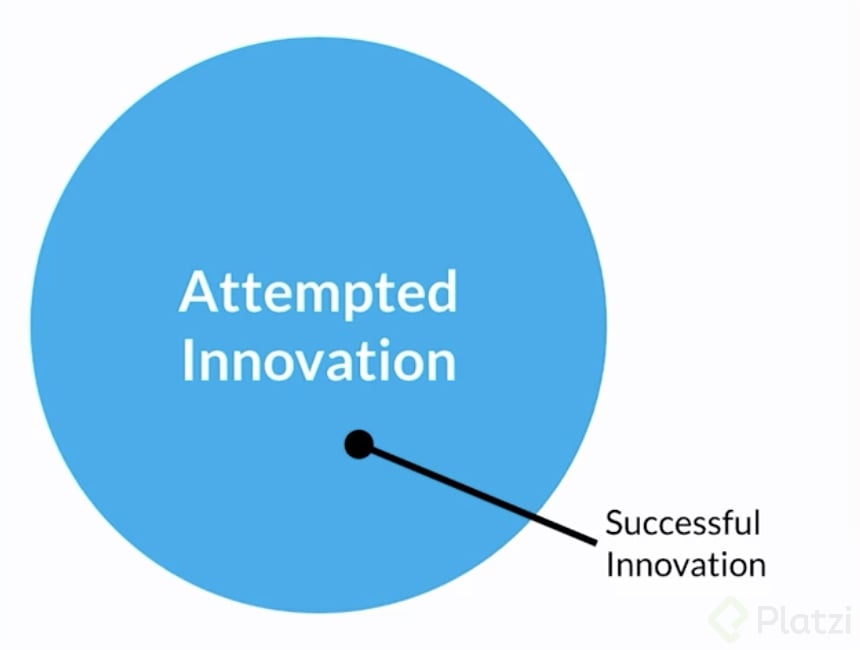
The gap between attempted innovation and successful innovation is enormous, and the main reason is not the quality of the idea. It's the missing final step: convincing others to adopt it. You can follow every stage of a creative process, validate your concept, and still watch it die because nobody changed their behavior around it.

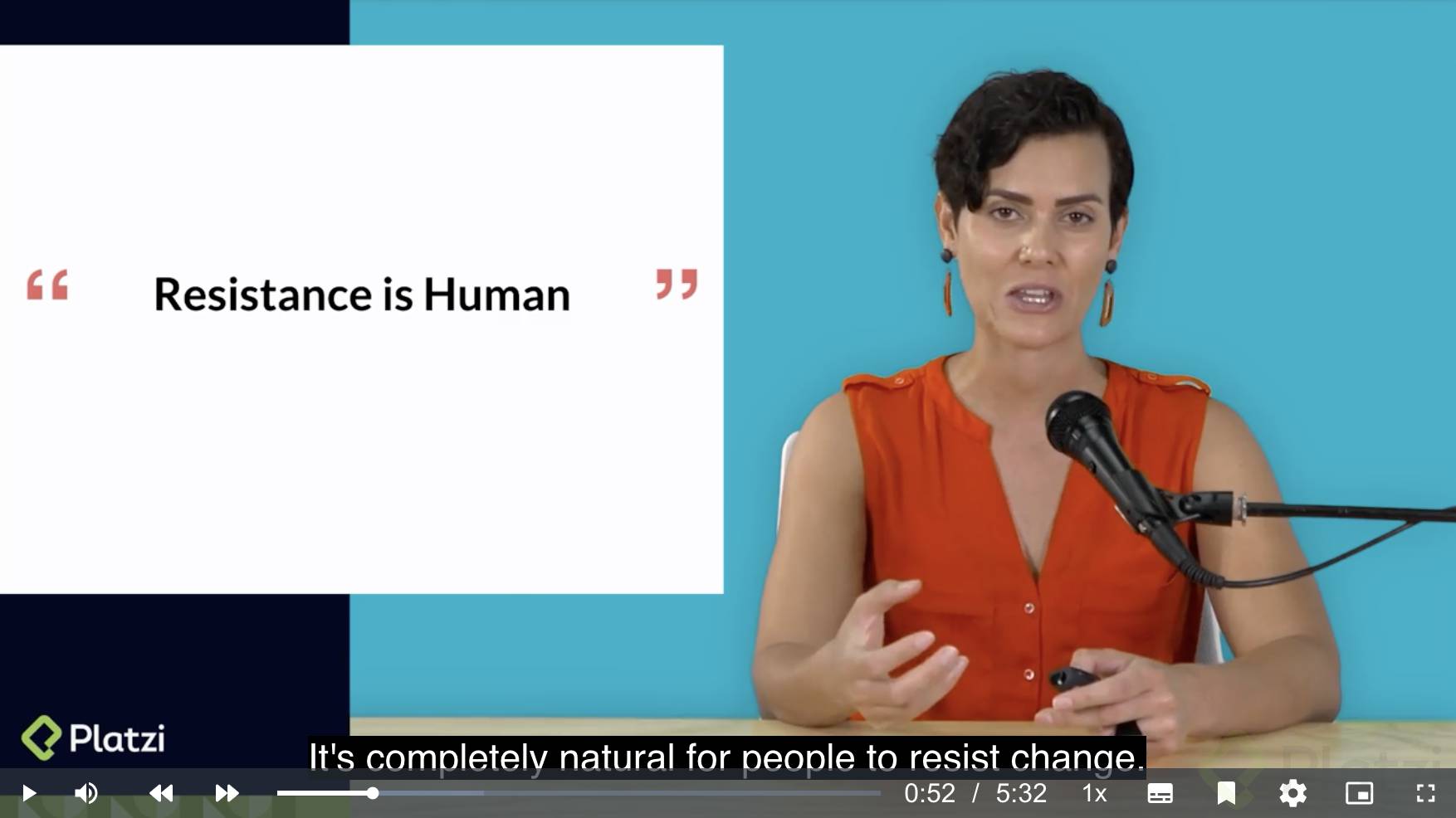
There's a famous phrase, resistance is futile. I'd rewrite it: resistance is human. When you ask someone to shift their habits, beliefs, or way of working, their first reaction will almost always be to push back. That's not sabotage, that's biology.

Why do people resist change at work? Because their brain reads change as risk. If the current way is working, any new proposal feels like a threat to something already proven, so the default response is to protect the status quo.

How does success make organizations less innovative?

Here's the counterintuitive part: the more successful an organization becomes, the less willing it is to try something new. Once a company finds a formula that works, it optimizes around it. Taking risks starts to feel unnecessary, even reckless. That creates a negative correlation between success and innovation appetite, which is exactly the opposite of what entrepreneurship demands.

Think of the typical corporate structure as a cast of characters:

  • The chief status quo officer.
  • The VP of wait and see.
  • The VP of play it safe.
  • The VP of more analysis.
  • The director of it'll never work.
  • The director of I've tried that before.
  • The director of yes, but.
  • The manager of I give up.

It's a caricature, sure, but it captures something real. Every successful company has people whose job, consciously or not, is to keep the machine running exactly as it always has. When you show up as an intrapreneur or entrepreneur with a new idea, their honest question is: why are you shaking things up if everything works?

What is an intrapreneur facing inside a company?

An intrapreneur is someone driving innovation from inside an established organization. And that role comes with a specific tension: you're paid to challenge the system that pays you. The bigger and more successful the company, the stronger the immune response you'll trigger.

How should you treat the people you need to convince?

Here's the mindset shift that changes everything: treat the people you need on board as another user. You already practiced empathy with your end customer, now extend that same empathy to your colleagues, your boss, your team. They have needs, fears, and incentives, and your job is to understand them.

Once you see them as users, three questions become useful:

  • How do I make this change in their interest, not a favor to me?
  • How do I lower the barriers so adopting it feels easy?
  • How do I address their concerns before they become objections?

You should never ask someone to change just because you want them to. The pitch has to be: this benefits you, and here's exactly how. If the change feels hard, frustrating, or risky, resistance multiplies. If it feels easy and clearly worth it, resistance drops.

How do I get my team to adopt a new idea? Show them what's in it for them, remove friction from the transition, and answer their worries before they voice them. People adopt change when it feels safer and more useful than staying still.

Why does making change easy matter more than making it exciting?

Excitement fades. Friction doesn't. If you rely on enthusiasm alone, adoption collapses the moment the first obstacle appears. Lowering barriers, simplifying steps, and removing worry is what makes change stick past the honeymoon phase.

Why being called a virus might be a compliment

There's a story worth holding onto. Working at a large corporate office driving innovation, the director of strategy once said in a meeting: you are a virus in this organization. It stings at first. Then it makes sense.

When you push innovation and change, you are challenging the organism. The organism will fight back. That's not a sign you're doing something wrong, it's a sign you're doing something real. Your job isn't to stop being a virus, it's to become a virus the system chooses to accept, by showing people that adopting you is better than rejecting you.

Selling your idea internally is not optional, it's part of the process. And the next step is learning exactly how to do that sale.

What's the biggest source of resistance you've faced when trying to push a new idea? Share it in the comments, your example might be exactly what someone else needs to read.