Contenido del curso


Módulo 2: Gestión del alcance y aliados de un proyectos

Módulo 3: Gestión del Cronograma de un proyecto
- 11

How Project Schedule Management Works
03:02 min - 12
Dependencias entre actividades para cronogramas de proyecto
06:46 min - 13

Effort vs Duration: The PERT Method
05:49 min - 14

Ruta crítica y cronograma con diagrama de Gantt
05:58 min - 15
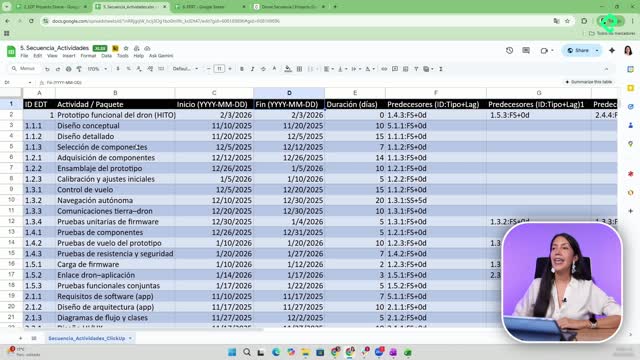
PERT and ClickUp for Project Scheduling
07:56 min - 16

Técnicas de compresión de cronogramas: fast tracking y crashing
09:03 min
Módulo 4: Planificación y Presupuesto de Costos
- 17

Gestión de costos en proyectos: procesos del PMBOK y control
04:23 min - 18
Tres métodos para estimar costos de proyectos con precisión
07:34 min - 19

Presupuestos de proyecto con reservas y curva S para control financiero
09:55 min - 20
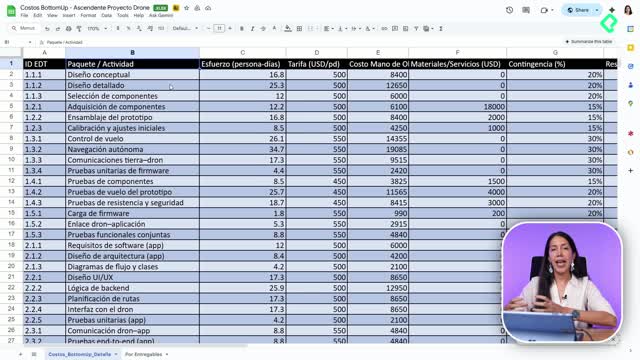
Building a Project Budget Baseline With S-Curve
07:15 min - 21
Why Low Spending Can Hide Project Failure
11:58 min - 22

WSJF and ROI to Prioritize Projects
06:58 min
Módulo 5: Siguientes Pasos

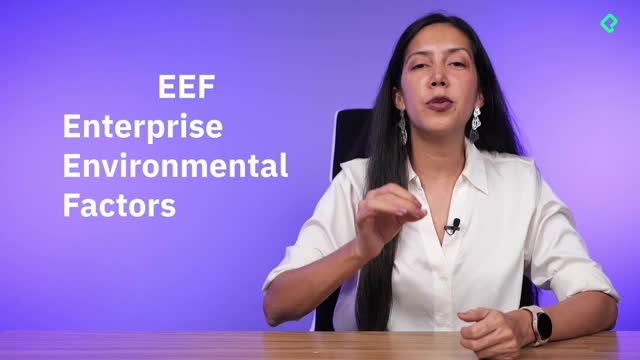
EEFs and OPAs: What Shapes Your Project
Resumen
Every project lives inside an ecosystem. Understanding enterprise environmental factors (EEFs) and organizational process assets (OPAs) is what separates a plan that survives reality from one that collapses on contact. If you manage projects, you need to read both layers before you commit to a single deadline.
Think of it like building a house. The weather and the terrain shape what you can do. The toolbox and the blueprints your company already owns shape how fast you can do it.
What are enterprise environmental factors and why do they matter?
EEFs are the conditions outside the project team's control that influence, constrain, or direct the project. You can't change them, but you can read them and plan around them.
What is an EEF in simple terms? It's any external or organizational condition you didn't create and can't control, but that still shapes your project. Think company culture, market demand, or government regulations.
How does organizational culture shape a project?
Running a project inside an agile startup with flat hierarchy is not the same as running one inside a large corporation where every decision needs ten approvals. A culture that rewards risk taking gives your team room to test new solutions. A rigid hierarchy slows you down, no matter how good your plan looks on paper.
Which external factors should you map before planning?
Before you lock a single milestone, scan these four:
- Culture and organizational structure, because they decide how fast decisions move.
- Infrastructure, meaning the tools, equipment, and facilities you actually have access to. Powerful servers and modern licenses speed you up; obsolete hardware drags you down.
- Market conditions, including competitors, customer demand, and resource availability. If a competitor just launched something similar, your strategy and timeline shift.
- Government regulations, like construction permits or labeling laws. You can't build a building wherever you want, and zoning laws are non negotiable.
These forces are your macro environment. You won't change them. You will plan in function of them.
What are organizational process assets and how do they help?
If EEFs are the climate, OPAs are the toolbox. They're the plans, processes, policies, procedures, and knowledge bases that belong to your company and are there for you to reuse.
What is an OPA? It's an internal resource, document, or lesson learned that the organization makes available to project teams so they don't start from zero.
Which OPAs save the most time?
Three categories tend to do the heavy lifting:
- Templates, like predefined project plans, risk registers, or meeting minutes. You skip the blank page and you keep consistency across projects.
- Knowledge bases, meaning information and learnings from past projects. A lessons learned repository can warn you about a technology that caused problems before, and a defect database helps you anticipate failures.
- Standardized procedures, the way things are done in your company. Formal scope change processes, procurement protocols, or quality control checklists guide the work and keep it aligned with what's already approved.
Unlike EEFs, you can and should use OPAs deliberately. They're your shortcut to efficiency.
How do EEFs and OPAs interact in a real project?
External factors limit your options or open opportunities. A disruptive new technology entering the market can force a radical change in your product plan. At the same time, internal assets give you a base to build on, so you can respond faster and avoid repeating old mistakes.
Let's make it concrete with the launch of a new line of eco friendly products.
What would the EEFs look like?
- Growing market demand for sustainable products, which is an opportunity.
- Stricter government regulations on organic product labeling, which is a constraint.
- Global shortage of certain recycled materials, which is a resource limitation.
None of these are under your control. All of them shape your scope and your timeline.
What would the OPAs look like?
- Templates for product certification and new packaging development.
- A lessons learned database from previous launches that identifies reliable suppliers and known supply chain risks.
- Standardized procedures to evaluate new suppliers and to run quality control on incoming materials.
How do EEFs and OPAs differ? EEFs are external forces that affect you from the outside. OPAs are internal tools and knowledge you use to respond. Read both, and your planning gets sharper.
When you combine a clear reading of your environment with disciplined use of your company's assets, you stop reinventing the wheel and you stop being surprised by the obvious. That's the shift from reactive project management to intentional project management. What EEFs or OPAs are shaping your current project right now?